One-Net/DASDEC User Manual 2-4v3.0 | r0616
Analog Audio Outputs
There are two types of Analog Audio Outputs: EAS Audio and Program Audio. The EAS
Audio output provides EAS decoded audio only. The Program Audio output provides
decoded EAS audio. When Program Audio inputs are connected to an incoming audio
source, these outputs deliver a switched program signal.
The EAS Audio output jack (9) is used to monitor EAS messages, provide an input to
other EAS devices, and feed EAS audio to the oponal MPEG card. The jack is a 3.5mm
TRS (mini) connector that is the same as the Analog Audio Inputs.
Program Audio outputs (1) are adjacent to the Program Audio inputs, found on the
same pluggable terminal connector. These balanced audio outputs deliver a connuous
audio program stream that switches between the Program Audio inputs and EAS audio
during an alert.
When the output audio connecons are complete, navigate to Setup > Audio > Audio
Output Levels/Tests to ensure proper connecvity, and set proper audio levels.
AES DIGITAL AUDIO WIRING
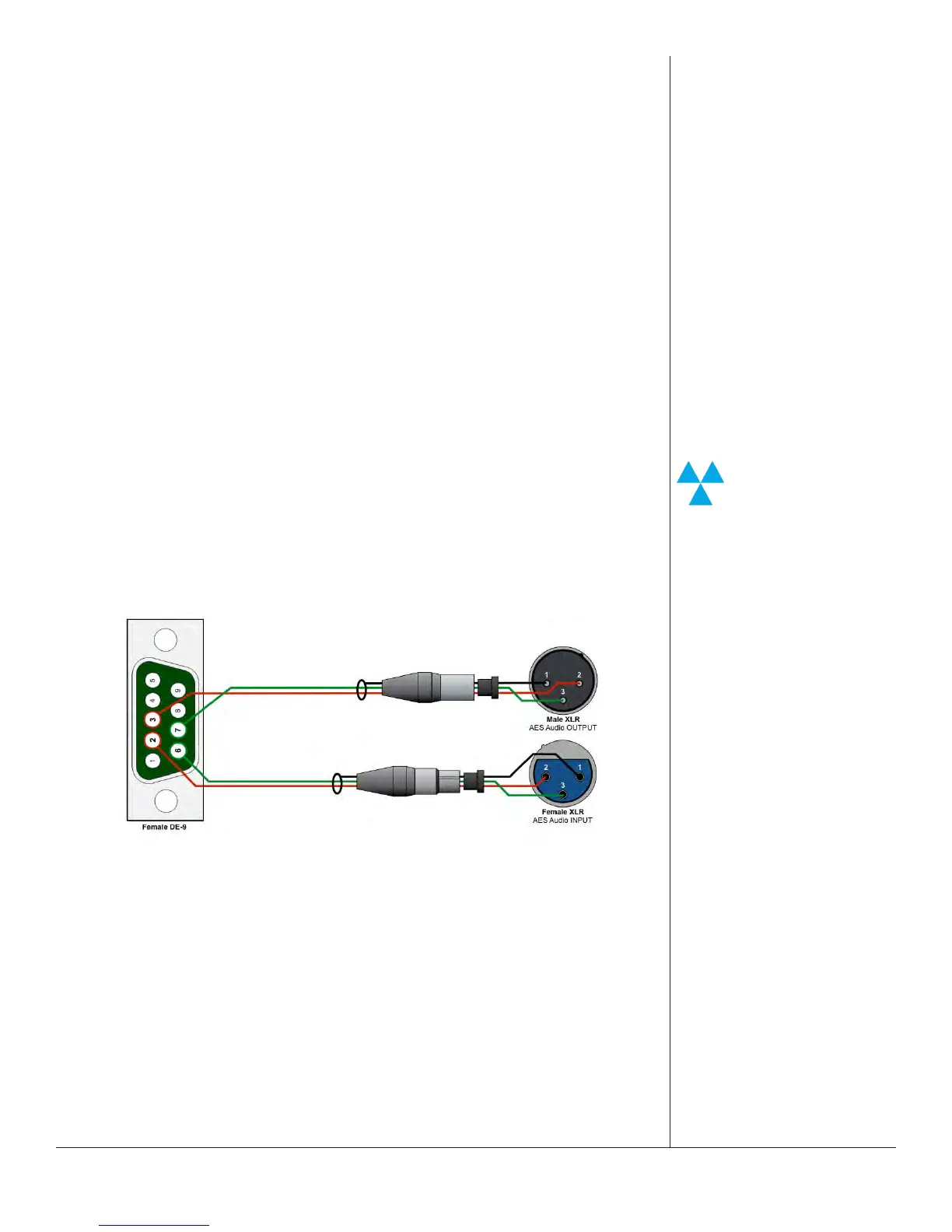
An oponal AES audio input/output funcon is available for the DASDEC plaorm. This
includes the capability for an AES digital audio output, along with a switching AES audio
output when an AES audio input is connected. A DE-9 to Male XLR and Female XLR
breakout cable is provided. Refer to the diagrams below for cabling of the AES audio
inputs and outputs.
AES Digital Audio Wiring
VIDEO WIRING
Video Output is an oponal feature included in some precongured devices. When
enabled, an NTSC analog composite video signal is available from the BNC jack located
on the back panel. This video signal provides visual, full-screen emergency alert details
during alert forwarding and/or alert originaon.
This feature is specic to
the DASDEC II.


 To Next Page