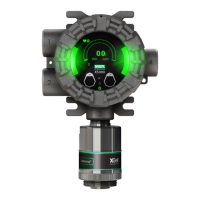
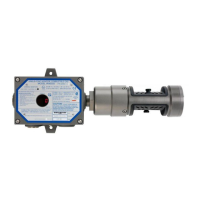
normally enter the sensor (see Figure 35 Frit Location). When this condition is detected, the transmitter will go into fault and
show “Diffusion Supervision Fault” on the display. Follow these recommended steps to attempt to clear this fault:
1. Inspect and clear the sensor inlet and frit.
2. Inspect and clear any accessories attached to the sensor.
3. Ensure Sensor is fully mated to the sensor body assembly.
4. Attempt to recalibrate the sensor.
5. Disable Diffusion Supervision or replace the sensor.
First, with the sensor still installed, visually inspect the sensor to see if any objects are covering the gas inlet and remove
them. Example objects may include tape or the green calibration cap. Next, check to make sure that there is no foreign
material stuck to the frit. If any material is found, gently remove it while considering any hazards that may arise from such an
action, like the accumulation of a static charge, and taking the necessary steps to avoid them. Take care to ensure that the frit
is not damaged during the cleaning process. DO NOT use water or liquids to try to clean the frit. The frit acts like a sponge and
will retain liquids, which will keep the gas path blocked.
Figure 35 Frit Location
WARNING!
The sensor relies on the frit as a part of its Flameproof/Explosionproof approval. If the frit is damaged while attempting to clean
it, immediately remove power from the device. Ensure the area is free of a hazardous atmosphere, then follow all steps as
outlined in this manual to properly replace the sensor.
Failure to follow this warning can result in serious personal injury or death.
If no material is visible, the frit may still be blocked by a liquid which has absorbed into the frit. Once absorbed, liquids are very
difficult to remove. For these situations, relying on natural evaporation is recommended. Due to the time it can take for liquids
to evaporate sufficiently from the frit, users may want to consider swapping out the affected sensor with one that is known to
be clear. Placing absorbent material against the outer surface of the frit can help accelerate this process.
If a sensor is in Diffusion Supervision Fault, the device will still allow the user to attempt to calibrate the sensor. In the rare
event that a sensor calibration is successful, but the Diffusion Supervision system continues to detect a blockage in the gas
path, the Diffusion Supervision Fault will return in approximately 24 hours. In this scenario, there is likely an environmental
factor affecting the Diffusion Supervision detection. Provided the sensor can successfully calibrate, the sensor is still capable
of detecting gas. To prevent the Diffusion Supervision Fault from reoccurring, a user can either disable Diffusion Supervision in
the Sensor Settings (see 4.2.2 Sensor Setup) or replace the sensor.
76
US 6 Maintenance



 To Next Page