DehumidierML180-MLT350
4.5.2Ductforoutdoorairinlet
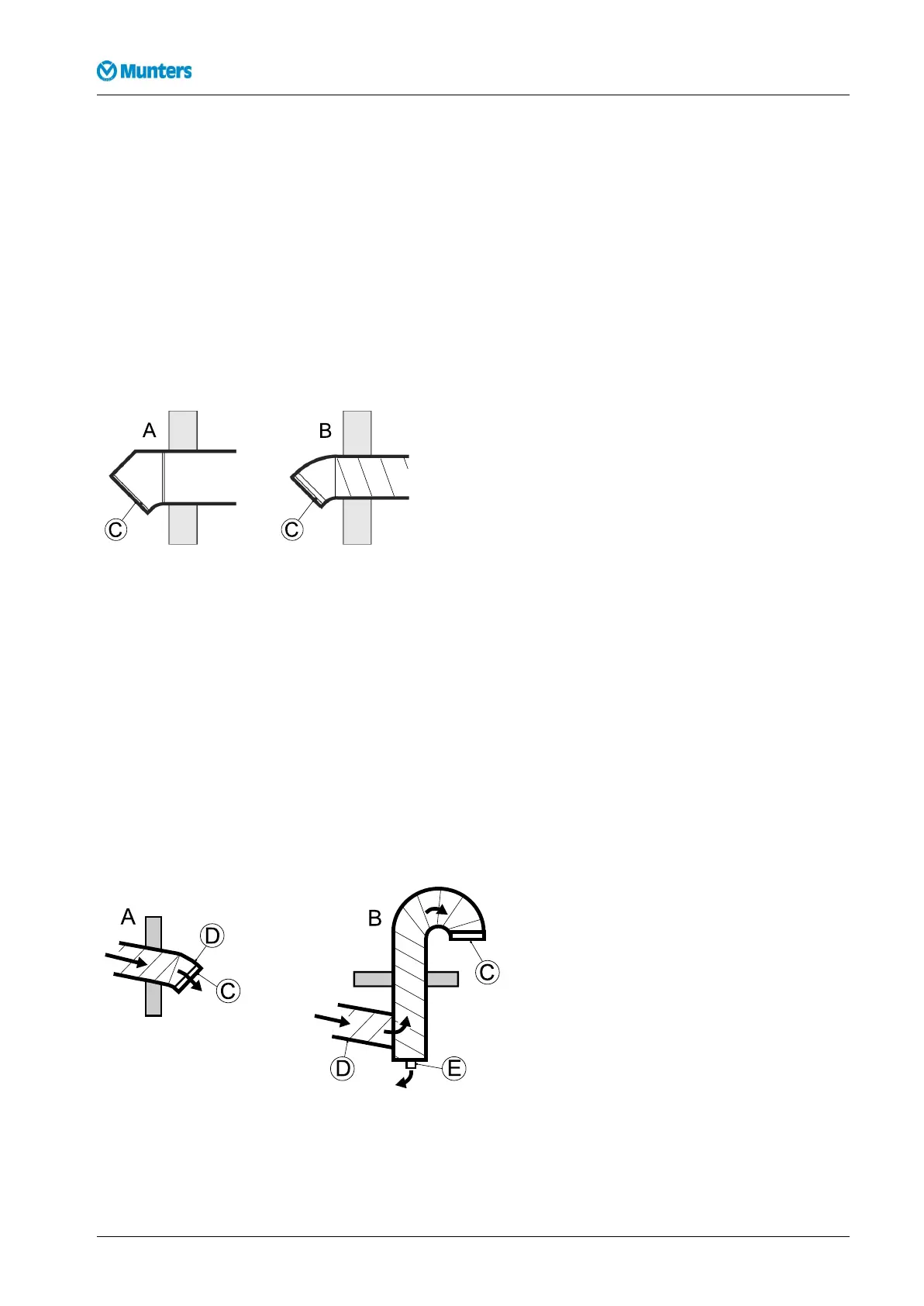
Whenbringingambientairfromoutdoorsintothedehumidier,theinletductopeningmustbelocated
sufcientlyhighabovegroundleveltopreventdustanddebrisfromentering.
Theductingmustbedesignedtopreventrainandsnowfrombeingdrawnintothedehumidier.Theair
inletmustbelocatedawayfrompossiblecontaminantssuchasengineexhaustgases,steamandharmful
vapours.
Topreventthewet(outlet)airfromhumidifyingthereactivation(inlet)air,theairinletforreactivationmust
belocatedatleast2mfromthewetairoutlet.
Attachawirenetwithameshwidthofapproximately10mmintheouterendoftheducttopreventanimals
fromenteringthedehumidierducting.
Figure4.5Outdoorairinletdesign
A.Rectangularducting
B.Roundducting
C.Wirenetting
4.5.3Ductforwetairoutlet
Makesurethattheambientairpressureisthesameattheairinletandatthewetairoutlettopreventthe
riskofreverseairow.
Thematerialforthewetairductmustwithstandcorrosionandtemperaturesofupto100°C.Thewetair
ductingmustalwaysbeinsulatedifthereisariskofcondensation.Thewetairleavingthedehumidierwill
easilycausecondensationontheinsideoftheductwallsduetothehighmoisturecontent.
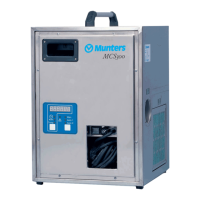
Horizontalductsmustbeinstalledslopingdownwards(awayfromthedehumidier)todrainawaypossible
condensation.Theductslopemustbeatleast2cm/m.Inaddition,drainageholes(5mm)shouldbemadeat
lowpointsintheducttopreventwateraccumulation.
Attachawirenetwithameshwidthofapproximately10mmintheouterendoftheducttopreventanimals
fromenteringthedehumidierducting.
Figure4.6Wetairoutletdesign
A.Horizontalwetairoutlet
B.Verticalwetairoutlet
C.Wirenetting
D.Downwardslope
E.Condensatedrainage
12Installation190TGB-1034-L1604



 To Next Page