© Munters AB, 2016 25
6.2 Ground wire
The ground wire is a large copper wire that connects the main circuit breaker panel to the ground
rod.
•
: Ground rods should be copper clad or galvanized steel.
o
Diameter: Typically, 16 mm (6-gauge) copper wire is sufficient. If the wire run is
greater than 20 feet, 20 mm (4-gauge) wire should be used.
o
Length: Minimum 2.5 meters (8 feet), preferably 3-meter (10-foot). A longer
ground rod will reach a soil with higher moisture content. Moist soil carries current
much better than drier soil.
The ground wire should be protected from damage by lawnmowers, tractors, etc. It should be buried
minimum 15 cm (6 inches) underground for protection and enter the house as soon as possible. It is
important that the wire not be cut; it should remain continuous.
6.3 Ground clamps
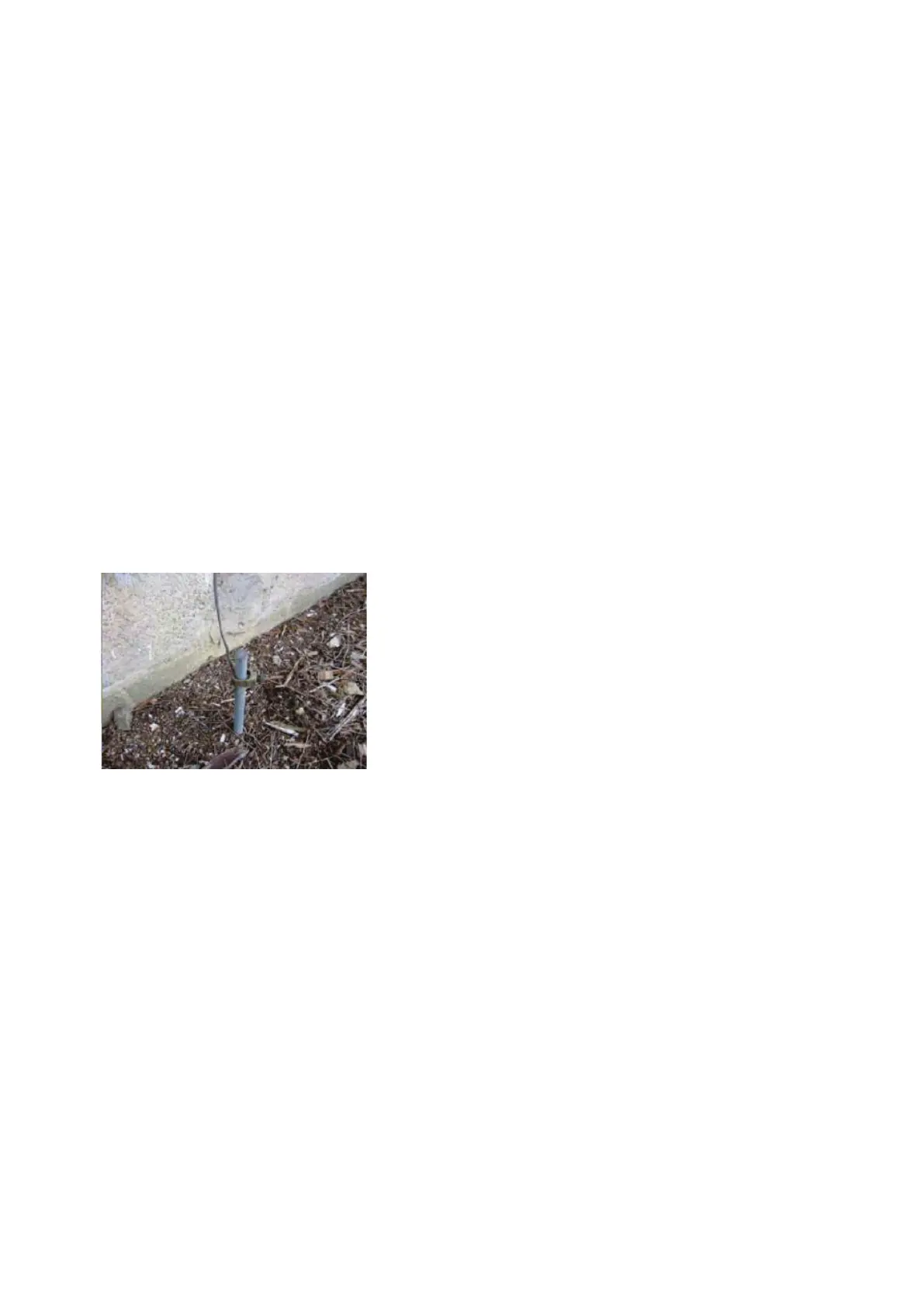
Ground wires should not be merely wrapped around a ground rod. Ground clamps are used to
attach a ground wire to a ground rod. The most common clamp is an acorn clamp. Make sure the
ground clamps you select are rated for outdoor use. Do not use pipe clamps rated for inside water
lines or hose clamps to attach the ground wire.
Figure 10: Ground Connection
6.4 What should be grounded?
Any equipment that is or could become energized, even accidentally, should be grounded. Current
from lightning strikes objects in a random fashion. Accounts of lightning strikes reveal scenarios most
of us could not predict.
Electric circuits should be wired with a 3-wire conductor consisting of hot, neutral and grounding
wires. The grounding wire should be attached cleanly and securely to devices or systems to be
grounded. The other end of the grounding wire should be attached to the ground bus on the main
panel.


 To Next Page