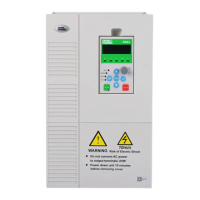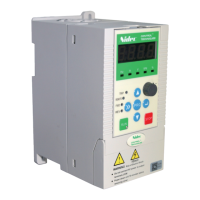
What to do if Nidec NE200-2S0007GB DC Drives show output phase loss?
- VVanessa FowlerSep 8, 2025
If your Nidec DC Drives are showing an output phase loss, check the U-V-W motor wiring. Also, if there is a serious unbalance in output, check the load.

What to do if Nidec NE200-2S0007GB DC Drives show output phase loss?
If your Nidec DC Drives are showing an output phase loss, check the U-V-W motor wiring. Also, if there is a serious unbalance in output, check the load.
What to do if Nidec NE200-2S0007GB DC Drives show load short-circuit?
If your Nidec DC Drives are displaying a load short-circuit error, check whether the electric motor coil is short circuit. If the inverting module IGBT is damaged, ask for the services from manufacturers.
What to do if my Nidec DC Drives show motor overload?
If your Nidec DC Drives indicate a motor overload, several factors could be responsible. First, check the input power source for any abnormalities. Ensure the motor's rated current is correctly configured in the settings. If the V/F curve isn't suitable, adjust it along with the torque boosting performance. For motors consistently operating with heavy loads at low speeds, consider using a specialized electric motor. Also, verify that neither the motor nor the load is blocked or experiencing sudden, large load changes. Finally, if the motor power is insufficient, use a motor and drive with appropriate power ratings.
What causes bus under voltage during running of Nidec NE200-2S0007GB?
A bus under voltage during the operation of Nidec DC Drives is caused by power grid low voltage, so check the input power source.
What to do if Nidec NE200-2S0007GB show fast current limit fault?
If your Nidec DC Drives are showing a fast current limit fault, it could be due to a load that is too large or a motor blocked to stall, so decrease the load and check the motor and mechanical part status. If the drive power rating is too small, choose a higher power drive. If the drive output circuit loop is grounded or short-circuited, remove the external fault.
What to do if my Nidec NE200-2S0007GB show over Voltage in Acceleration?
If your Nidec DC Drives display an overvoltage during acceleration, it could be due to a too short acceleration time, so increase it. Another possible cause is an abnormal power supply, so check the input power source.
What to do if my Nidec DC Drives show over voltage in constant speed?
If your Nidec DC Drives are showing an overvoltage at constant speed, first check the input power source for abnormalities. If the load inertia is large, add suitable braking devices.
How to fix heat-sink over heat in Nidec NE200-2S0007GB?
To resolve heat-sink overheating in Nidec DC Drives, first lower the ambient temperature. If the fan is damaged, replace it. Also, ensure the fan air duct is clear of any blockages.
What to do if my Nidec NE200-2S0007GB DC Drives show over voltage in deceleration?
If your Nidec DC Drives are showing an overvoltage during deceleration, the deceleration time may be too short, so increase it. Also, if the load inertia is large, add suitable brake devices.
What causes over current in Nidec NE200-2S0007GB DC Drives during deceleration?
Overcurrent during deceleration in Nidec DC Drives can occur due to several reasons. If the deceleration time is too short, increase it. If there is a large load inertia, add suitable brake devices. Finally, if the drive power rating is too small, choose a higher capacity drive.
Detailed technical specifications for NE200 and NE300 drives across various control modes.
Physical dimensions and outline drawings for product mounting.
Guide for selecting and applying appropriate braking resistors based on model.
Guidelines for suitable installation environments, avoiding dust, moisture, and extreme temperatures.
Diagram showing the connection of the drive with peripheral devices like power supply, motor, etc.
Main circuit wiring terminal configurations for different drive models.
Important precautions and guidelines for wiring the main circuit to prevent damage and ensure safety.
Wiring diagrams and specifications for the control terminals of NE200 and NE300 drives.
Explains the three-level menu structure for viewing and modifying function codes.
Parameters for controlling drive start and stop operations, including start modes and DC braking.
Parameters for vector control, including speed and current loops, torque control, and encoder settings.
Parameters for V/F control, including curve settings, torque boost, and slip compensation.
Parameters for PID control, including setup channels, feedback, gains, and switching conditions.
Parameters for motor overload, voltage, current, phase loss, and communication protection.
Parameters for communication settings, including RS485, CAN baud rates, and error detection.
Parameters for controlling drive start and stop operations, including start modes and deceleration.
Parameters for vector control, including speed and current loops, torque control, and encoder settings.
Parameters for V/F control, including curve settings, torque boost, and slip compensation.
Parameters for PID control, including setup channels, feedback, gains, and switching conditions.
Parameters for motor overload, voltage, current, phase loss, and communication protection.
Parameters for communication settings, including RS485, CAN baud rates, and error detection.
Details various fault codes, possible causes, and troubleshooting solutions for NE200/300 series drives.
General troubleshooting guide for common abnormalities encountered during drive usage.