Patent No. 6,766,028 - OFI Testing Equipment, Inc.
OFITE, 11302 Steeplecrest Dr., Houston, TX 77065 USA / Tel: 832-320-7300 / Fax: 713-880-9886 / www.ote.com 39
Disassembly
This procedure should be performed immediately after every test and
calibration.
1. Turn the unit off.
2. Remove the R1 rotor from the drive rotor.
3. Remove the bob:
a. To remove a threaded bob, place the bob shaft wrench against the
ats on the bob shaft. Use the wrench to hold the bob shaft in place
while you unscrew the bob.
Do not try to remove the bob without the wrench. Doing so can
cause severe internal damage.
b. To remove the KlikLock™ bob, pull it straight down off the shaft.
4. Once the bob is removed, wipe down the bobshaft.
5. For testing mud, clean all removed parts with soap and water. If a
stronger cleaner is necessary for removing cement, use citric acid.
Do not use strong acids such as hydrochloric or sulfuric. It will
damage the equipment.
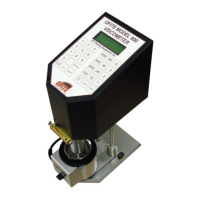
The Model 900 utilizes a stepper motor / timing chain, drive and a non-
contact rotational transducer detection system, which is extremely accurate
and sensitive enough to detect micro-divisions of 1/262,000th of a revolution.
This viscometer utilizes an absolute minimum of moving parts, and there
are no gears to jam up or get worn down like more conventional units. The
bob shaft bearings are isolated from the rotation of the rotor, which ensures
no induced drag on the bob shaft due to rotation. This results in more
sensitive and accurate readings, particularly at low shear rates, and the life
of the bearings is prolonged. When replacement is warranted however,
the bearings and the torsion spring may be easily changed. This is a major
advantage over previous viscometers.
It is important to remove the bob from the bob shaft during viscometer
transport to prevent bending or damaging the bob shaft assembly.
Tools Required:
Allen Wrench, "
Allen Wrench, "
Split Ring Pliers, small
Bob Shaft Wrench (provided)
Maintenance


 To Next Page