Need help?
Do you have a question about the Pakedge Device & Software WAP-VKIT and is the answer not in the manual?
Testing and limits for Class B digital devices to provide protection against harmful interference.
Information on radio frequency electromagnetic energy emissions and safety guidelines.
Guidelines on where wireless devices may be restricted, like airplanes or specific environments.
Read all instructions, comply with warnings, retain for reference, observe symbols, and follow all instructions.
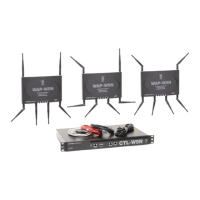
List of items included in the WAP-VKIT package for careful checking upon receipt.
Minimum hardware and software needed to access the controller's web interface and operate the system.
Explanation of how the WAP-VKIT interfaces with other LAN products for wireless network creation.
Description of the CTL-W5N controller's ports and their functions.
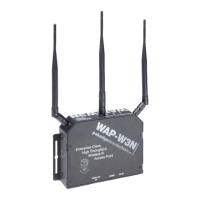
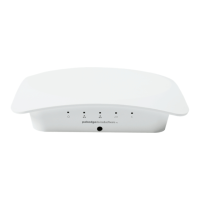
Details on the WAP-W5N access point, including its ports and features.
Information about the SW8-4PB PoE switch, including its ports and power capabilities.
Overview of the SW8-8PB, SW16-16PB, and SW24-24PB PoE switches and their port configurations.
Step-by-step guide for setting up the hardware using the SW8-4PB PoE switch.
Instructions for hardware setup using the SW8-8PB, SW16-16PB, or SW24-24PB PoE switches.
Default IP address, username, password, and network domain for the controller.
Default IP addresses assigned to internal interfaces and VLANs, corresponding to the RSB-Kxx kit.
Default SSIDs preconfigured to map to VLANs for seamless integration with the RSB-Kxx.
Mapping of SSIDs to wireless security types and default passphrases.
Steps to access the WLAN management interface using a web browser and login credentials.
Procedure to change the default administrator password for enhanced security.
Instructions on how to modify the controller's static IP address, netmask, and gateway.
Explanation of how SSIDs map to VLANs and how to add or modify ESS profiles.
Guide on creating a new SSID by adding an ESS profile, specifying its name, SSID, and security.
Important warning and steps for deleting an SSID profile, advising against removing preconfigured ones.
Method to disable an ESS profile instead of deleting it, allowing for future re-enabling.
Instructions on how to configure or create new wireless security profiles for ESSIDs.
Steps to add a new security profile, including configuration for RADIUS, encryption, and key settings.
How to edit an existing security profile to change its mode or passkey.
Guide to setting up MAC filtering (allow or deny lists) for ESS profiles to control device access.
Steps to enable MAC filtering for specific security profiles within the system.
How to adjust wireless channel, RF band, and channel width settings for seamless client roaming.
Detailed steps to update wireless interface parameters like channel, RF band, and transmit power for individual APs.
Process to change VLAN settings on the CTL-W5N, requiring removal from ESS profiles first.
Steps to update VLAN IP address, netmask, gateway, or tag within the VLAN Configuration page.
Recommendations for naming and organizing Access Points for effective support and troubleshooting.
How to name APs and input location details for record-keeping and identification.
Detailed specifications for the WAP-W5N Access Point, covering QoS, Security, Mobility, and Management.
Technical details on wireless standards, power management, antennas, client support, and data rates.
Specifics for IEEE802.11a, including frequency band, operating channels, data rates, and transmit power.
Details for IEEE802.11b/g, covering frequency band, operating channels, data rates, and transmit power.
Specifications for the CTL-W5N controller, including QoS, Security, Mobility, and Management features.
Information on wireless compliance, automatic discovery, and wired/switching protocols supported.
Details on operating environment, interfaces, and certifications for the device.
Details for contacting Pakedge support via website, email, and physical address.
Explanation of what manufacturing defects are covered by Pakedge's warranty service and parts.
Specifies exclusions from the warranty, such as damage from misuse, accidents, or acts of God.
Instructions for registering the product and obtaining service through a Pakedge dealer or directly.
 General
| Brand | Pakedge Device & Software |
|---|---|
| Model | WAP-VKIT |
| Category | Wireless Access Point |
| Language | English |

 To Next Page