29
Administering TRUE-IPV® Therapy with In-Line Valve
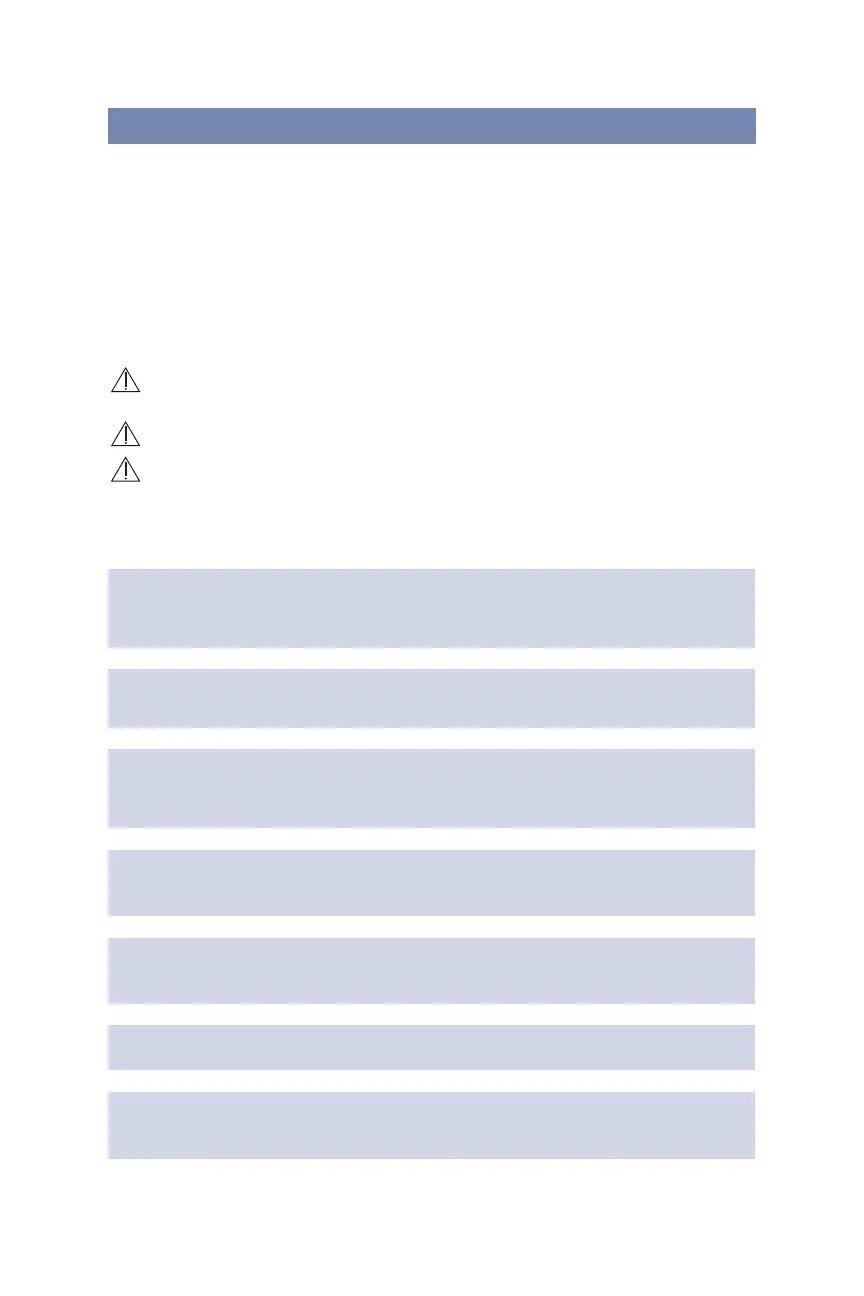
When administering TRUE-IPV® Therapy with an In-Line Valve, a pressure control (PC)
mode is recommended or follow your institutional protocol.
Mean Airway Pressures (MAP) will increase slightly with the administration of TRUE-IPV®
In-line therapy with the ventilator. The clinician must be aware of this eect and monitor
the patient closely for any adverse side eects.
When using the IPV®-1C in pressure-control mode, the in-line valve may remain closed.
When using the ventilator in volume-control, the in-line valve may be opened to create
a leak.
NOTE: If chest percussion is inadequate, raise drive pressure (psi gauge) and scan
PERCUSSION rate to mobilize secretions.
NOTE: Operational pressure and percussive rate can be adjusted to increase and
decrease the amount of chest movement (wiggle).
NOTE: Suctioning should be performed as needed.
NOTE: It may take multiple treatments to identify optimal therapeutic eect for each
patient.
WARNING: NEVER run device without sterile liquid in nebulizer during
treatment. This is required for airway hydration.
WARNING: Notate the current ventilator alarm and mode settings.
WARNING: Reset occasional CMV high-pressure alarms as they occur. When
applying TRUE-IPV® in-line, adjust the pressure relief valve to achieve desired Amplitude
Pressure per your institutional/hospital protocol. High-pressure alarms should not occur
on a regular basis if the Pressure Relief Adjustment valve is set correctly.
NOTE: Patients who are performing T-tube trials or CPAP sprinting may be taken o the
ventilator for the IPV® treatment utilizing a ex adapter. Decreasing cu pressure still
applies to this patient population.
NOTE: Lowering of the cu pressure facilitates secretion removal into the oral cavity
where they may be suctioned. This also helps in the prevention of tube obstruction in the
event copious secretions are mobilized.
NOTE: Following your institutional protocols for cued endotracheal tubed patient, the
cu pressure may be lowered.


 To Next Page