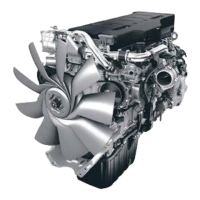
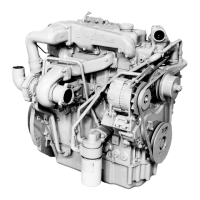
Table 1
Engine Specifications
Engine
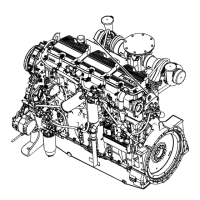
2806A, 2806C, and the 2806D
Arrangement and Cylinders In-Line six cylinder
Bore 145 mm (5.7 inch)
Stroke 183 mm (7.2 inch)
Aspiration
ATAAC
(1)
Displacement 18 L (1098 cubic inch)
Firing Order
1-5-3-6-2-4
Rotation (flywheel end)
Counterclockwise
(1)
Air-to-air aftercooled
Electronic Engine Features
The engine is designed for electronic controls. The
integral on board computer controls the operation of
the engine. Current operating conditions are
monitored. The Electronic Control Module (ECM)
controls the response of the engine to these
conditions and to the demands of the operator. These
conditions and operator demands determine the
precise control of fuel injection by the ECM. The
electronic engine control system provides the
following features:
• Engine speed governor
• Automatic air/fuel ratio control
• Torque rise shaping
• Injection timing control
• System diagnostics
An electronic governor controls the output of the unit
injectors to maintain the engine rpm that is desired.
The functions of the governor include a
programmable low idle and a 20 rpm to 200 rpm
governor overrun.
High injection pressures are produced by
electronically controlled, mechanically actuated unit
injectors. The injectors combine the pumping and the
electronic fuel metering (duration and timing) during
injection. The unit injectors accurately control smoke
limiting, white smoke, and engine acceleration rates.
There is one unit injector per cylinder. Individual unit
injectors meter the fuel. The individual unit injectors
also pump the fuel. The metering and the pumping
are done under high pressure. High injection
pressures help to reduce fuel consumption and
emissions. The use of this type of unit injector
provides total electronic control of injection timing.
The injection timing varies with engine operating
conditions. The engine performance is optimized in
the following areas:
• Starting
• Emissions
• Noise
• Fuel consumption
The timing advance is achieved through precise
control of the injector firing. Engine speed is
controlled by adjusting the firing duration. The
information is provided to the Electronic Control
Module (ECM) by an engine speed/timing sensor.
The information is for detection of cylinder position
and engine speed.
The engines have built-in diagnostics to ensure that
all the components are functioning and operating
properly. In the event of a system component
deviation from the programmed limits, a
DIAGNOSTIC lamp that is mounted on the control
panel will illuminate. An electronic service tool that is
provided by Perkins may be used to read the
numerical code of the diagnostic flash code. There
are three types of diagnostic codes: ACTIVE,
LOGGED, and EVENT. These codes are logged and
stored in the ECM. Refer to the Operation and
Maintenance Manual, “Engine Diagnostics” for
additional information.
The cooling system consists of the following items: a
centrifugal pump that is driven by a gear, water
temperature regulator, an oil cooler, and a radiator
that incorporates a shunt system.
The engine lubricating oil is supplied by a gear type
pump. The engine lubricating oil is cooled and
filtered. Bypass valves provide unrestricted flow of
lubrication oil to the engine in the following
circumstances: when the oil viscosity is high and if
the oil cooler or the oil filter elements (paper
cartridge) become plugged.
Engine efficiency, efficiency of emission controls, and
engine performance depend on adherence to correct
operation and maintenance recommendations
including the use of recommended fuels, coolants,
and lubrication oils.
Extra Features
The following extra features provide increased
engine fuel economy and serviceability:
• Cold starting capability
26
SEBU9074-06
Product Information Section
Product Description



 To Next Page