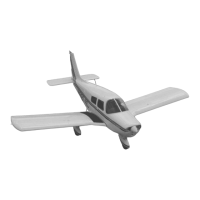
TWIN COMANCHE C/R
During normal conditions, retraction of the landing gear should occur when a gear down landing is no
longer possible on the runway. Attain the best rate Of climb speed and at least 400 feet above ground level
before reducing power.
-.
WING FLAPS
Wing flaps are not necessary for take-off except when operating from a short or
soft field. The use of wing flaps during take-off in a lightly loaded airplane may cause
the airplane to lift-off the runway before Vmc is attained. An effort to hold the
airplane on the runway too long may result in a “wheelbarrowing tendency” with most
of the weight on the nose wheel.
Wing flaps are not normally used during a crosswind take-off. After lift-off set up
the required crab angle, retract the gear at a safe altitude and continue climb out.
An en route climbing speed of 130 miles per hour is recommended for increased
forward visibility during continuous climb.
SHORT AND SOFT FIELD TAKE-OFFS
If it is necessary to get the airplane off the runway in the shortest possible
distance, set take-off wing flaps (with the flap position needle at the bottom of the
white arc on the flap indicator). With brakes set, run up engines to maximum power
and check, instruments. If the airplane is off the runway at less than 80 miles per hour,
it is essential to fly level a few feet off the runway immediately after lift-off until
reaching 80 mph. After airspeed has increased, initiate a climb at the best angle of
climb speed (90 mph at sea level) if an obstacle is to be cleared, or at the best rate of
climb speed (112 mph at sea level) if a normal climb out is desired. Since the airplane
cannot be controlled in flight below Vmc in the event of the sudden power loss in one
engine, be ready to reduce power promptly.
NOTE
Take-off at high altitude (density altitude), from a soft, wet, rough
or grassy field, or with an uphill gradient or tail wind component
results in greatly reduced take-off performance.
During take-off roll. check to be sure the airspeed indicator is
operating properly. The needle should indicate zero when the
airplane is at rest.
LANDING GEAR RETRACTION
Make sure the aircraft has sufficient altitude and airspeed with no chance’of
settling back on the runway before retracting the gear. When taking off from a long
runwayt retract the landing gear when it would no longer be possible to land straight
ahead.
DEICER BOOTS
If your Twin Comanche C/R is equipped with deicer boots, they should not be
operating during take-off since inflated boots fan change the stall characteristics of the
airplane.
PAGE 6
OPERATING INSTRUCTIONS
ISSUED: June 1 :I970
REVISED: April 28,1972


 To Next Page
 Loading...