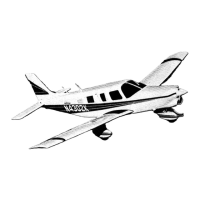
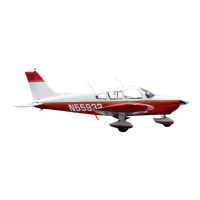
TWIN COMANCHE C/R
HEATING AND VENTILATING SYSTEM
The flow of air for heating and defrosting is taken through an inlet located in the nose and regulated
by controls located in the lower right side of the instrument panel.
Heated air for the cabin and windshield defrosting is provided by a Janitrol heater installed in the nose
section.
Operation of the heater is controlled by a three position switch, labeled FAN, OFF and HEAT. The
FAN position will operate the vent blower only and may be used for cabin ventilation on the ground or for
windshield defogging when heat is not desired.
Iz
For heat the manual heater fuel valve must be on and the three position switch turned to HEAT. This
will start fuel flow and ignite the burner simultaneously. With instant starting and no need for priming, heat
should be felt within a few seconds.
I
Regulation of heat, airflow and defroster operation is controlled by levers on the heater control
console. The top control regulates a thermostat and provides a wide range of temperature selections.
Adjustable heat deflectors are on the cabin wall beneath the instrument panel to provide additional
comfort.
Cabin temperature and air circulation can be maintained by using various combinations of lever
settings, to suit individual desires. To minimize the feeling of drafts, a low airflow high heat combination
may be used.
Windshield defrosting may be regulated by various settings of the defroster lever and in severe
windshield fogging or icing conditions, it may be desirable to restrict the heater air, since this will drive
more air through the defrosters.
Heat may be supplied to warm the cabin before flight by turning on the master switch, the right
auxiliary fuel pump, and starting the heater.
The cabin heater uses gasoline from the fuel injector on the right engine. If the right fuel selector is in
the off position the heater is inoperative. In case of right engine failure the heater can be operated by
leaving the fuel selector on and closing the mixture control while operating the auxiliary fuel pump. Before
the heater is operated under these conditions, determine that no fuel leaks are present between the tank
and engine.
Located in the heater is a heat limit switch, which acts as a safety device to render the heater system
inoperative if a malfunction should occur causing excessively high temperatures. This control is located in
the downstream end of the vent jacket, with the’reset button on the heater shroud. It is reached only
through the nose section to insure that the malfunction causing the overheat condition is corrected prior to
future heater operation.
To prevent activation of the overheat control during landing roll or while taxiing, turn the three
position switch to FAN during the approach for landing. During ground operation the manual switch
should be on FAN for several minutes to cool the heater before turning to the OFF position.
Ventilating air for the cabin interior is obtained from the two ventilators located at each side of the
instrument panel. The rear seat area is furnished with air by overhead vents from the dorsal fin scoop. Each
individual vent is adjustable for the desired airflow. Located in the aft section of the cabin is an exhaust
vent to improve the circulation of air in the cabin interior.
PAGE 12
AIRPLANE
AND SYSTEMS
ISSUED: June 1,197O


 To Next Page
 Loading...