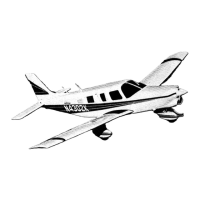
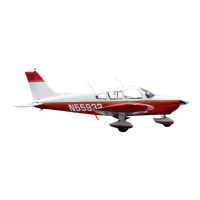
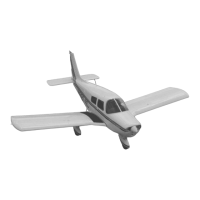
TWIN COMANCHE C/R
OPERATING TIPS
The following Operating Tips are of particular value in the operation of the Twin Comanche C/R:
1.
Strobe lights should not be operated when flying through heavy haze or clouds, since reflected
light can produce spatial disorientation. Show courtesy for other pilots by not operating strobe
lights while taxiing in the vicinity of other aircraft.
3
a.
In an effort to avoid accidents, pilots should obtain and study the safety related information
made available in FAA publications such as regulations, advisory circulars, Aviation News, AIM,
and safety aids.
3. The rudder pedals are suspended from a torque tube which extends across the fuselage. The pilot
should become familiar with the proper positioning of his feet on the rudder pedals so as to avoid
interference with the torque tube when moving the rudder pedals or operating the toe brakes.
4. Pilots who fly above 10,000 feet should be aware of the need for special physiological training.
Appropriate training is available at approximately twenty-three Air Force Bases throughout the
United States for a small fee. The training is free at the NASA Center in Houson and at the FAA
Aeronautical Center in Oklahoma.
Forms to be completed (Physiological Training Application and Agreement) for application
for the training course may be obtained by writing to the following address:
Chief of Physiological Training, AK-143
FAA Aeronautical Center
P. 0. Box 25082
Oklahoma City, Oklahoma 73 125
It is recommended that all pilots who plan to fly above 10,000 feet take this training before
flying this high and then take refresher training every two or three years.
16-
I
OPERATING TIPS
ISSUED: December 26,197s
1
PAGE 1


 To Next Page
 Loading...