14 - ENG
Risk of property damage. Compressed air from the unit may contain
wa ter condensation and oil mist. Do not spray un fil tered air at an item that could be
damaged by moisture. Some air tools and accessories may require filtered air. Read
the in struc tions for the air tools and accessories.
HOW TO START
1. Set the Auto/Off switch (D) to "Auto" and allow tank pressure to build. Motor will
stop when tank pressure reaches "cut-out" pressure.
2. Turn regulator knob (N) clockwise to increase pressure and stop when desired
pressure is reached. Push regulator knob in to lock in place.
Riskofunsafeoperation.Ifanyunusualnoiseorvibrationis
noticed,stopthecompressorimmediatelyandhaveitcheckedbyatrained
servicetechnician.
The compressor is ready for use.
MAINTENANCE
CUSTOMER RESPONSIBILITIES
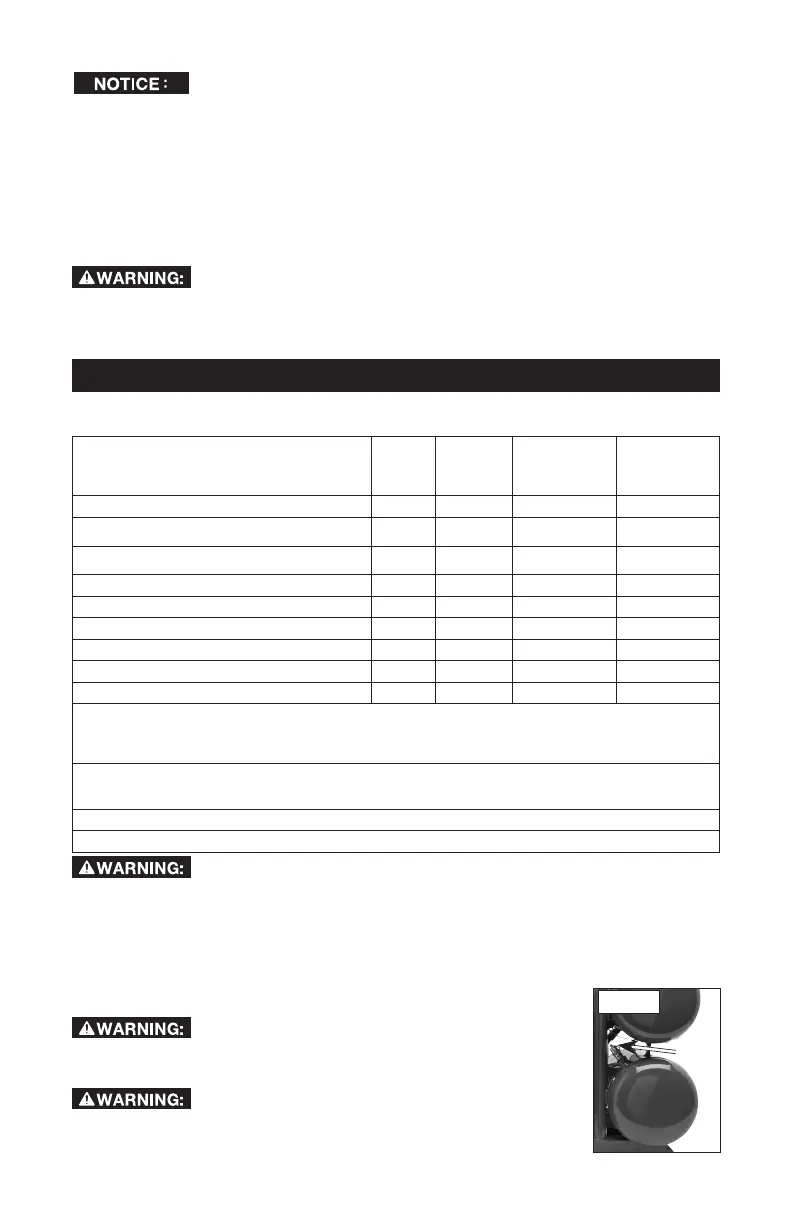
Procedure Daily Weekly 1 year or
200 Hours
See tank
warning
label
Check safety valve X
Drain air tank X
Check pump oil level X
Change pump oil X (2, 3)
Oil leak inspection X
Check for unusual noise/vibration X
Check for air leaks X (1)
Clean compressor exterior X
Remove tank from service X (4)
(1)To check for air leaks apply a solution of soapy water around joints. While
compressor is pumping to pressure and after pressure cuts out, look for air
bubbles to form.
(2) The pump oil must be changed after the first 20 hours of operation. Thereafter,
change oil every 200 hours of operation or once a year, whichever comes first.
(3) Perform more frequent in dusty or humid conditions
(4) For more information,
call our Customer Care Center at 1-888-848-5175
Risk of unsafe operation. Unit cycles automatically when
powerison.Whenperformingmaintenance,youmaybeexposedtovoltage
sources,compressedair,ormovingparts.Personalinjuriescanoccur.Before
performing any maintenance or repair, disconnect power source from the
compressorandbleedoffallairpressure.
NOTE: See Operation section for the location of controls.
TO CHECK SAFETY VALVE (FIG. 5)
RiskofBursting.Ifthesafetyvalvedoesnot
F
FIG. 5
work properly, over-pressurization may occur, causing air
tankruptureoranexplosion.
Risk from Flying Objects. Always wear
certifiedsafetyequipment:ANSIZ87.1eyeprotection(CAN/
CSA Z94.3) with side shields.



 To Next Page