EasyManua.ls Logo

Porter-Cable PCFP02040 - User Manual

Porter-Cable PCFP02040
68 pages
Print Icon
To Next Page IconTo Next Page
Loading...
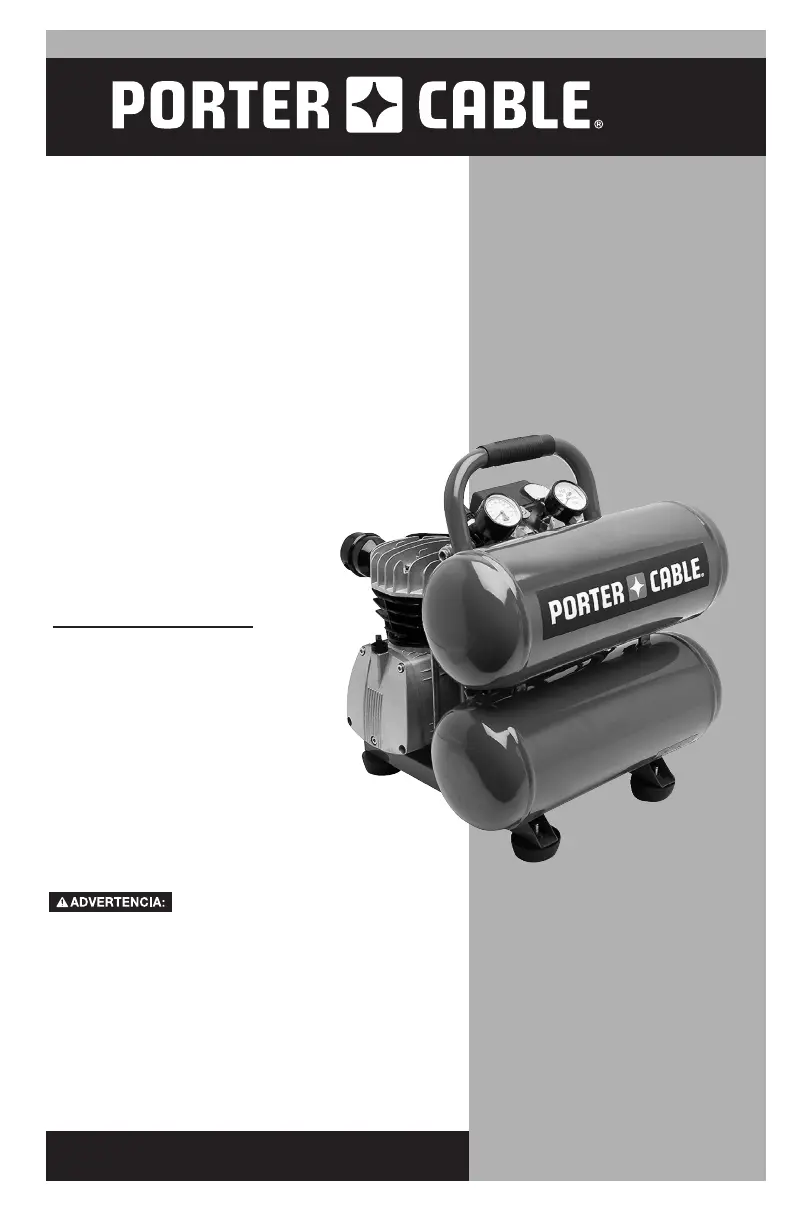
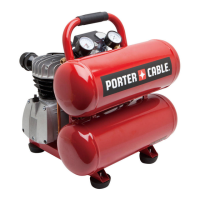
ELECTRIC 4 GALLON HAND
CARRY AIR COMPRESSOR
COMPRESSEURS D’AIR
PORTATIFS ÉLECTRIQUES
DE 4 GALLONS
COMPRESOR DE AIRE PORTÁTIL
ELÈCTRICO DE 4 GALONES
www.portercable.com
Français : Page 21
Español: Página 43
INSTRUCTIVO DE OPERACIÓN, CENTROS
DE SERVICIO Y PÓLIZA DE GARANTÍA.
LÉASE ESTE INSTRUCTIVO
ANTES DE USAR EL PRODUCTO.
PCFP02040
Part No. N298182 AUG13
Copyright © 2013 PORTER-CABLE
Instruction manual
Manuel d'instructions
Manual de'instrucciones

Questions and Answers

  • L
    lfarmerAug 15, 2025
    Why is my Porter-Cable Air Compressor not supplying enough air?
    • K
      Kylie ScottAug 15, 2025
      If your Porter-Cable Air Compressor isn't supplying enough air, it could be due to several reasons. You might be using too much air for too long, so try to decrease your air usage. The compressor itself might not be large enough for your needs, so check the accessory's air requirements and consider a larger compressor if needed. Also, inspect the hose for any holes and replace it if necessary. Other potential issues include restricted airflow due to a restricted check valve or air intake filter (replace the filter and do not operate without it), air leaks (tighten the fittings).
  • K
    Kylie FlemingAug 18, 2025
    How to fix excessive tank pressure on Porter-Cable PCFP02040?
    • D
      Dawn PottsAug 18, 2025
      If the safety valve on your Porter-Cable Air Compressor is popping off due to excessive tank pressure, it could be because the pressure switch isn't shutting off the motor when the compressor reaches its cut-out pressure. Try moving the Auto/Off lever to the "Off" position. If it still doesn't shut off, have it checked by a trained service technician. It's also possible that the pressure switch "cut-out" is set too high, which also requires a technician to check.
  • M
    mark62Aug 21, 2025
    What to do if my Porter-Cable PCFP02040 Air Compressor motor will not run?
    • D
      dlucasAug 21, 2025
      If your Porter-Cable Air Compressor motor won't run, start by checking the fuse box for blown fuses and replace them if needed. Also, reset the circuit breaker, ensuring you don't use one with a higher rating than specified. Inspect the extension cord and check the wiring connections under the pressure switch cover. Other potential issues could be a defective motor, starting capacitor, a tripped motor overload protection switch. In such cases, it's best to have it checked by a trained service technician. A stuck open check valve or paint spray on internal motor parts could also be the reason, and you will need a technician in both cases.
  • J
    Joseph HigginsAug 25, 2025
    How to fix air leaks at fittings on Porter-Cable PCFP02040?
    • M
      Michelle BakerAug 26, 2025
      If you notice air leaks at the fittings of your Porter-Cable Air Compressor, it's likely that the tube fittings aren't tight enough. Carefully tighten the fittings where you hear air escaping, and use a soapy water solution to check for leaks. Be cautious not to overtighten them.
  • Z
    zhuberAug 28, 2025
    What to do if Porter-Cable PCFP02040 Air Compressor has air leaks in air tank?
    • J
      Jennifer JonesAug 28, 2025
      If you find air leaks in the air tank or at the air tank welds of your Porter-Cable Air Compressor, it indicates a defective air tank. The air tank must be replaced. Do not attempt to repair the leak, as this poses a risk of bursting. Also, avoid drilling into, welding, or modifying the air tank, as this will weaken it and could cause it to rupture or explode.
  • H
    Heather RaymondAug 31, 2025
    Why is my Porter-Cable Air Compressor safety valve leaking air?
    • P
      petersjessicaSep 1, 2025
      If you notice an air leak from the safety valve on your Porter-Cable Air Compressor, it may be due to a possible defect in the safety valve. Try manually operating the safety valve by pulling on the ring. If the valve continues to leak, it should be replaced.
  • M
    Melissa ReyesSep 4, 2025
    Why is my Porter-Cable PCFP02040 making a knocking noise?
    • H
      Heather MartinezSep 4, 2025
      If you hear a knocking noise coming from your Porter-Cable Air Compressor, it could be due to a defect in the safety valve. Try manually operating the safety valve by pulling on the ring; if it continues to leak, the valve should be replaced. Other potential causes include a defective check valve or carbon build-up in the pump, both of which require a trained service technician to inspect.
  • H
    howardkeithSep 7, 2025
    Why does my Porter-Cable PCFP02040 Air Compressor make a squealing sound?
    • J
      James DavisSep 7, 2025
      If you hear a squealing sound from your Porter-Cable Air Compressor, it could be due to a lack of oil in the compressor pump. Refer to the Pump Oil-Checking paragraph in the Maintenance section. Another possible cause is a blocked air vent on the dipstick; try cleaning the air vent or replacing the dipstick.
  • B
    Bradley LeeSep 12, 2025
    What to do if pressure drops when using accessories with Porter-Cable PCFP02040 Air Compressor?
    • W
      Whitney MendezSep 12, 2025
      It's normal for some pressure drop to occur on your Porter-Cable Air Compressor. However, if there's an excessive amount of pressure drop when an accessory is used, adjust the regulator following the instructions in the Description of Operation paragraph in the Operation Section. Remember to adjust the regulated pressure under flow conditions (while the accessory is being used).

Summary

Safety Information

Safety Guidelines - Definitions

Defines safety terms and symbols used in the manual.

Important Safety Instructions

Key safety instructions to follow for safe operation.

Hazards

Risk of Explosion or Fire

Details fire and explosion risks and prevention methods.

Risk to Breathing (Asphyxiation)

Addresses hazards from breathing contaminated air and chemical exposure.

Risk of Bursting

Covers air tank integrity, potential rupture, and maintenance.

Risk of Electrical Shock

Explains electrical hazards, grounding, and safe usage practices.

Risk from Flying Objects

Warns about hazards from compressed air stream and projectiles.

Risk of Hot Surfaces

Alerts users to burn risks from hot compressor components.

Risk from Moving Parts

Highlights dangers associated with moving parts like pulleys and belts.

Risk of Unsafe Operation

General safety guidelines for operating the compressor safely.

Risk of Falling

Addresses the danger of the portable compressor falling from elevated positions.

Risk from Noise

Discusses potential hearing loss due to operational noise.

Risk of Injury from Lifting

Warns about the dangers of lifting the heavy compressor.

Risk of Serious Injury or Property Damage When Transporting Compressor

Provides precautions for safely transporting the compressor.

Specifications

Glossary

Duty Cycle

Assembly

Unpacking

Instructions for removing the unit from its packaging.

Check Pump Oil

Guide for checking the pump oil level before operation.

Installation

How to Set Up Your Unit

Steps and considerations for placing and setting up the air compressor.

Location of the Air Compressor

Guidance on selecting an appropriate location for the compressor.

Noise Considerations

Advice on managing compressor noise levels.

Electrical

Refers to safety instructions for electrical connections.

Transporting

Instructions for safely transporting the compressor.

Moving

Guidance on how to safely move the compressor.

Grounding Instructions

Extension Cords

Voltage and Circuit Protection

Operation

Know Your Air Compressor

Encourages users to read the manual and familiarize themselves with the unit.

Description of Operation

Explains the function of various controls and gauges on the compressor.

How to Use Your Unit

How to Stop

Steps to safely stop the air compressor.

Before Starting

Safety precautions to take before operating the unit.

Initial Set-Up (Break-In Procedure)

Before Each Start-Up

How to Start

Maintenance

Customer Responsibilities

Table outlining daily, weekly, and annual maintenance tasks.

To Check Safety Valve

Procedure for checking the proper function of the safety valve.

To Drain Tank

Pump Oil

Checking

Steps for checking the pump oil level.

Changing

Procedure for changing the pump oil.

Storage

Service

Replacement Parts

Information on obtaining replacement parts for the compressor.

Service and Repairs

Details on service centers and repair policies.

Accessories

Troubleshooting

Excessive tank pressure - safety valve pops off.

Addresses issues with excessive tank pressure and safety valve activation.

Air leaks at fittings.

Guides on identifying and fixing air leaks at various fittings.

Air leaks in air tank or at air tank welds.

Addresses air leaks within the air tank itself.

Air leaks between head and valve plate.

Covers leaks occurring between the compressor head and valve plate.

Air leak from safety valve.

Troubleshoots leaks originating from the safety valve.

Compressor is not supplying enough air to operate accessories.

Addresses insufficient air supply for accessories.

Regulator knob has continuous air leak.

Troubleshoots continuous air leaks from the regulator knob.

Regulator will not shut off air outlet.

Addresses issues with the regulator failing to shut off the air outlet.

Motor will not run.

Guides on diagnosing and fixing issues where the motor fails to start.

Knocking Noise.

Addresses unusual knocking sounds from the compressor.

Squealing sound.

Troubleshoots squealing noises from the compressor.

Air vent on dipstick is blocked.

Guides on clearing blockages in the dipstick air vent.

Full One Year Warranty

Porter-Cable PCFP02040 Specifications

General IconGeneral
BrandPorter-Cable
ModelPCFP02040
CategoryAir Compressor
LanguageEnglish

Related product manuals