EasyManua.ls Logo

Printronix T4M - User Manual

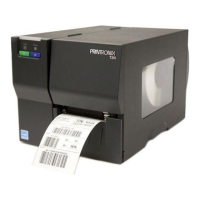
Printronix T4M
308 pages
Print Icon
To Next Page IconTo Next Page
Loading...
Users Manual
SL4M™ and T4M™
RFID Smart Label and Thermal Printers

Table of Contents

Questions and Answers

Summary

Introduction

The SL4 M;T4 M Thermal Printer

Introduces the SL4M/T4M series of printers and their capabilities.

Standard Features

Lists the key features of the SL4M/T4M printers.

Optional Features

Details additional features available for the printers, such as memory cartridges and font options.

Thermal Printer Technology

Explains the inline thermal printhead technology used by the printers.

The Printing Process

Describes the two modes of thermal printing: Direct Thermal and Thermal Transfer.

Manual Conventions

Explains the conventions used in the manual for keys, messages, and key combinations.

Warnings and Special Information

Details important safety and operational warnings.

Related Documents

Lists other available documentation for the printer and its features.

Thermal Consumables

Covers media and ribbon requirements for thermal printing.

Media Selection

Discusses the two types of thermal media: direct thermal and thermal transfer.

Ribbons

Explains the importance of using genuine Printronix thermal ribbons.

Operation

Unpacking the Printer

Provides instructions on how to safely unpack the printer from its shipping container.

Installation

Guides through the process of installing the printer, including placement and power connection.

Power Cord Requirements

Details the safety and electrical requirements for the printer's power cord.

Setting Up the Printer

Provides procedures for loading ribbon and media, and general setup precautions.

Loading Ribbon

Step-by-step instructions for loading the ribbon into the printer.

Loading Roll Media

Guides on how to load roll media into the printer for printing.

Loading Fanfold Media

Provides instructions for loading fanfold media into the printer.

Operating Modes

Explains the different operating modes of the printer: Online, Offline, Menu, and Fault.

Controls and Indicators

Identifies and describes the printer's control panel, indicators, and power switch.

Power Switch

Locates and explains the function of the printer's power switch.

Powering On the Printer

Describes the printer's self-test and initialization process upon powering on.

Control Panel

Details the components of the printer's control panel, including LCD, indicators, and buttons.

Liquid Crystal Display (LCD)

Describes the features and display capabilities of the printer's LCD screen.

Pause Key

Explains the function of the Pause key in toggling between printer modes.

Media Handling Modes

Outlines the different modes for handling media: Tear-Off, Continuous, Peel-Off, Cut, and Rewind.

Printhead Pressure Adjustment

Explains how to adjust printhead pressure for different media thicknesses.

Media Thickness Adjustment

Describes the adjustment dial and switch for media thickness.

Media Width Adjustment

Details how to adjust the printhead balance dial for media width.

Printhead Alignment

Explains when and how to align the printhead for optimal print quality.

Positioning the Media Sensors

Guides on how to position media sensors to detect media features correctly.

Sensing Media with Horizontal Black Marks or Inboard Notches

Describes how to configure the printer for media with black marks or notches.

Sensing Media with No Label Length Indicators

Explains how to set up the printer for media without specific length indicators.

Sensing Media with Gapped Liner

Details the process for sensing media with a gapped liner.

Sensing Different Media Types

Explains how to select the correct sensor option for various media types.

Running Auto Calibrate

Provides steps to initiate and perform automatic media calibration.

Running Media Profile

Explains how to run a media profile printout for setting thresholds.

Running Manual Calibrate

Details the procedure for manual media calibration when Auto Calibrate fails.

Standard Interfaces

Overview

Introduces host interfaces and the Auto Switching feature for multiple data streams.

Auto Switching

Explains how the printer handles multiple data streams sequentially from different interfaces.

Parallel Interface

Describes the parallel interface options, including Centronics and IEEE 1284.

Centronics

Details the pin assignments for the Centronics interface connector.

IEEE 1284

Explains the IEEE 1284 interface and its operating modes: Compatibility, Nibble, and Byte.

Serial Interface

Covers the RS-232 serial interface and its characteristics.

RS-232

Details the pin assignments for the 9-pin RS-232 serial interface connector.

Configuring the Printer

Overview

Provides information on setting, saving, modifying, and printing printer configurations.

Setting Printer Configuration Parameters

Explains how configuration parameters are set via the control panel or retrieved from memory.

Moving within the Configuration Menu

Guides on navigating through the printer's configuration menus using navigation keys.

Selecting a Menu Option

Details how to select and confirm menu options, including the Enter key lock function.

Changing Printer Settings

Explains how to modify printer settings like print speed and emulations via the control panel.

Hidden Menus

Describes how to display hidden menus for advanced users by enabling Admin User.

Menu Overview

Provides a visual overview of the main configuration menus and their functions.

Main Menu

Details the main menu structure, including MEDIA SETUP, SENSOR SETUP, EMULATION, PRINTER SETUP, etc.

MEDIA SETUP Menu

Outlines the various options available within the MEDIA SETUP menu for printer configuration.

MEDIA SETUP Submenus

Details submenus within MEDIA SETUP like Print Intensity, Speed, Mode, and Handling.

Print Intensity

Specifies the level of thermal energy applied by the printhead for media and ribbon.

Print Speed

Sets the speed at which media passes through the printer during printing.

Print Mode

Specifies the type of printing: Transfer or Direct Thermal.

Media Handling

Defines how the printer handles media (labels or tag stock) during printing.

Adv Continuous

Allows selection of special media modes for Continuous Media Handling.

Tear Off Adjust

Adjusts the label stop position for Tear-Off, Peel-Off, or Cut media handling.

Label Length

Specifies the user-selected label length in inches or millimeters.

Label Width

Specifies the physical width of the image to be printed.

Ver Image Shift

Adjusts image shift vertically for precise label positioning.

Hor Image Shift

Adjusts image shift horizontally for precise label positioning.

Orientation

Selects the image orientation (Portrait or Landscape) for printing labels.

Auto Map Select

Specifies maximum print width for applications using IGP/Auto Label Mapping.

Auto Label Width

Sets single label width or maximum media width for print files.

Num Auto Labels

Specifies the number of labels to be printed vertically adjacent on the form.

Slew Speed Ctrl

Controls the speed at which media moves without printing.

Print Direction

Determines the basic print image orientation (Head First or Foot First).

Label Wait Time

Sets the time the printer waits after printing stops before advancing media.

Label Missing

Configures how the printer handles missing labels, with options for fault disable or enable.

Clip Page

Determines how the printer handles images too large for one page length.

Fault Reprint

Specifies how the printer handles data printing when an error occurs.

Ribbon Low

Enables a warning when ribbon supply is low, indicated by an attention indicator and LCD message.

Units

Selects the unit of measure for display: millimeters or inches.

Set Label Length

Selects whether Auto/Manual Calibrate Sensed Distance sets Label Length.

TOF Detect Fault

Allows selection of three different Top-of-Form detection faults.

Ticket Save Mode

Determines printer action for Continuous, Tear-Off, Tear-Off Strip, and Cut Media Handling Modes after power up.

TOF Adjust Mode

Disables or enables the TOF Adjust distance set using the TOF Adjust menu.

TOF Adjust

Sets the distance left blank after a label is removed in Tear-Off Strip mode.

SENSOR SETUP Menu

Details options for media sensing and calibration results.

SENSOR SETUP Submenus

Explains submenus for Gap/Mark Sensor and Auto-Calibrate.

Gap;Mark Sensor

Specifies sensor type for detecting Top-of-Form position on media with label length indicators.

Run Auto-Cal (Auto-Calibrate)

Sets media sensor sensitivity and reliability for detecting indicators and paper out.

Run Profile

Provides a graphical printout of Paper Out and Gap/Mark Threshold relationships.

Sensed Distance

Represents the distance sensed between label TOF to next label TOF.

Gap;Mark Thresh

Sets a value recognized as a gap or black mark when exceeded by media sensor output.

Paper Out Thresh

Selects a value recognized as a paper out condition when exceeded by media sensor output.

Run Manual Cal

Improves media sensing when Auto Calibrate fails or Gap/Mark Threshold values are ineffective.

Pwr Up Action

Determines the printer's action upon power-up, such as Auto-Cal or Seek TOF.

Head Auto-Cal

Selects whether the printer calibrates media after a Printhead Open fault.

Online Auto-Cal

Automatically performs Run Auto-Cal when the printer is brought online.

Gap Windowing

Compensates for early falling edges or spurious peaks in gap length for reliable TOF detection.

Gap Length

Sets the actual length (height) of a label gap in .01 inch increments.

Cal in Peel Mode

Allows calibration (Run Auto-Cal or Pwr Up Auto-Cal) in Peel-Off Media Handling mode.

Min Calib Delta

Changes the minimum threshold value for sensors to detect differences between label and gap/notch/hole.

Use Label Length

Determines if the Label Length value set in MEDIA SETUP is used during Run Auto-Cal.

Threshold Range

Allows selection of optimal threshold range for label stock for gap/notch/mark detection.

Standard Interfaces

Overview

Introduces host interfaces and the Auto Switching feature for multiple data streams.

Auto Switching

Explains how the printer handles multiple data streams sequentially from different interfaces.

Parallel Interface

Describes the parallel interface options, including Centronics and IEEE 1284.

Centronics

Details the pin assignments for the Centronics interface connector.

IEEE 1284

Explains the IEEE 1284 interface and its operating modes: Compatibility, Nibble, and Byte.

Serial Interface

Covers the RS-232 serial interface and its characteristics.

RS-232

Details the pin assignments for the 9-pin RS-232 serial interface connector.

Configuring the Printer

Overview

Provides information on setting, saving, modifying, and printing printer configurations.

Setting Printer Configuration Parameters

Explains how configuration parameters are set via the control panel or retrieved from memory.

Moving within the Configuration Menu

Guides on navigating through the printer's configuration menus using navigation keys.

Selecting a Menu Option

Details how to select and confirm menu options, including the Enter key lock function.

Changing Printer Settings

Explains how to modify printer settings like print speed and emulations via the control panel.

Hidden Menus

Describes how to display hidden menus for advanced users by enabling Admin User.

Menu Overview

Provides a visual overview of the main configuration menus and their functions.

Main Menu

Details the main menu structure, including MEDIA SETUP, SENSOR SETUP, EMULATION, PRINTER SETUP, etc.

MEDIA SETUP Menu

Outlines the various options available within the MEDIA SETUP menu for printer configuration.

SENSOR SETUP Menu

Details options for media sensing and calibration results.

EMULATION MENU

Covers printer emulation options and their configuration.

Downloading Software

Loading Flash Memory

Explains the process of loading emulation and operating system software into flash memory.

Downloading Software with the Firmware Download Utility

Guides on using the FDU utility program for downloading software via parallel, serial, or ethernet ports.

Downloading Software through the Parallel Port

Provides step-by-step instructions for downloading software via the parallel port using a command prompt.

Downloading Software through the NIC

Details how to load software through the Network Interface Card (NIC) using an IP Address.

Downloading Software through the USB Port

Guides on downloading software to the printer via the USB port, requiring driver installation and remapping.

Downloading Software through the Printronix Windows Driver

Describes using the Printronix Windows Driver to download software to the printer via Properties.

Downloading Software If Flash Contains Only Boot or Corrupt Code

Explains how to download software via parallel port using a three-key initialization sequence for corrupted flash.

Using TrueType Fonts

Explains how to download and use TrueType fonts to customize forms and labels.

Downloading TrueType Fonts

Lists methods for downloading TrueType fonts: Windows Driver, PGL Emulation, Download Mode, PTX_SETUP, Labeling Applications.

PGL Emulation (Online)

Describes loading TrueType fonts using PGL FONTLOAD commands.

Download Mode

Explains how to download TrueType fonts by adding a header and placing the printer in Download mode.

Adding A Header

Details converting TrueType font files to downloadable format using cnvt2fls.exe.

Header For Main Flash

Provides steps to create a header for main flash download using command prompt.

Header For EMC Flash

Explains creating a header for EMC flash download using addttemc.bat.

Download TrueType Fonts via the Parallel or Serial Port

Guides on downloading TrueType fonts via parallel or serial port using command prompt.

PTX_SETUP

Explains using PTX_SETUP to load TrueType fonts into the file system.

Labeling Applications

Mentions downloading TrueType fonts via labeling applications like Codesoft, Loftware, Bartender.

Filename Extensions Not Shown in Menus

Lists file extensions considered system files and not shown in menus.

Select and Print Downloaded TrueType Fonts

Explains how to access downloaded fonts using PGL commands for ASCII and DBCS characters.

To Print Double Byte Characters (DBCS)

Details the conditions and steps for printing DBCS characters using ISET or SYMSET.

Routine Care and Troubleshooting

Cleaning

Provides guidelines for periodic cleaning of the printer to maintain print quality.

Interior Cleaning

Instructions for cleaning the interior of the printer using a vacuum or brush.

Cleaning the Printhead, Platen Roller, Media Sensors, and Media Damper

Details cleaning procedures for key printer components to ensure proper operation.

Printhead Cleaning

Explains how to clean the printhead to remove residue and maintain print quality.

Platen Roller Cleaning

Guides on cleaning the platen roller to remove dust and adhesive residue affecting print quality.

Media Sensor Cleaning

Describes cleaning media sensors to ensure reliable Top-of-Form and Paper Out sensing.

Media Damper Cleaning

Explains how to clean the media damper and width guides to ensure proper label guiding.

Cutter Option Cleaning

Details periodic cleaning of the cutter mechanism to remove dust and debris.

Printer Tests

Explains the automatic tests performed during printer power-up and manual test patterns.

Troubleshooting Common Situations

Addresses common printer problems and provides potential solutions.

Improving Processing Time

Discusses factors affecting processing time and throughput, and how to improve them.

Data Exchange

Suggests methods to isolate data loss or communication problems.

Handshaking

Explains hardware and software handshaking for data transfer status indication.

Controlling Print Quality

Identifies four key factors affecting print quality: heat, speed, pressure, and compatibility.

Determining Printhead Wear

Describes methods to diagnose vertical streaks indicating a worn printhead.

Replacing the Printhead

Provides step-by-step instructions for safely replacing the printer's printhead assembly.

Restore the Printer to Operation

Guides on restoring printer operation after maintenance, including cleaning and testing.

Diagnostics for E0 xx, Bad NVM, or ILL NVM Errors

Details how to invoke diagnostic options to capture failure information for analysis.

Solving Other Printer Problems

Lists common printer problems and their corresponding solutions for troubleshooting.

Printer Alarms

Explains the printer's built-in alarms for status and stock conditions, and error detection.

Fault Messages

Summarizes fault messages, categorizing them into operator-correctable and field service required.

Operator-Correctable Fault Messages

Provides corrective actions for faults that the operator can resolve.

Fault Messages Requiring Field Service Attention

Lists fault messages that require attention from an authorized service representative.

Table 15. Fault Messages

A table listing fault messages, their correctness by user, explanation, and solution.

Status Messages

Lists status messages displayed by the printer during operation.

Table 16. Status Messages

A table detailing status messages, their correctness by user, explanation, and solution.

Specifications

Print Method

Details the print resolution, speed, media width, and memory specifications for SL4M/T4M.

Media

Provides general information about supported media types, supply roll, and sensing.

Table 17. Media - General Information

Lists media types, descriptions, and typical applications.

Figure 5. Media Dimensions

Illustrates media dimensions for tag and label specifications with mark and gap sensing.

Table 18. Media Specifications

Details media specifications like label width, liner width, gap height, length, and thickness.

Media Thickness

Specifies the printer's supported media thickness range.

Media Capacity

Details the capacity for roll and fanfold media, and ribbon length.

Ribbon

Lists ribbon specifications including length, description, core, width, and optimum width.

Indicators and Switches

Identifies and describes indicator lights, switches, and keys on the control panel.

Table 19. Indicators and Switches

A table summarizing printer indicators, switches, and message display components.

Memory

Details standard Flash and DRAM memory capacities.

Optional Expanded Memory Cartridge

Describes the EMC as a user-installable cartridge for additional flash memory.

Media Cutter Option

Details the media cutter's typical life, warranty, environment, and specifications.

Host Interfaces

Lists the available host interfaces: Serial RS-232, Parallel, and USB.

Power

Details power source, grounding, and power consumption specifications.

Table 20. Power Source and Grounding

Specifies the printer's power source voltage and grounding requirements.

Table 21. Power Consumption

Lists power consumption in watts for different operating modes (Power Saver, Idle, Maximum).

Environmental

Details operating and storage temperature, humidity, ventilation, and dust conditions.

Physical

Lists printer dimensions and weights for various configurations.

Acoustic Noise

Specifies the noise level generated by the printer under typical operating conditions.

Printer Options

Hardware Options

Describes available hardware options to enhance printer capabilities and application flexibility.

Media Cutter

Details the media cutter mechanism for cutting tags and label liner.

Full Media Rewinder

Explains the full media rewinder for automatically rewinding printed labels into a roll.

Standard Peel with Liner Rewinder

Describes the peel-off mode where labels are dispensed one at a time, rewinding the liner.

Standard Peel

Provides the ability to peel labels while discarding the dispensed liner.

Expanded Memory Cartridge (EMC)

Describes the EMC as a user-installable cartridge for additional flash memory.

Asian TrueType Fonts

Optional cartridges for Asian fonts (Chinese, Korean, Japanese) for complex character printing.

Andalé TrueType Fonts

Optional TrueType fonts supporting multiple languages, including Chinese, Japanese, and Korean.

Quick Change Memory Cartridge (QCMC)

A cartridge for copying printer firmware and configuration settings between printers.

Real Time Clock

A clock chip with internal battery for tracking time, operating even when the printer is off.

RFID

Explains the RFID encoder for programming smart labels with embedded inlays.

Interface Options

Details options for connecting the printer to networks via NIC or Wireless NIC.

Network Interface Card (NIC)

Permits placing the printer on a LAN via Ethernet or Wireless NIC.

Ethernet 10;100 Base-T

Supports data transfer rates of 100 Mbps for the Ethernet NIC.

Wireless 802.11 b;g

Provides wireless connectivity without cables, using PrintNet Enterprise Suite software.

Software Options

Discusses software options including EMC, DBCS Fonts, and Andalé Fonts.

DBCS Character Sets and Fonts

Optional Asian Double Byte Character Set cartridges for complex character printing.

Andalé Fonts

Optional TrueType fonts supporting multiple languages, requiring EMC cartridge for use.

Quick Change Memory Cartridge (QCMC)

Explains QCMC's ability to duplicate printer firmware, configurations, and files.

Installing the QCMC

Provides instructions on how to safely install the QCMC into the printer.

Saving the Printer’s Configuration to the QCMC

Guides on saving the printer's firmware, configurations, and custom files to the QCMC.

Copying the QCMC “Snapshot” Image to a Second Printer

Details how to copy the QCMC snapshot image to another printer for identical configuration.

Updating the Printer Configuration to the QCMC

Explains how to delete existing QCMC files before saving a new image.

Loading New Firmware on the Printer

Describes how loading firmware erases NVRAM, similar to cloning or saving to QCMC.

Installing the EMC

Provides instructions on how to safely install the Expanded Memory Cartridge (EMC).

Using the Standard Peel without Liner Rewinder

Explains how to use the Standard Peel without Liner Rewinder option for label dispensing.

Configure The Printer Menu

Guides on setting Media Handling to Peel-Off and calibrating the printer.

Load Media

Provides steps for loading media into the printer for Standard Peel operation.

Using the Full Media Rewinder Option

Explains how the full media rewinder automatically rewinds printed labels into a roll.

Configure the Printer Menu

Guides on setting Media Handling to Rewind and calibrating the printer.

Load Media

Provides instructions for loading media into the printer when using the media rewinder.

Rewinder Full Sensor Setup

Details positioning and tightening the rewinder full sensor.

Remove Printed Media from the Rewinder

Guides on removing printed media from the rewinder and handling the media roll.

Using the Full Media Rewinder with 3 Inch Diameter Core Adapters

Explains using core adapters for rewinding labels onto a 3-inch diameter core.

Configure the Printer Menu

Guides on setting Media Handling to Rewind and calibrating the printer.

Install the Core Adapters and Media Take-Up Core

Provides instructions for installing inside and outside core adapters and the media take-up core.

Figure 16. Installing the Outside Core Adapter

Illustrates installing the outside core adapter onto the rewinder.

Figure 17. Installing the Media Take-Up Core

Illustrates sliding a 3-inch media take-up core onto the rewinder over core adapters.

Load Media

Provides instructions for loading media using the media rewind path.

Figure 21. Installing the End Plate

Illustrates installing the media retainer onto the rewinder.

Rewinder Full Sensor Setup

Details positioning and tightening the rewinder full sensor.

Using The Standard Peel With Liner Rewinder Option

Explains the Standard Peel with Liner Rewinder for dispensing labels and rewinding liner.

Configure The Printer Menu

Guides on setting Media Handling to Peel-Off and calibrating the printer.

Load Media

Provides instructions for loading media onto the Standard Peel with Liner Rewinder.

Figure 24. Standard Peel with Liner Rewinder Media Path

Illustrates the media path for the Standard Peel with Liner Rewinder.

Figure 26. The Rewinder In Peel-Off Mode

Shows the rewinder setup in Peel-Off Mode.

Removing Label Liner from the Rewinder

Guides on removing the liner from the rewinder and disposing of it.

Appendix B Supplies

Supplies

Emphasizes matching printer, ribbon, and media for optimal printing.

Genuine Printronix Thermal Transfer Ribbons

Lists genuine Printronix thermal transfer ribbons with brief descriptions.

Genuine Printronix Media

Details Printronix media types, sizes, and configurations for labeling needs.

Ribbon and Media Usage

Provides a table correlating media types, ribbons, features, and typical applications.

Appendix C ASCII Control Codes

ASCII Control Codes

Lists ASCII control codes with their character, decimal, and hexadecimal values.

PTX_SETUP Commands

Overview

Introduces PTX_SETUP commands for printer tasks like re-routing debug and downloading configurations.

The PTX_SETUP Commands

Explains concepts for using PTX_SETUP commands, including case sensitivity and format.

General Commands

Describes general PTX_SETUP commands that work across platforms, including format and examples.

Table 22. General PTX_SETUP Commands

Lists general PTX_SETUP commands, sub-commands, parameters, and descriptions.

Table 22. General PTX_SETUP Commands

Continues listing general PTX_SETUP commands related to CONFIG, MPI_SELECT, and PNE_PORT.

Table 22. General PTX_SETUP Commands

Continues listing general PTX_SETUP commands related to CONFIG PANEL, PNE_PORT_NUM, PXML_PORT_NUM, and LP MODE.

Table 22. General PTX_SETUP Commands

Lists FILE_IO (DISK_IO) commands for capturing, driving, properties, and deleting files.

Table 22. General PTX_SETUP Commands

Lists FILE_IO (DISK_IO) commands for RUNFILE, UPLOAD, MAXSIZE, MINSIZE, OPTIMIZE, and PTX_END.

Summary of the CONFIG Command

Summarizes UPLOAD and DOWNLOAD commands for managing printer configurations.

Operation of the FILE_IO Command

Explains how FILE_IO commands work, including file system interaction and RAM usage.

Thermal Commands

Table 23. Thermal PTX_SETUP Commands

Lists PTX_SETUP commands specific to thermal printers, including ENGINE and PRINTJOB.

Table 23. Thermal PTX_SETUP Commands

Continues listing thermal PTX_SETUP commands for ENGINE (MEDIA_HANDLING, MIRROR, MODE, WIDTH, ODV, RFID) and PRINTJOB.

Customer Support

Printronix Customer Support Center

Provides contact information and required details for contacting Printronix Customer Support.

Printronix Supplies Department

Offers contact information for ordering genuine Printronix supplies.

Corporate Offices

Lists Printronix corporate office addresses and contact details worldwide.

Glossary

Glossary

Defines technical terms and acronyms used throughout the manual.

Communication Notices

Notices

Provides legal notices, copyright information, and disclaimers for the document.

Communication Notices

Details FCC compliance, RF exposure, and co-location requirements for the device.

RF Exposure

States compliance with FCC and IC RF exposure requirements with minimum separation distance.

Co-location

Addresses compliance with FCC and IC requirements regarding co-location with other transmitters.

Canada

States compliance of the digital apparatus with Canadian ICES-003 and RSS 210 standards.

CE Notice (European Union)

Indicates compliance with EMC and Low Voltage Directives, listing technical standards.

Taiwan

Provides regulatory compliance information specific to Taiwan.

China

States altitude and non-tropical climate warnings for safe usage.

Software License Agreement

RFID

Specifies the intended use for the RFID non-specific short range device.

Wireless Ethernet

Specifies the intended use for the Wireless Ethernet LAN product.

Software License Agreement

Outlines the terms of the license agreement for the printer's operating software.

Object Code License

Grants a non-exclusive license to use the software in conjunction with the printer.

Source Code

Informs about the availability of eCos Software source code under the GNU General Public License.

No Warranty

Disclaims all warranties for the embedded software, stating it is provided "AS IS".

Conflicting Terms

States that the agreement provides no more rights than any express warranty from Printronix.

Limitation of Liability

Limits Printronix's liability for damages arising from the use or inability to use the software.

U.S. Government Users

Defines rights for U.S. Government users acquiring the covered software.

Miscellaneous

Covers governing law and the complete agreement terms.

eCos Software

Details the terms for redistributing and modifying eCos software under the GNU GPL.

OpenSSL License

Outlines the dual license conditions for the OpenSSL toolkit.

WPA Supplicant License

States the BSD license terms for the WPA Supplicant program.

Limited Software Product Warranty

Warrants the Software's performance for ninety days but disclaims warranties for bugs or errors.

Termination of License Agreement

Explains conditions under which the license agreement may be terminated.

U.S. Government Restricted Rights

Details restrictions on use, duplication, or disclosure for U.S. Government end users.

Acknowledgement of Terms and Conditions

User's acknowledgment and agreement to the terms and conditions of the license.

Printronix T4M Specifications

General IconGeneral
Print TechnologyThermal Transfer
Print Resolution203 dpi
Max Print Width4.09 inches
ConnectivitySerial
Print MethodThermal Transfer
Media Thickness0.0025 inches
Optional FeaturesCutter
Label Thickness Range0.0025 inches
Max. Print Speed4 ips
Media TypeLabels, Tags

Related product manuals