www.usaprocom.com
21200233-01B
NG
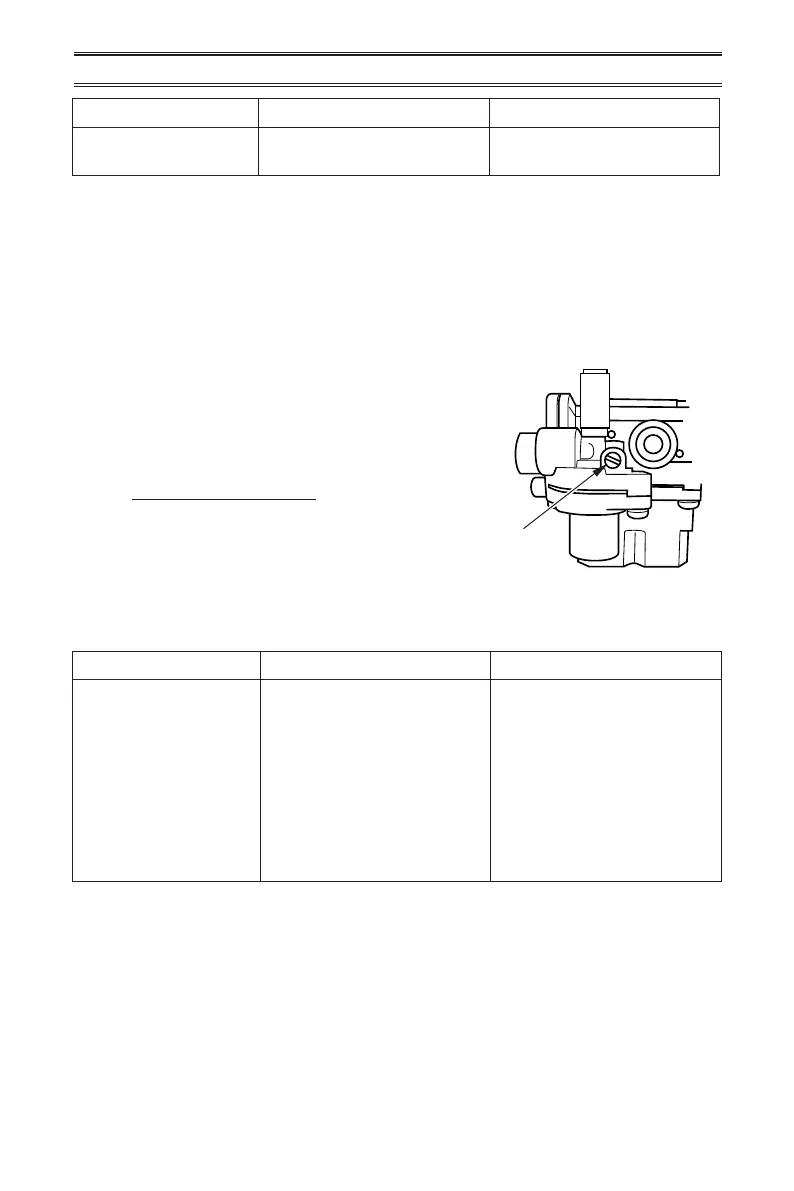
Figure 27 - Gas Regulator Pressure
Switch
Pressure Switch
Set Screw
Pressure Switch
When using natural gas (NG), there is a
pressure switch that acts to turn off the gas
ow to the pilot if the inlet pressure exceeds
9.5" WC. This is to prevent the operation of
the unit on the wrong gas (propane/LP). If
your natural gas supply exceeds 9.5" WC the
unit will not operate. Either contact your gas
supplier to check and adjust the inlet pressure
or a qualied service technician can bypass
the pressure switch.
Before attempting to bypass the pressure
switch, make sure the type of gas being used
is correct. Check to make sure the connection
tting is in the correct inlet on the regulator.
Refer to Connecting to Gas Supply, page 13.
Only a qualied installer should bypass the
pressure switch. To bypass the pressure
switch locate the set screw on the regulator.
Use a small at bladed screw driver to turn the
set screw counterclockwise 2 turns. This will
bypass the pressure switch function.
Problem Possible Cause Corrective Action
Using natural gas and
pilot will not light.
Inlet pressure exceeds
9.5" WC.
Bypass pressure switch. See
instructions below.
The entire gas delivery piping including con-
nections inside the heater should be leak
tested by the qualied installer. After leak
testing the qualied installer should light the
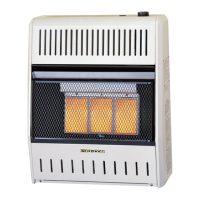
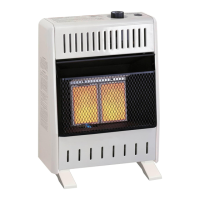
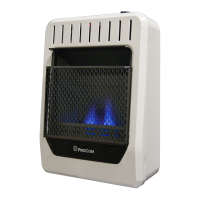
appliance. Refer to the correct ame pattern
as illustrated on page 23. All ame patterns
should be safely inside the product. If for any
reason they are not, stop use of the appliance
and call for repairs.
TROUBLESHOOTING
Problem Possible Cause Corrective Action
When ignitor button is
pressed in, there is no
spark at ODS/pilot
1. Ignitor electrode is posi-
tioned wrong. Ignitor elec-
trode is broken.
2. Ignitor electrode is not con-
nected to ignitor cable.
3. Ignitor cable is pinched or
wet.
4 Broken ignitor cable.
5. Bad piezo ignitor.
1. Replace electrode.
2. Replace ignitor cable
3. Free ignitor cable if pinched
by any metal or tubing. Keep
ignitor cable dry.
4. Replace ignitor cable.
5. Replace piezo ignitor.


 To Next Page