www.usaprocom.com
200233-01B6
PRODUCT IDENTIFICATION
UNPACKING
1. Remove heater from carton.
2. Remove all protective packaging applied
to heater for shipping
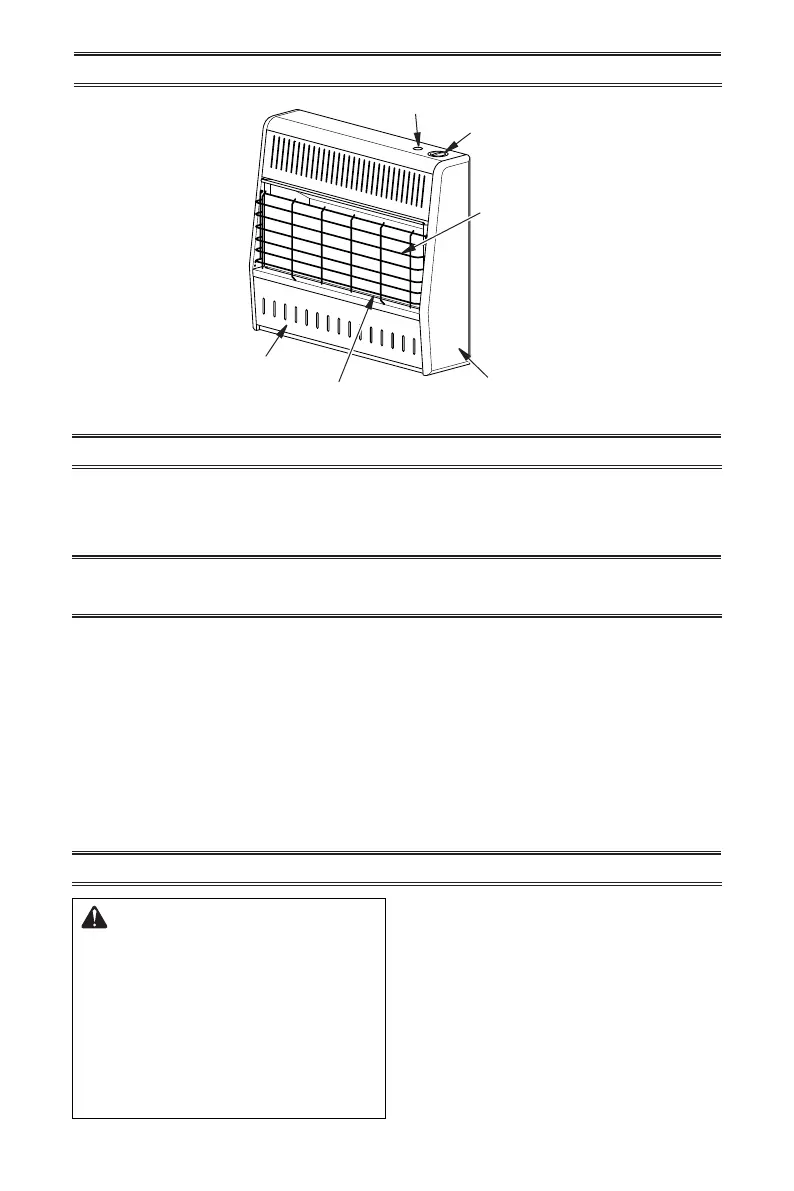
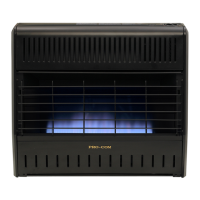
Figure 1 - Vent-Free Gas Heater
Control
Knob
Ignitor Button
Front
Panel
Grill
Burner
Heater
Cabinet
3. Check heater for any shipping damage. If
heater is damaged, promptly inform dealer
where you bought heater.
WATER VAPOR: A BY-PRODUCT OF
UNVENTED ROOM HEATERS
Water vapor is a by-product of gas combus-
tion. An unvented room heater produces ap-
proximately one (1) ounce (30 mL) of water for
every 1,000 BTUs (0.3 KWs) of gas input per
hour. Unvented room heaters are recommended
as supplemental heat (a room) rather than a
primary heat source (an entire house). In most
supplemental heat applications, the water vapor
does not create a problem. In most applications,
the water vapor enhances the low humidity
atmosphere experienced during cold weather.
The following steps will help ensure that water
vapor does not become a problem.
1. Be sure the heater is sized properly for the
application, including ample combustion
air and circulation air.
2. If high humidity is experienced, a dehu-
midier may be used to help lower the
water vapor content of the air.
3. Do not use an unvented room heater as
the primary heat source.
AIR FOR COMBUSTION AND VENTILATION
WARNING: This heater shall
not be installed in a conned space
or unusually tight construction
unless provisions are provided
for adequate combustion and
ventilation air. Read the following
instructions to insure proper fresh
air for this and other fuel-burning
appliances in your home.
Today’s homes are built more energy efcient
than ever. New materials, increased insulation
and new construction methods help reduce
heat loss in homes. Home owners weather
strip and caulk around windows and doors
to keep the cold air out and the warm air in.
During heating months, home owners want
their homes as airtight as possible.


 To Next Page