16 QD134-15
4. TYRE MANAGEMENT
The table below shows the suggested running pressures and pressures for race tyres:
o Please note that the starting pressures are to only be used as a guide; conditions on the day will alter
where you should start your pressures. Hot conditions will increase the pressure rise over the same
period of time.
o Fit valve caps when running.
o Temperature spreads must not exceed 15
o
C across the front and 10
o
C on the rear.
o Measure tyre temperature spreads, 3cm in from each edge of the tyres and in the centre, make sure
you are not measuring the temperature of any pickup on the tyre.
o Avoid kerbs on the out-lap when the tyres are cold.
4.1 TYRE WEAR PATTERNS
Decisions based on handling should always be preceded with thorough examination of tyre working surface.
Use the temperatures, pressures, data and driver feedback with the visuals of the tyre to get the best all round
view of car and tyre behaviour.
Measure the tyre temperatures and pressures as often as possible straight after a fast lap, get the driver to do
a full pace in-lap, in order to get the best readings.
4.2 TYRE CONDITIONS
When examining a tyre, always check both sides. The unloaded side can
drag the inner wheel, causing excessive negative camber and overheating
in the inner edge.
When measuring the temperature spreads start from the inner edge then
work to the outer edge.
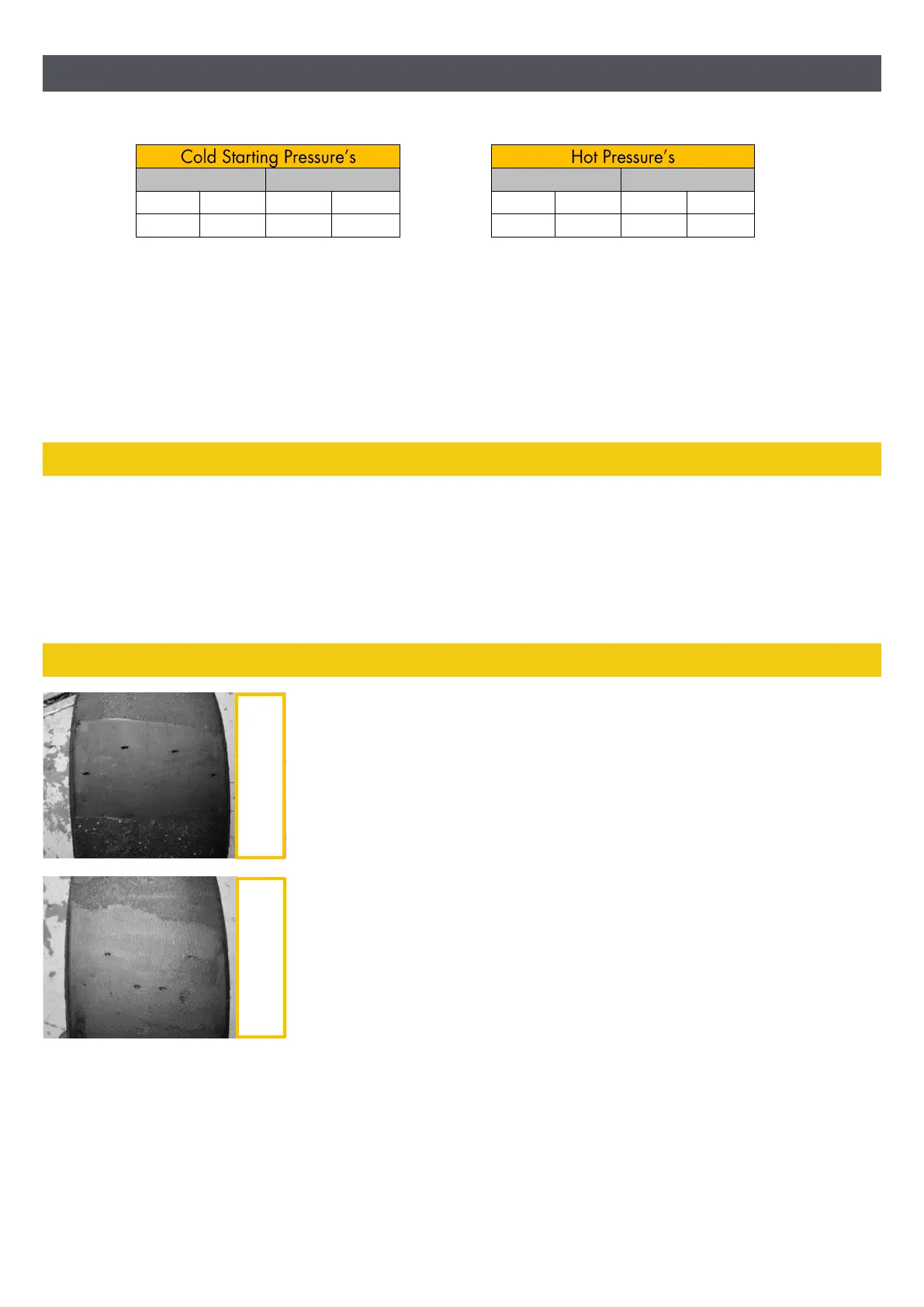
The picture in the top left is an example of a rear tyre in good condition,
more camber can be added if the rear is lacking grip.
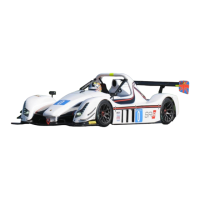
This is an example of a well-worn front tyre, judging by the wear indicators
and the level of graining it suggests the car has been suffering with under
steer. This could also be run with more camber.
If a tyre is graining on either side, this can be used to judge whether the
right level of camber is being used.


 To Next Page