Trailering
10-9
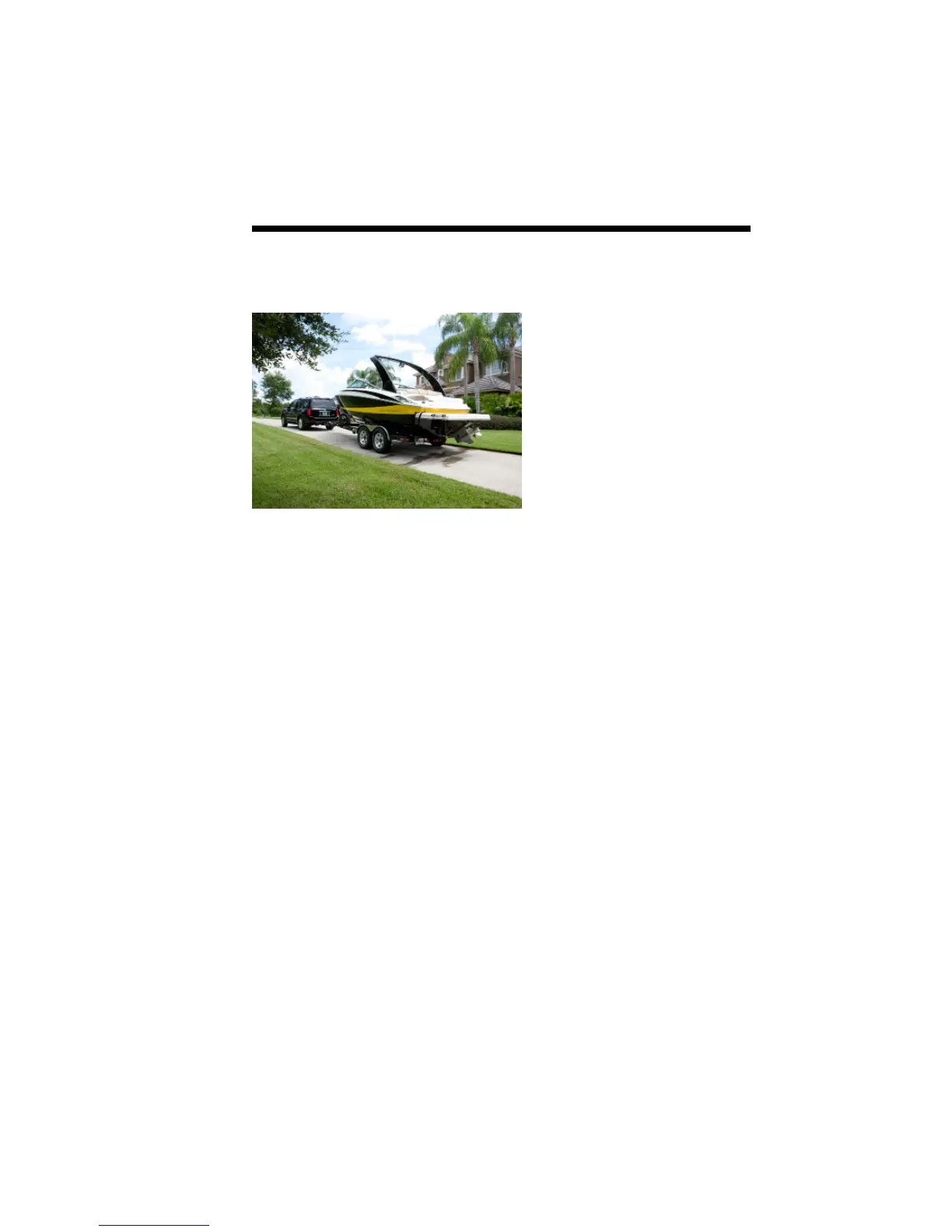
The most important thing
to remember when pulling
your boat out of the water
is that often the ramp will be
crowded. As you approach
the ramp, make a visual
inspection of the traffi c and
people, both at the ramp
and all around you. This is
an important time to use
caution, courtesy, and common sense. While you may feel it’s your
next turn, another boater may not be as courteous. Don’t insist on
your rightful place in line; it could lead to disastrous consequences in
the confi nes of a crowded boat ramp. If there is any perceived danger,
stand off until you can safely approach the ramp.
Back your trailer down to the water’s edge. At this point it is a good
idea to let a suffi cient amount of line out of the winch to reach the
bow eye. Make sure you disconnect the trailer harness to keep the bulbs
from blowing out due them being subjected to the cold water.
On roller or bunk style trailers back up until the aft roller is just at the
water level. This allows you to hook up the winch cable and to start
cranking the boat on to the trailer properly. This method gives you a
good starting point and helps keep the boat centered on the trailer as
it is reloaded. It may be necessary to further back the trailer into the
water. This permits cranking the boat easier on to the trailer.
Once the boat is positioned correctly on the trailer have someone hook
up the winch cable hook to the bow eye. Also, this will help keep the
boat bow against the trailer roller. Shut down the engine and run the
outboard drive(s) up to clear the ramp and any effects of trailer up and
down movement while on the highway.
With the bow snug against the roller, start to crank the boat up on to
the trailer. Make sure the hull bottom or keel stays in the center of each
roller as it is being cranked on the trailer. Double check to ensure the
hitch is locked tight on the vehicle ball.
LOADING


 To Next Page