22
Chapter 8
BATTERIES
Frequently check your battery terminals for corrosion
build-up. If you find a greenish, powdery substance,
remove the cable connections and clean both the terminals
and the connectors with a wire brush. When the cleaning
is finished reconnect the battery cables and coat the
terminals with with a
petroleum jelly to help
prevent any further
corrosion. Check the
electrolyte level at least
every 30 days, more
often in hot weather.
The level should be
maintained between the
top of the battery plates
and the bottom of the
fill cap opening. Add
distilled water (does not
contain minerals) as
needed after charging
the batteries or as
needed. Do not overfill
because sulfuric acid
could run over and
cause burns or an
explosion. Extremely
corroded batteries can
be cleaned with baking soda and rinsed with warm water.
Perform this procedure with the batteries removed from
the boat.
Batteries should be charged outside the boat. Do not smoke
or bring flames near a battery that is being or has recently
been charged. The hydrogen gas generated by battery
charging is highly explosive.
Set cranking batteries on a block of wood rather than
concrete since this procedure will aid the batteries to hold
their charge.
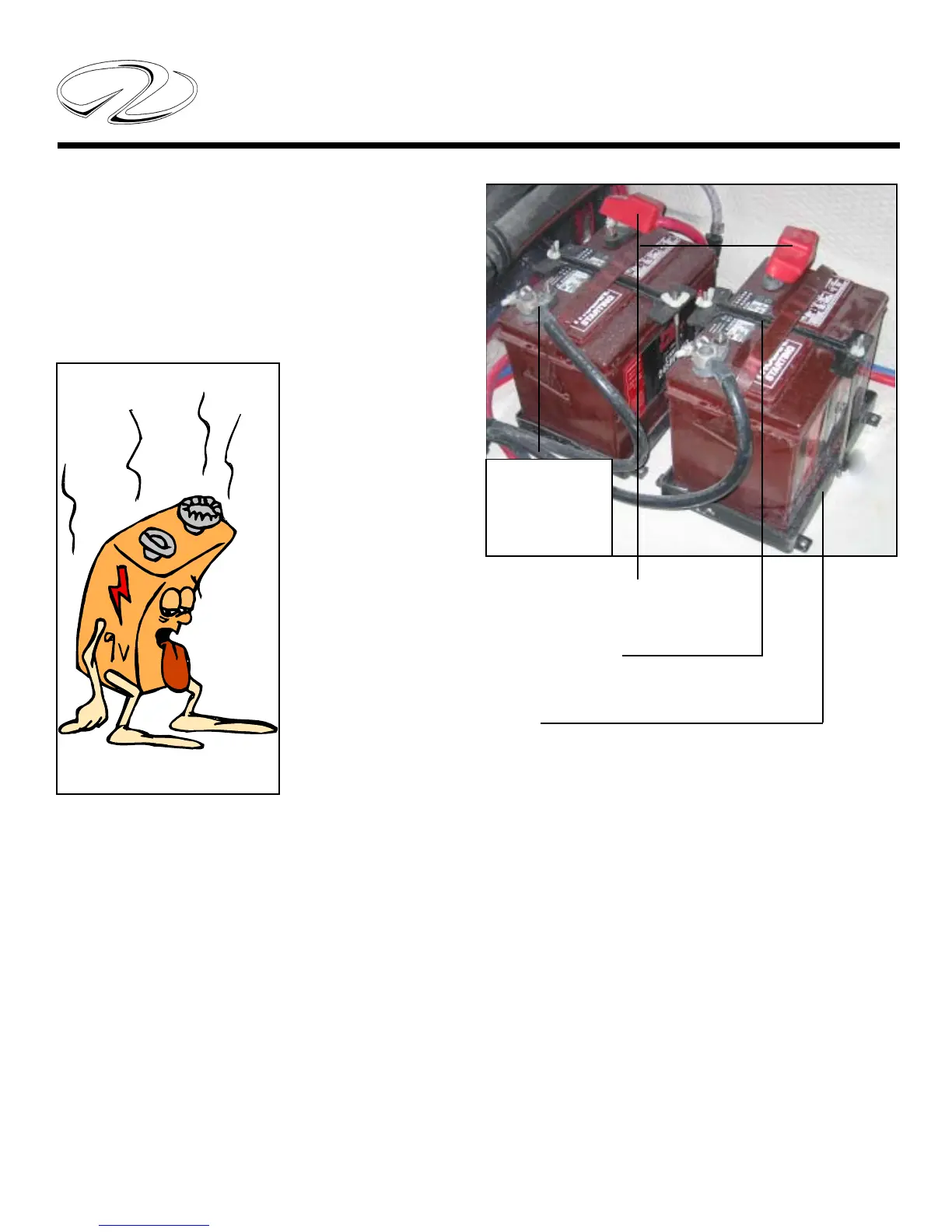
POSITIVE BATTERY
BOOTS
TIE-DOWN
HARDWARE
BATTERY
TRAY
NEGATIVE
BATTERY
POST
TERMINAL
Do not allow a metal object or loose wires to spark across
battery posts while working close to the battery. Contact
across the terminals will cause a short circuit and electrical
fires or personal injury may result.
Tighten all battery tie-down and battery tray fasteners
securely. Check their tightness by pulling on the
connectors. They should not move from their tightened
position. When the battery is yanked on it should not move
more than 1” in any direction. Be sure to reinstall the
positive boot over the battery terminal after tightening
the battery post connection. Monitor the charge with the
engine turned off (static condition).
The engine alternators recharge the batteries. A fully
charged battery will indicate between 12.3 and 12.6 volts
on the voltmeter. Readings below this could indicate a
dead battery cell or a charging system malfunction which
should be checked by a marine professional.



 To Next Page