EB 8310-1 EN 3-1
Design and principle of operation
3 Design and principle of operation
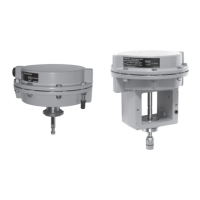
TheType3271-5andType3277-5Actua-
torshaveanactuatorareaof120cm².The
actuators mainly consist of two diaphragm
cases (A1, A2), a rolling diaphragm (A4)
andinternalsprings(A10).SeeFig.3-1and
Fig.3-2.Theactuatorsaremountedinpar-
ticularonSAMSONSeries240Valvesand
Type3510Micro-owValves.
The signal pressure p
st
creates the force F =
p
st
· A at the diaphragm surface A which is
opposed by the springs (A10) in the actua-
tor. The bench range is determined by the
number of springs used, taking into account
the rated travel. The travel is proportional to
the signal pressure p
st
. The direction of ac-
tion of the actuator stem (A7) depends on
how the springs are installed in the actuator.
Severalspringsmaybettedintooneanoth-
er.
The stem connector clamps (A26/27) of Se-
ries240Valvesconnecttheactuatorstem
(A7) with the plug stem of the valve. The ac-
tuator stem (A7) and plug stem (5) of the mi-
cro-owvalveareconnectedusingathread-
ed stem connection.
TheType3277-5Actuatoristtedwithan
additional yoke on the bottom diaphragm
case(seeFig.3-2).Itpermitsthedirectat-
tachment of a positioner and/or limit switch.
Thebenetofthisdesignisthatthetravel
pick-off located inside the yoke is protected
againstexternalinuences.
A4
S
A5.1
A5.2
A26/27
A8
A41
A42
A40
A16
A7
A2 A133
Fig.3-1: Type3271-5 Actuator with
120cm² actuator area


 To Next Page