EasyManua.ls Logo

Samson TROVIS 3730-1 - User Manual

Samson TROVIS 3730-1
108 pages
Print Icon
To Next Page IconTo Next Page
Loading...
Translation of original instructions
EB 8484-1 EN
Firmware version 3.00.04
Edition January 2019
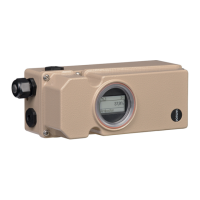
TROVIS3730-1 Electropneumatic Positioner

Table of Contents

Other manuals for Samson TROVIS 3730-1

Questions and Answers

  • H
    hsmithAug 18, 2025
    What to do if the actuator of my Samson Valve Positioner does not move?
    • M
      marywilliamsAug 18, 2025
      If the actuator of your Samson Valve Positioner doesn't move during initialization, start by verifying the air supply and ensuring it is adequate. Also, inspect the positioner mounting for any obstructions. Finally, check the milliamp (mA) input signal. After these checks, re-initialize the positioner.
  • T
    Thomas MillerAug 21, 2025
    How to fix zero error on Samson Valve Positioners?
    • J
      Jordan LinAug 21, 2025
      If your Samson Valve Positioner shows a zero error, it means the zero point has shifted more than 5% since initialization, possibly due to valve seat trim wear. Check the valve and positioner attachment, as well as the supply pressure. If the mounting is correct, recalibrate the zero point using Code P23 (see the 'Start-up and configuration' section), and clear the error code (see section 9.1.1).
  • A
    Aaron PowersAug 23, 2025
    What to do if travel is not achieved during initialization of Samson Valve Positioners?
    • Z
      zgrahamAug 23, 2025
      If your Samson Valve Positioner's travel isn't achieved during initialization, it could be due to low supply pressure, actuator leaks, incorrect travel settings, or an activated pressure limit function. Check the supply air, positioner mounting, lever, pin position, and settings. Then, re-initialize the positioner.
  • L
    Laura MccarthyAug 26, 2025
    Why is the transit time too short during initialization of my Samson Valve Positioner?
    • H
      hammondgraceAug 26, 2025
      If the transit time is too short during the initialization of your Samson Valve Positioner, it means the actuator transit times detected are too short, making optimal tuning impossible. Inspect the piping and re-initialize the positioner. If needed, use a screw restriction or reduce the gain K.
  • S
    Stephanie CainAug 27, 2025
    What to do if displayed and INIT values are not identical on Samson Valve Positioners?
    • B
      Bruce TaylorAug 28, 2025
      If the displayed and INIT values on your Samson Valve Positioner aren't identical, it's because the parameters (Code P3, P4, or P5) were changed after initialization. To resolve this, either reset the parameters or re-initialize the positioner.
  • S
    Samuel TaylorAug 30, 2025
    Why is standstill detection not possible during initialization of Samson Valve Positioners?
    • Z
      Zachary VelazquezAug 30, 2025
      If standstill detection is not possible during the initialization of your Samson Valve Positioner, it may be due to variations in supply pressure or incorrect mounting. Check the supply air and positioner mounting. Then, re-initialize the positioner.
  • C
    Carol NortonSep 1, 2025
    Why does the actuator move in the wrong direction on my Samson Valve Positioner?
    • H
      hodgemichaelSep 1, 2025
      If your Samson Valve Positioner's actuator moves in the wrong direction, check the direction of action (Code P8), the characteristic setting, the piping, and the configuration of the mounting parts.
  • M
    michaelbrockSep 3, 2025
    How to fix K setting P initialization error on Samson Valve Positioners?
    • M
      Michelle ReyesSep 3, 2025
      If the gain setting P is causing an initialization error on your Samson Valve Positioner, it means the gain is too high. Limit the gain K (Code P9), re-initialize the P positioner, and possibly use a screw restriction.
  • L
    lance72Sep 6, 2025
    What causes the travel signal to be at the lower or upper limit on Samson Valve Positioners?
    • R
      Ruth MartinSep 6, 2025
      If the travel signal is at the lower or upper limit on your Samson Valve Positioner, it could be due to the wrong pin position, lever, or attachment direction when using NAMUR attachment. Reset the error code (see section 9.1.1), check the positioner mounting, and re-initialize the positioner.
  • R
    Robert DelgadoSep 8, 2025
    Why does the actuator move too slowly on my Samson Valve Positioner?
    • P
      parksrussellSep 8, 2025
      If your Samson Valve Positioner's actuator moves too slowly, examine the supply pressure, the cross-section of the piping and screw fittings, and the configuration of the mounting parts.

Summary

Safety Instructions and Measures

Intended use

Defines the primary application and operational constraints of the positioner.

Qualifications of operating personnel

Specifies the necessary training and expertise for personnel handling the device.

Warning against residual hazards

Advises on potential hazards from process medium, pressure, or moving parts.

Servicing explosion-protected devices

Guidelines for maintenance and inspection of explosion-protected versions.

Notes on possible severe personal injury

Warns of fatal injury risks due to explosive atmospheres and installation errors.

Notes on possible personal injury

Warns of injury risk from moving valve parts during initialization or operation.

Design and principle of operation

3.2 Configuration using the TROVIS-VIEW software

Explains how to use the software for device configuration and parameter monitoring.

3.7 Technical data

Lists specifications for travel, set point, supply air, and performance.

Measures for preparation

Mounting and start-up

5.1 Mounting position

Specifies correct placement of the positioner on the valve to avoid damage.

5.2 Lever and pin position

Explains how to set the lever and pin for actuator adaptation and travel adjustment.

5.3 Direct attachment

Details the process for direct mounting to specific actuator types.

5.3.1 Type 3277-5 Actuator

Provides specific instructions for direct attachment to the Type 3277-5 actuator.

5.3.2 Type 3277 Actuator

Offers specific instructions for direct mounting to the Type 3277 actuator.

5.4 Attachment according to IEC 60534-6

Outlines the procedure for mounting via NAMUR rib or rod-type yokes.

5.5 Attachment according to VDI;VDE 3847-1

Describes attachment methods for quick replacement while the process is running.

5.6 Attachment according to VDI;VDE 3847-2

Explains mounting for specific rotary actuators with NAMUR interface.

5.6.1 Version for single-acting actuator

Details the mounting process for single-acting actuators using specific adapter kits.

5.6.2 Version for double-acting actuator

Provides mounting instructions for double-acting actuators, including reversing amplifiers.

5.7 Attachment to Type 3510 Micro-flow Valve

Details the process for attaching the positioner to a Micro-flow Valve using a bracket.

5.8 Attachment to rotary actuators

Describes mounting the positioner to rotary actuators using brackets.

5.8.1 Heavy-duty version

Specifies mounting procedures for the heavy-duty version of rotary actuator attachments.

5.13 Connecting the supply air

Outlines the sequence for connecting supply air and other utilities.

5.14 Electrical connections

Covers safety precautions and general guidelines for electrical connections.

Optional additional functions

Operation

Operating the positioner

8.3 Entering the fail-safe position

Guides on defining the valve's fail-safe state based on type and action.

8.4 Initialization

Describes the process of adapting the positioner to actuator friction and signal pressure.

8.5.6 Performing zero calibration

Provides instructions for recalibrating the zero point to correct valve closing inconsistencies.

Maintenance

Malfunctions

10.2 Error codes

Lists error codes, their descriptions, and classification based on operational impact.

Decommissioning and removal

Samson TROVIS 3730-1 Specifications

General IconGeneral
TypeElectropneumatic positioner
Input signal4 to 20 mA
Output signalPneumatic
Protection classIP 66
CommunicationHART
Signal range4 to 20 mA
Ambient temperature range-40 to +80 °C (-40 to +176 °F)
Enclosure ratingIP 66
Housing materialAluminum

Related product manuals