Draft Requirements:
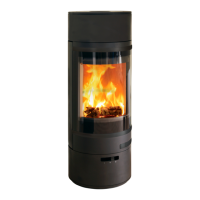
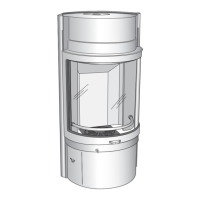
The DSA 5 is only one component of the total system. The venting system is equally important for
achieving the required flow of combustion air to the firebox and for safely removing unwanted
combustion by products from the stove. If the venting system’s design does not promote these ends,
the system may not function properly. Poorly functioning venting systems may create performance
problems as well as be a safety hazard (i.e. an oversized chimney may result in less than optimum
performance. A draft test should read greater than .05" W.C. (Inches Water Column) and less than
.08" W.C.
The chimney draught depends on the weather conditions. In stormy weather, you may reduce the
chimney draught by closing the damper in the smoke pipe (if a damper has been installed).
Chimney Installation:
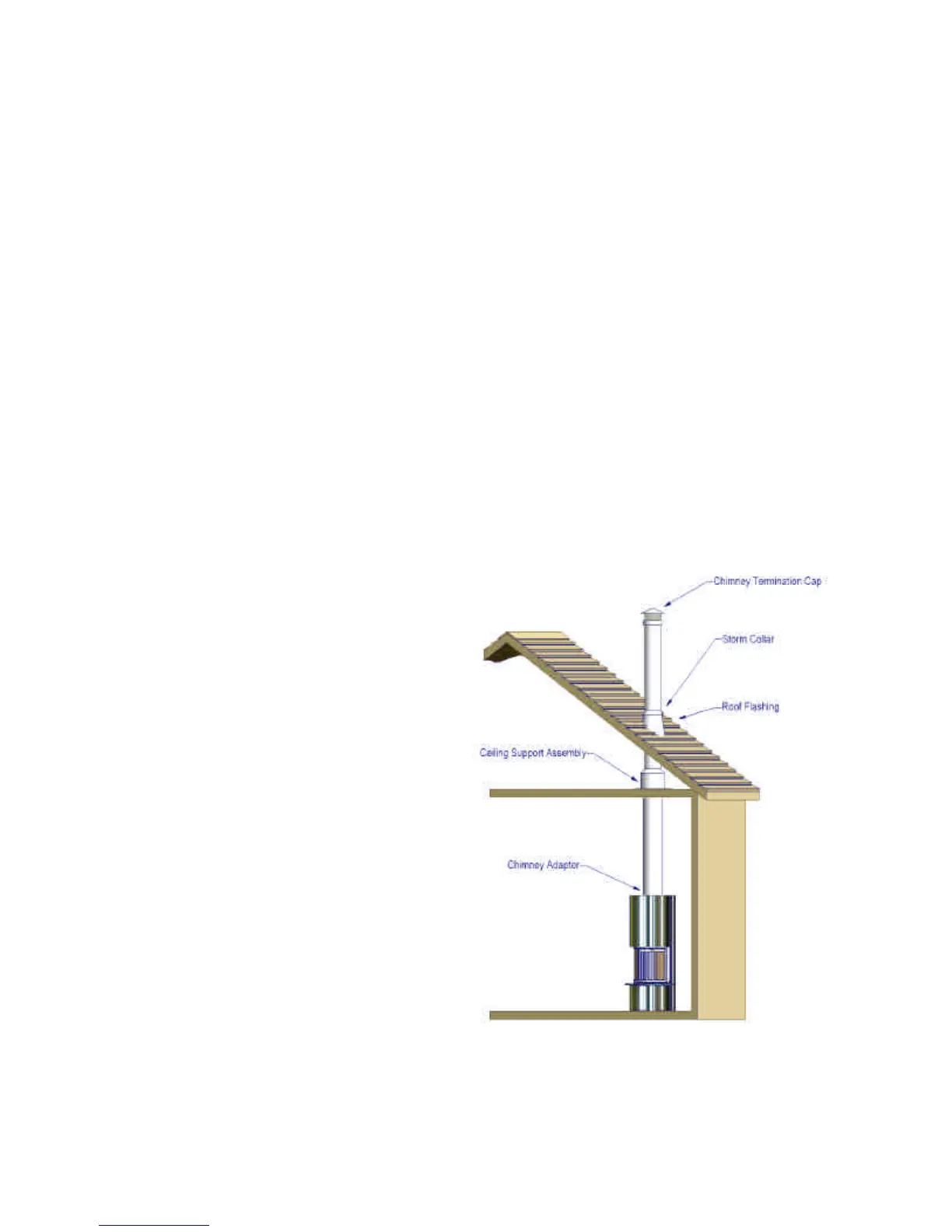
For USA the stove is listed for installation as a vertically top vented stove using a listed 6" class A
(UL103HT) factory built chimney exiting through the ceiling/attic/roof.
For Canada the stove is listed for installation as a vertically top vented stove using a listed 6"
(CAN/ULC-S629) factory built chimney exiting through the ceiling/attic/roof. The installation shall
conform to CAN/CSA B365.
For connection of the stove to the chimney / Connector pipe use the enclosed adapter, follow the
chimney manufacturer’s instruction for installation of chimney, connector pipe and chimney adapter.
For other vent configuration than descript here follow local codes or NFPA 211 or CAN/CSA-B365
guidelines and methods.
Do not connect this unit to a chimney flue
serving another appliance.
Required installation components:
• Chimney cap
• Insulated chimney
• Storm collar
• Roof flashing
• Ceiling support box or joist
shield/fire stop spacer
• Chimney connector


 To Next Page