Shure Incorporated
30/50
•
•
•
•
•
•
•
•
•
•
•
•
Reducing Interference
Perform a group or channel scan to find the best open frequency. Perform a sync to transfer the setting to the transmitter.
For multiple systems, check that all systems are set to channels in the same group (systems in different bands do not
need to be set to the same group).
Maintain a line of sight between transmitter and receiver antennas.
Move receiver antennas away from metal objects or other sources of RF interference (such as CD players, computers,
digital effects, network switches, network cables and Personal Stereo Monitor (PSM) wireless systems).
Eliminate RF overload (see below).
Increasing Range
If the transmitter is more than 6 to 60 m (20 to 200 ft) from the receiver antenna, you may be able to increase range by doing
one of the following:
Reduce interference (see above).
Increase transmitter RF power level.
Use an active directional antenna, antenna distribution system, or other antenna accessory to increase RF range.
Eliminating RF Overload
If you see the red RF LED on a receiver, try the following:
Reduce the transmitter RF power level
Move the transmitter further away from the receiver—at least 6 m (20 ft)
If you are using active antennas, reduce antenna or amplifier gain.
Use omnidirectional antennas
Contact Customer Support
Didn't find what you need? Contact our customer support to get help.
Accessories
Furnished Accessories
All Systems
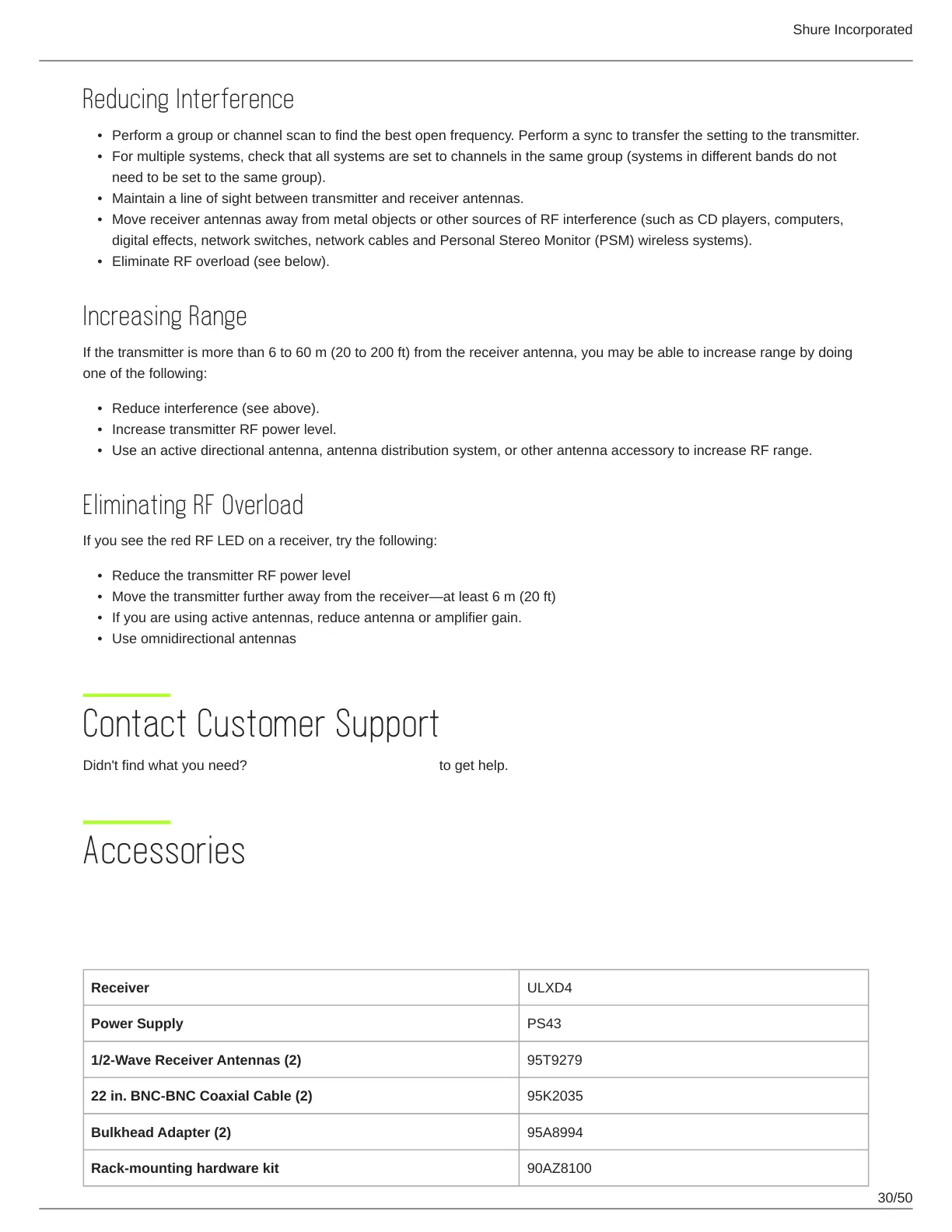
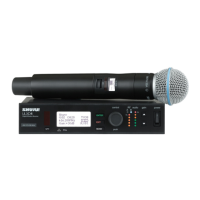
Receiver ULXD4
Power Supply PS43
1/2-Wave Receiver Antennas (2) 95T9279
22 in. BNC-BNC Coaxial Cable (2) 95K2035
Bulkhead Adapter (2) 95A8994
Rack-mounting hardware kit 90AZ8100



 To Next Page