Chapter 7 – Prestart Inspection
28 A46JRT – 0260996
Coolant
The engine is liquid cooled.
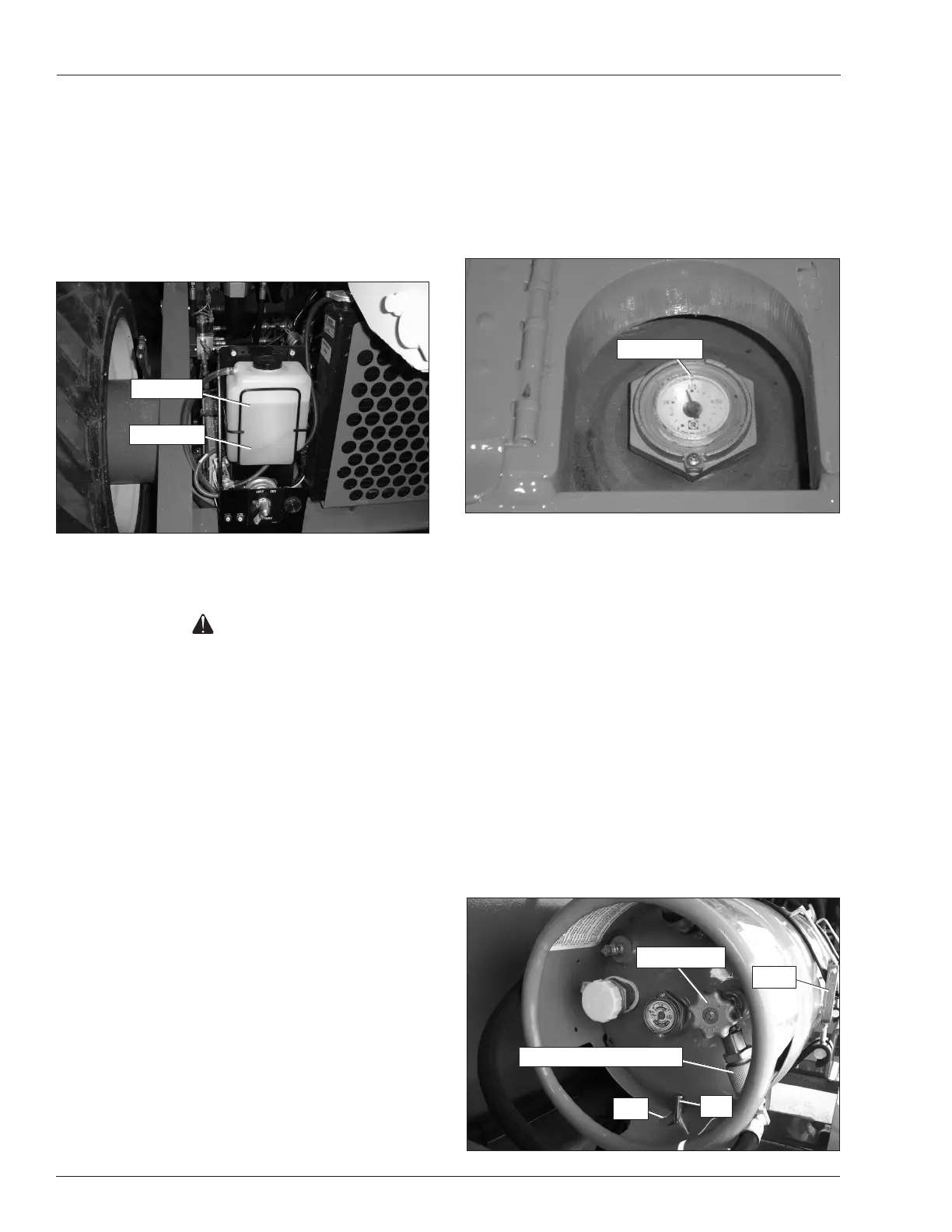
• When the engine is cold, the coolant level should
be between the Hot and Cold marks on the coolant
reservoir (refer to Figure 7.3).
• When the engine is at operating temperature, the
coolant should be at the Hot level.
Figure 7.3 – Coolant Reservoir
To inspect the coolant level:
Caution
Engine coolant escaping under pressure may cause
serious burns. Shut the engine off and let it cool
before removing the radiator cap.
1. Shut the engine off and wait for it to cool.
2. Check to make sure the coolant level is between the
Hot and Cold marks.
3. If necessary, remove the cap from the coolant reser-
voir and add coolant. Tightly replace the cap.
Note
Refer to Chapter 2 for engine coolant specifications. The
need to regularly add fluid indicates a leak that should
be corrected.
Radiator
To inspect the radiator:
1. Inspect the radiator hoses and clamps for wear, leak-
age, or damage.
2. Make sure the hoses are not hardened, cracked, or
feel spongy.
3. Make sure the cap is in place and tight.
4. Check under the chassis for coolant that has leaked.
Coolant leaks are easily visible on the ground.
5. Make sure the radiator core and ventilation openings
on the cover are free of bugs, dirt, or foreign material
that might restrict airflow.
Fuel Tank
The fuel level gauge is behind the door on the left side
of the chassis (refer to Figure 7.4). The gauge measures
the level of fluid in 1/16ths of a tank full.
Figure 7.4 – Fuel Level Gauge
Note
Refer to Chapter 2 for fuel grade specifications.
To check the fuel level:
1. Open the door to access the fuel gauge.
2. Read the fuel level indicated on the gauge.
3. If necessary, add fuel.
Note
Refer to Chapter 2 for fuel grade specifications.
4. Make sure the cap is securely fastened.
Use the following procedure to change the LPG tank.
1. Close the shutoff valve (refer to Figure 7.5).
Figure 7.5 – LPG Tank
Hot Level
Cold Level
Fuel Gauge
Latch
Shuto Valve
Slot
Quick Disconnect Fitting
Pin



 To Next Page