Chapter 7 – Prestart Inspection
30 A46JRT – 0260996
Hydraulic System
Hydraulic power is supplied from an engine driven vari-
able displacement piston pump.
Danger
Hydraulic fluid escaping under pressure can have
enough force to inject fluid into the flesh. Serious
infection or reaction will result if medical treatment is
not given immediately. In case of injury by escaping
hydraulic fluid, seek medical attention at once.
The hydraulic reservoir is inside the right side of the
chassis. The pump is mounted on the engine.
Fluid Level
To inspect the fluid level:
1. Make sure the aerial platform is fully stowed on a
level surface.
2. Remove the engine cover to access the engine
compartment.
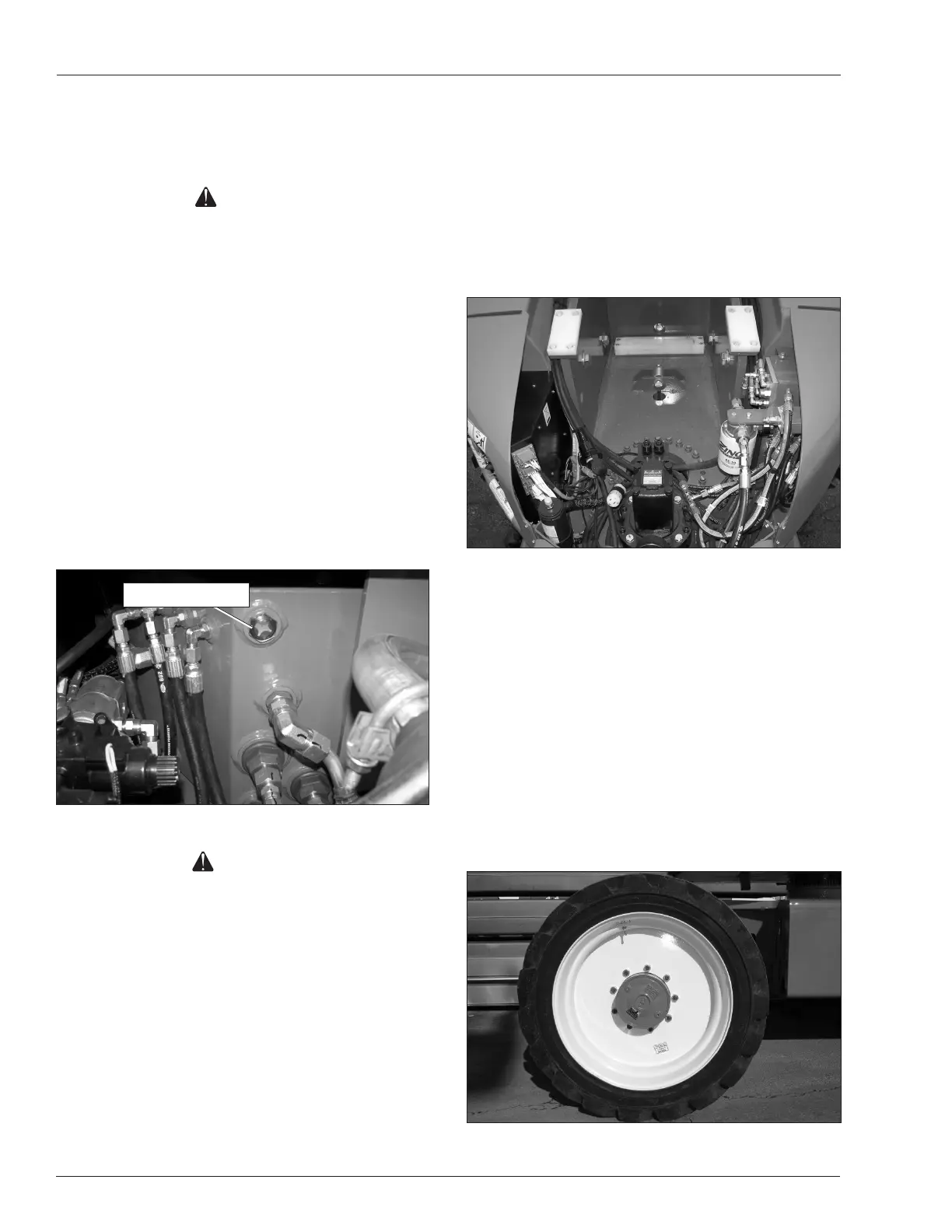
3. Visually check to make sure the fluid is visible in the
sight glass (refer to Figure 7.7).
Figure 7.7 – Fluid Level Indicator
Caution
Not all hydraulic fluid is suitable to use in the hydrau-
lic system. Some have poor lubricating character-
istics and may increase component wear. Only use
hydraulic fluid as recommended.
4. If necessary, remove the filler cap and add fluid of
the proper type. Replace the cap making sure it is
tightly in place.
Note
Refer to Chapter 2 for the proper type and grade of
hydraulic fluid to use. The need to regularly add fluid
indicates a leak that should be corrected.
Fluid Sight Gauge
Fluid Filter
Checking the condition of the hydraulic fluid filter is part
of the machine maintenance schedule and should not be
performed by the operator.
Hoses, Tubes, and Fittings
To inspect the hoses, tubes, and fittings:
1. Inspect all hydraulic hoses, tubes, and fittings for
wear, leakage, or damage (refer to Figure 7.8).
Figure 7.8 – Hoses, Tubes, and Fittings
2. Make sure the hoses are properly routed to avoid
sharp edges, kinking, and scuffing.
3. Inspect the tubes for dents or other damage that may
restrict fluid flow.
4. Make sure all hoses and tubes are held firmly in their
support brackets.
5. Check under the chassis for fluid that has leaked. Hy-
draulic fluid leaks are easily visible on the ground.
Tires and Wheels
Visually inspect the tires and wheels (refer to Figure 7.9)
to make sure they are suitable for service.
Figure 7.9 – Tires and Wheels


 To Next Page