Version 6.2, February 2025
SolarEdge Solution Connection and Configuration Guide for Australia 48
PV Plus SolarEdge Home Battery
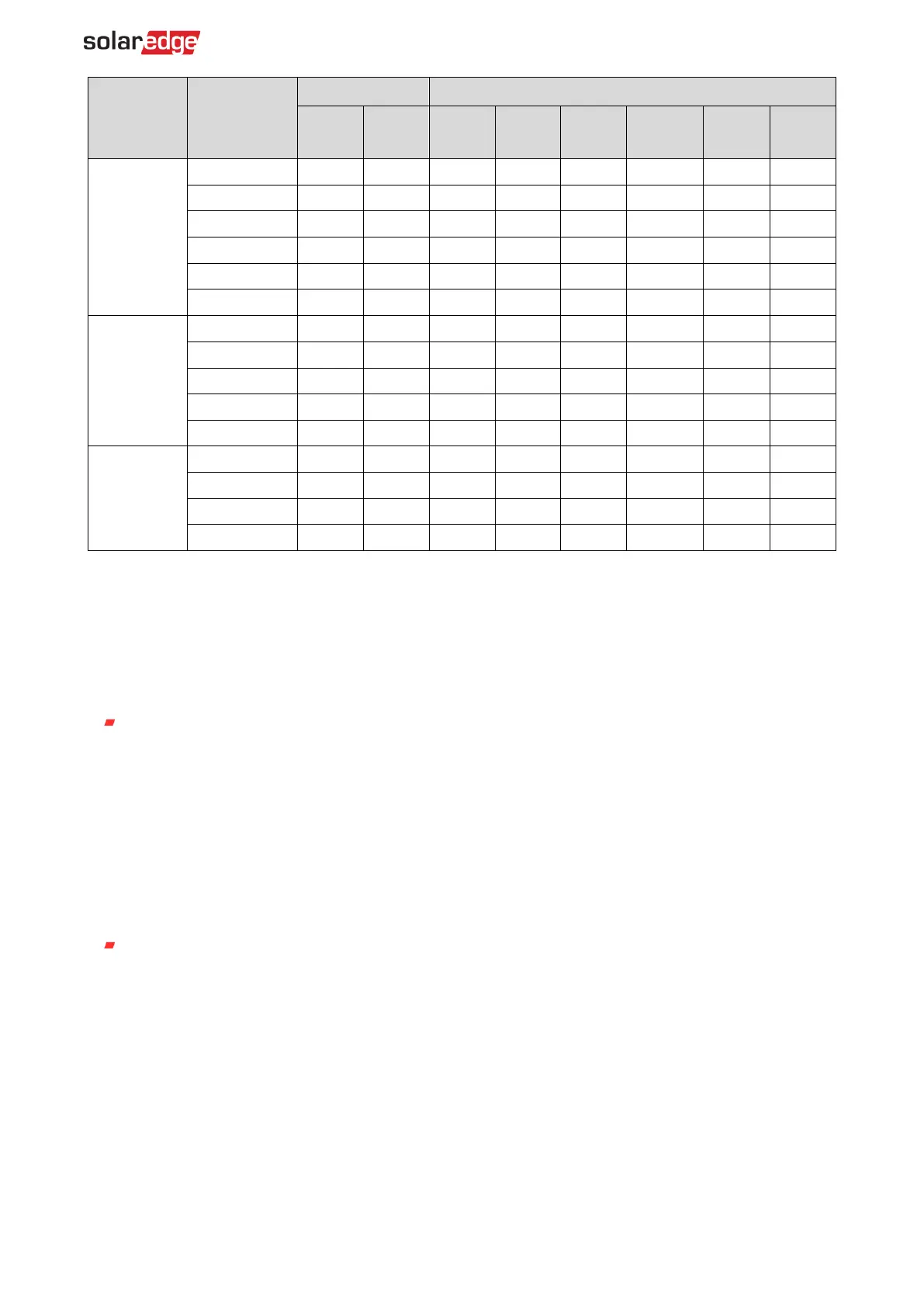
Table 3: Maximum PV Oversizing guidelines
Guidance related to RCD requirements
PV System residual current factors
In every PV installation, several elements contribute to the current leakage to protective earth (PE).
These elements can be divided into two main types:
Capacitive discharge current - Discharge current is generated mainly by the parasitic
capacitance of the PV modules to PE. The module type, the environmental conditions (rain,
humidity) and even the distance of the modules from the roof can affect the discharge current.
Other factors that may contribute to the parasitic capacitance are the inverter's internal
capacitance to PE and external protection elements such as lightning protection.
During operation, the DC bus is connected to the alternating current grid via the inverter. Thus, a
portion of the alternating voltage amplitude arrives at the DC bus. The fluctuating voltage constantly
changes the charge state of the parasitic PV capacitor (i.e. capacitance to PE). This is associated with
a displacement current, which is proportional to the capacitance and the applied voltage amplitude.
Residual current - if there is a fault, such as defective insulation, where an energized cable
comes into contact with a grounded person, an additional current flows, known as a residual
current.
Residual Current Device (RCD)
All SolarEdge inverters incorporate a certified internal RCD (Residual Current Device) to protect
against possible electrocution in case of a malfunction of the PV array, cables or inverter (DC). The
RCD in the SolarEdge inverter can detect leakage on the DC side. There are 2 trip thresholds for the
RCD as required by the DIN VDE 0126-1-1 standard. A low threshold is used to protect against rapid
changes in leakage typical of direct contact by people. A higher threshold is used for slowly rising
leakage currents, to limit the current in grounding conductors for fire safety. The default value for
higher speed personnel protection is 30mA, and 300mA per unit for lower speed fire safety.
Installation and selection of an external RCD device



 To Next Page