- If resistance of test probes is too high, R
E
earth electrode measurement will be burdened with addi-
tional uncertainty. Particularly high uncertainty of measurement occurs when a small value of re-
sistance-to-earth is measured with probes that have a weak contact with earth (such a situation oc-
curs frequently when the earth electrode is well made and the upper soil layer is dry and slightly con-
ductive). In such a case, the ratio of resistance of the probes to resistance of the tested earth elec-
trode is very high and consequently, uncertainty of measurement that depends on this ratio is also
very high. Then, you can make a calculations according to the formulas given in sec. 10.2 to estimate
the influence of measurement conditions or you can use the graph also included in the appendix. You
can improve the contact between the probe and soil, for example, by dampening with water the place
where the probe is driven into earth, driving the probe into earth in a different place or using a 80 cm-
long probe. Check also the test leads for possible insulation damage and for corroded or loosened
connection between the banana plug and the test lead. In majority of cases the achieved measure-
ment accuracy is satisfactory. However, you should always be aware of the uncertainty included in
the measurement.
Additional information displayed by the meter
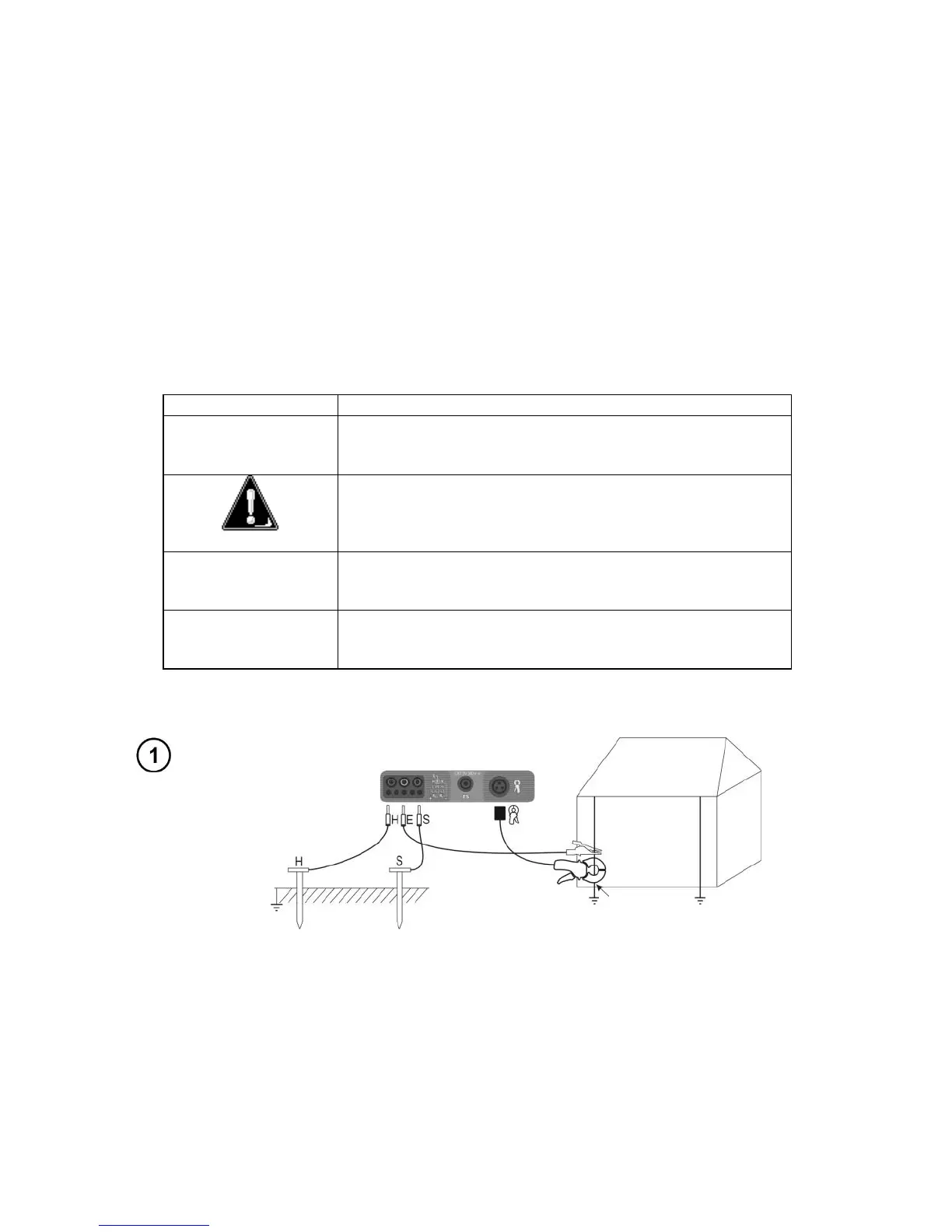
The current electrode (driven into earth) should be connected to H socket of the meter.
The voltage electrode (driven into earth) should be connected to S socket of the meter.
The earth electrode being tested should be connected to E socket of the meter with the lead.
The tested earth electrode as well as current and voltage electrodes should be located along one
line and in the relevant distances, in accordance with the rules of earth measurements.
Clamps should be attached to the tested earth electrode below the connection point of E lead.


 To Next Page