EasyManua.ls Logo

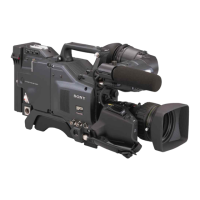
Sony DXC-637 - Product Configurations and Preparations; Product Configurations; Preparations for Use

Sony DXC-637
63 pages
Print Icon
To Next Page IconTo Next Page
To Previous Page IconTo Previous Page
Loading...
Product
Configurations
The
six
models,
DXC-637K,
DXC-637L,
DXC-637H,
DXC-637PK,
DXC-637PL,
and
DXC-637PH,
comprise
both
NTSC
and
PAL
versions
and
the
DXC-637K/637PK
OXC-637L/637PL
VCT-U14
Tripod
Adaptor
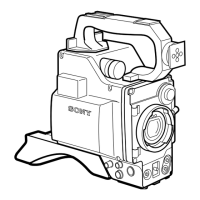
DXC-637/637P
Camera
Head
ek
Camera
adaptor
The
product
kit
does
not
include
a
camera
adaptor:
to
use
a
camera
adaptor,
you
will
need
to
purchase
a
model
CA-537/537P
or
CA-327/327P.
(W3)dZ€9-0xa
(on)ze9-Oxa
components
as
shown
in
the
figure
below.
The
operation
of
the
basic
camera
unit
is
the
same
in
all
cases.
OXF-601/601CE
Viewtinder
VCL-916BYA
Zoom
Lens
Test
chart
for
flange
focal
langth
adjustment
|
5
Preparations
for
Use
Fitting
the
zoom
lens
It
is
important
to
fit
the
lens
correctly,
as
otherwise
damage
may
result.
Be
sure
to
refer
to
the
section
“Fitting
the
Lens”
(See
page
19}.
Power
supply
Use
only
the
specified
12
V
DC
power
supply.
Do
not
disassemble
the
unit
The
internal
mechanism
of
the
camera
is
of
precision
construction.
Touching
internal
parts
may
cause
a
malfunction.
There
are
dangerously
high
voltages
present
within
the
viewfinder,
and
touching
internal
components
could
cause
an
electric
shock
accident.
Keep
foreign
objects
out
of
the
unit
If
metal
objects
or
liquids
get
inside
the
unit,
they
could
cause
a
malfunction
or
accident.
Do
not
cover
the
unit
while
operating
Putting
a
cloth,
for
example,
over
the
unit
can
cause
excessive
internal
heat
build-up.
Operation
and
storage
Avoid
storing
or
operating
the
unit
in
the
following
conditions.
In
excessive
heat
or
cold
(operating
temperature
range:
—10
°C
to
+45
°C
(14
°F
to
113
°F))
Remember
that
in
summer
in
warm
climates
the
temperature
inside
a
car
with
the
windows
closed
can
easily
exceed
50
°C
(122
°F).
¢
In
damp
or
dusty
locations
©
Locations
where
the
unit
may
be
exposed
to
rain
¢
Locations
subject
to
violent
vibration
*
Close
to
radio
or
TV
transmitters
producing
strong
electromagnetic
fields.
Viewfinder
e
Do
not
leave
the
camera
with
the
eyepiece
pointing
directly
at
the
sun.
The
eyepiece
lens
can
concentrate
the
sun's
rays
and
melt
the
interior
of
the
viewfinder.
©
Do
not
use
the
viewfinder
close
to
strong
magnetic
fields.
This
can
cause
picture
distortion.
"|
IN
Shipping
Use
the
optional
LC-421
Carrying
Case
for
optimal
shipping.
If
sending
the
camera
by
truck,
ship,
air
or
other
transportation
service,
first
store
it
in
the
carrying
case,
then
pack
the
carrying
case
in
the
supplied
carton
(or
an
equivalent).
Care
of
the
unit
Remove
dust
and
dirt
from
the
surfaces
of
the
lenses
or
optical
filters
using
a
blower.
If
the
body
of
the
camera
is
dirty,
clean
it
with
a
soft,
dry
cloth.
In
extreme
cases,
use
a
cloth
steeped
in
a
little
neutral
detergent,
then
wipe
dry.
Do
not
use
organic
solvents
such
as
alcohol
or
thinners,
as
these
may
cause
discoloration
or
other
damage
to
the
finish
of
the
unit.
In
the
event
of
operating
problems
If
you
should
experience
problems
with
the
unit,
contact
your
supplier
or
Sony
service
representative.
Sree
an
The
following
effects
may
appear
in
the
image.
They
are
characteristic
of
cameras
using
CCDs
(charge-
coupled
devices),
and
do
not
indicate
a
malfunction.
Vertical
smear
When
shooting
a
very
bright
object,
such
as
a
light,
the
highlight
tends
to
produce
vertical
tails.
This
effect
is
much
reduced
in
this
camera.
--
Vertical
tail
on
the
Image
Monitor
screen
Bright
object
(electric
light,
sun,
etc.)
White
flecks
If
the
camera
is
operated
at
a
high
temperature,
white
flecks
may
appear
in
the
image.

Related product manuals