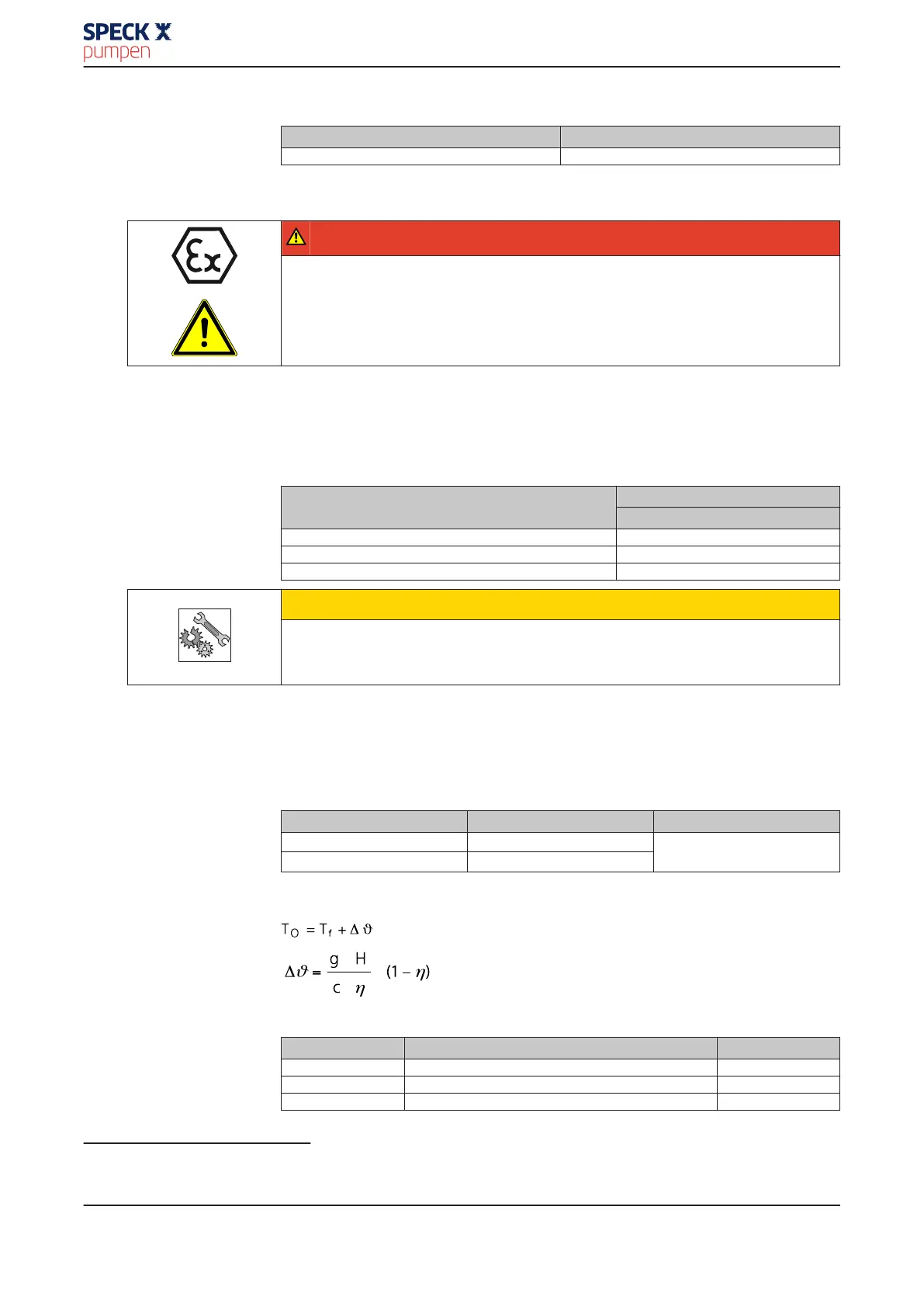
Table 10: Permissible ambient temperatures
Permissible ambient temperature Value
Maximum 40 °C
6.2.2 Frequency of starts
DANGER
Excessive surface temperature of the motor
Explosion hazard!
Damage to the motor!
▷ In case of explosion-proof motors, observe the frequency of starts specified in
the manufacturer's product literature.
The frequency of starts is usually determined by the maximum temperature increase
of the motor. This largely depends on the power reserves of the motor in steady-
state operation and on the starting conditions (DOL, star-delta, moments of inertia,
etc). If the start-ups are evenly spaced over the period indicated, the following limits
serve as orientation for start-up with the discharge-side gate valve slightly open:
Table 11: Frequency of starts
Impeller material Maximum number of start-ups
[Start-ups/hour]
Grey cast iron (EN-GJL-250/A48 CL 35B) 15
Bronze (CC480K-GS/B30 C90700) 6
Stainless steel (1.4408/ A743 GR CF8M) 6
CAUTION
Re-starting while motor is still running down
Damage to the pump (set)!
▷ Do not re-start the pump set before the pump rotor has come to a standstill.
6.2.3 Fluid handled
6.2.3.1 Flow rate
Table 12: Flow rate
Temperature range (t) Minimum flow rate Maximum flow rate
-30 to +70 ℃
≈ 15 % of Q
Opt
3)
See hydraulic characteristic
curves
> 70 to +140 °C
≈ 25 % of Q
Opt
3)
The calculation formula below can be used to check if an additional heat build-up
could lead to a dangerous temperature increase at the pump surface.
Table 13: Key
Symbol
Description Unit
c Specific heat capacity J/kg K
g Gravitational constant m/s²
H Pump discharge head m
3)
Best efficiency point
6 Commissioning/Start-up/Shutdown
32 of 58
Normblock



 To Next Page