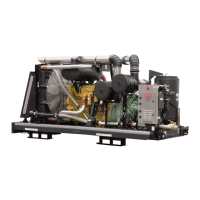
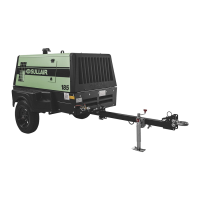
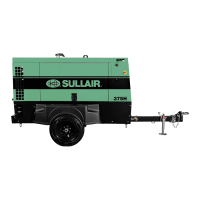
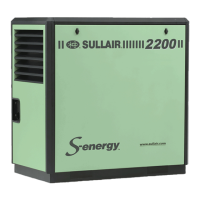
600H, 750, 750H, 750HH, 825, 900, 900H, 1050 T3 CAT User Manual 1: Safety
02250197-981 R01
Subject to EAR, ECCN EAR99 and related export control restrictions. 7
reservoir tanks. Lockout or tag lines or
valves.
b. Any mechanism under tension or pres-
sure, such as springs, should be
released and locked out or tagged.
c. Block any load or machine part prior to
working under it.
d. Electrical circuits should be checked with
calibrated electrical testing equipment
and stored energy and electrical capaci-
tors should be safely discharged.
6. Lockout and/or Tagout each energy source
using the proper energy isolating devices
and tags. Place lockout hasp and padlock or
tag at the point of power disconnect where
lockout is required by each person perform-
ing work. Each person shall be provided with
their own padlock and have possession of
the only key. If more than one person is
working on a machine each
person shall affix
personal lock and tag using a multi-lock
device.
7. Tagout devices shall be used only when
power sources are not capable of being
locked out by use of padlocks and lockout
hasp devices. The name of the person affix-
ing tag to power source must be on tag along
with date tag was placed on power source.
8. Release stored energy and bring the equip-
ment to a “zero mechanical state”.
9. Verify Isolation: Before work is started, test
equipment to ensure power is disconnected.
B. General Security
1. The lock shall be removed by the “Autho-
rized” person who put the lock on the
energy-isolating device. No one other than
the person/persons placing padlocks and
lockout hasps on power shall remove pad-
lock and lockout hasps and restore power.
However, when the authorized person who
applied the lock is unavailable to remove it
his/her Supervisor may remove padlock/pad-
locks and lockout hasps and restore power
only if it is first:
a. verified that no person will be exposed to
danger.
b. verified that the “Authorized” person who
applied the device is not in the facility.
c. noted that all reasonable efforts to con-
tact the “Authorized” person have been
made to inform him or her that the lock-
out or tagout device has been removed.
d. ensured that the “Authorized” person is
notified of lock removal before returning
to work.
2. Tagout System—Tags are warning devices
affixed at points of power disconnect and are
not to be removed by anyone other that the
person placing tag on power lockout. Tags
shall never be by-passed, ignored, or other-
wise defeated.
1.12 Jump starting
A. Observe all safety precautions mentioned elsewhere
in this manual.
B. Batteries may contain hydrogen gas which is flam-
mable and explosive. Keep flames, sparks and other
sources of ignition away.
C. Batteries contain acid which is corrosive and poison-
ous. DO NOT allow battery acid to contact eyes, skin,
fabrics or painted surfaces as serious personal injury
or property damage could result. Flush any con-
tacted areas thoroughly with water immediately.
Always wear an acid-resistant apron and face shield
when attempting to jump start the compressor.
D. Remove all vent caps (if so equipped) from the bat-
tery or batteries in the compressor. DO NOT permit
dirt or foreign matter to enter the open cells.
E. Check fluid level. If low, bring fluid to proper level
before attempting to jump start (not applicable to
maintenance-free batteries).
F. DO NOT attempt to jump start if fluid is frozen or
slushy. Bring batteries up to at least 60°F (16°C)
before attempting to jump start or it may explode.
G. Cover open cells of all compressor batteries with
clean dampened cloths before attempting to jump
start.
H. Attempt to jump start only with a vehicle having a
negative ground electrical system with the same volt-
age, and is also equipped with a battery or batteries
of comparable size or larger than supplied in the
compressor. DO NOT attempt to jump start using
motor generator sets, welders or other sources of DC
power as serious damage may result.
I. Bring the starting vehicle alongside the compressor,
but DO NOT permit metal to metal contact between
the compressor and the starting vehicle.



 To Next Page