Aperio
The Aperio protocol is for future use.
Note: Aperio has a fixed baud rate of 19200 baud.
SALLIS
The SALLIS protocol is for future use.
Note: SALLIS has a fixed baud rate of 38400 baud.
Flexible device locations
With the Network Access Controller, there is flexibility in how devices such as
inputs, relays and readers can be physically wired up to the NAC and how they
are addressed.
Devices can be connected directly to the NAC or can be connected to DGPs or
RASs on one of the NAC’s buses. Thus, when programming the NAC, devices
are not addressed by their number alone, but must be defined according to how
they have been physically wired up to the NAC.
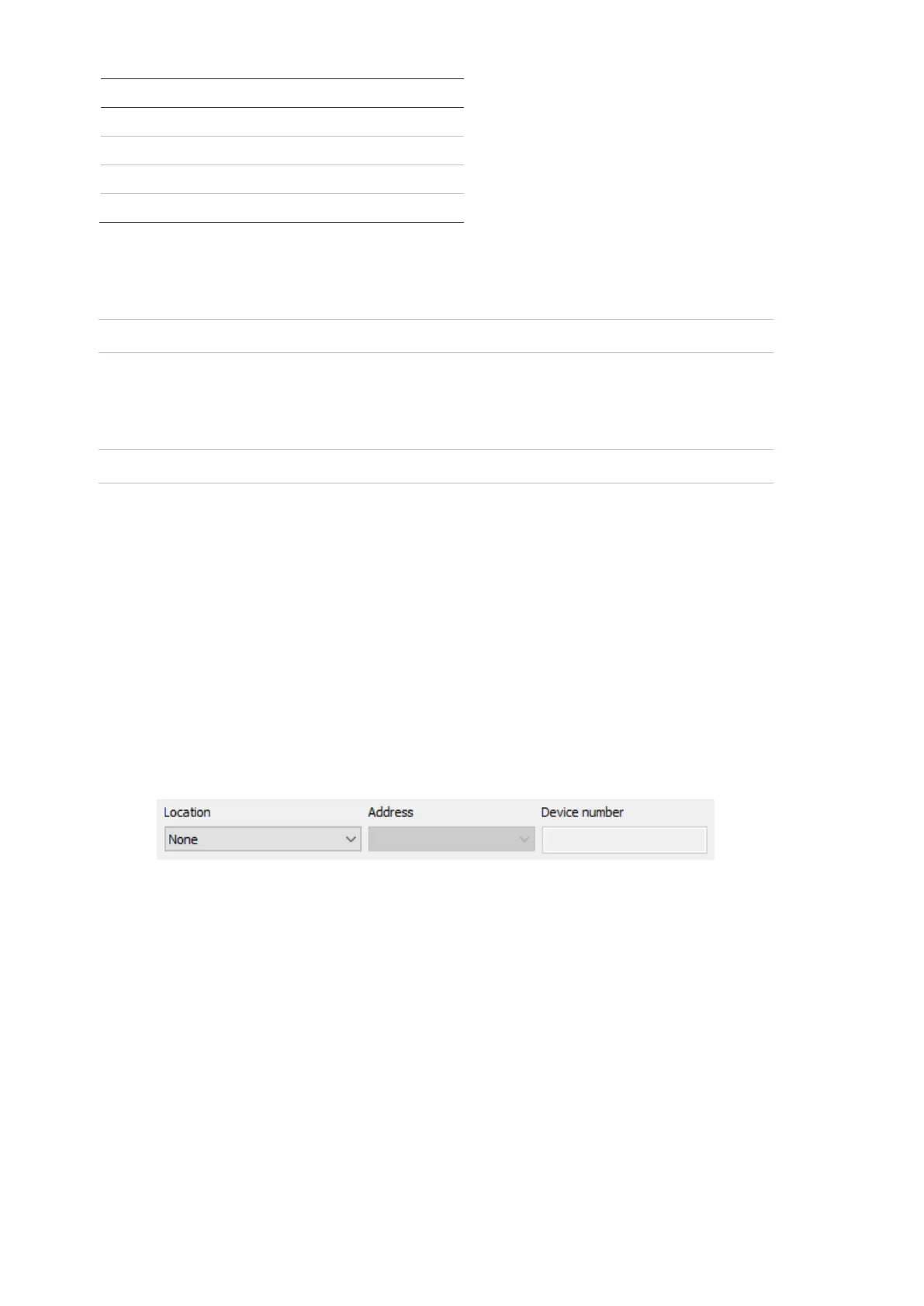
When specifying a device attached to the NAC in CTPlus, the operator must
enter information in location fields that look like the following:
The fields are defined as follows:
1. Location – select the device’s location from the following options:
Onboard – The device is connected directly to the NAC’s onboard
terminals (or a relay on an attached relay controller). Enter the device’s
number in the Device number field.
DGP – The device is connected to a DGP that is connected to one of
the NAC’s buses. Enter the address of the DGP in the Address field,
and the device’s number on the DGP in the Device number field. The
DGP must be assigned to the NAC and polled on the bus.
RAS – The device is a RAS, or is an input or relay connected to a
RAS, which is connected to one of the NAC’s buses. Enter the address


 To Next Page