30
ZIP 22
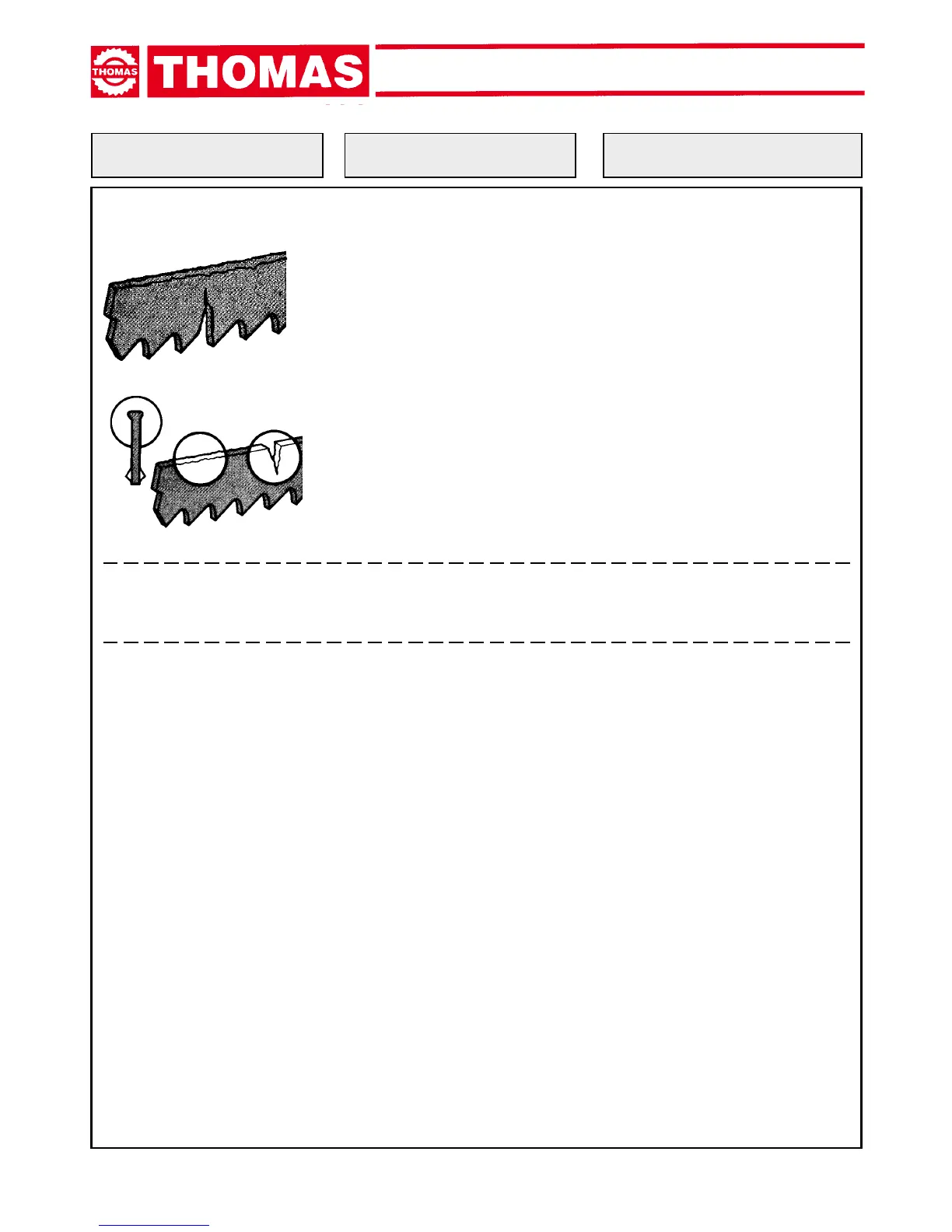
FAULT PROBABLE CAUSE REMEDY
Check distance between bearings (see
Chapter “Machine adjustments” in the
Blade Guide Heads section): extremely
accurate guiding may cause cracks and
breakage of the tooth. Clean carefully.
Check that the tightening handwheel is
against the set screw that ensures ideal
tightening.
Approach head as near as possible to
material to be cut so that only the blade
section employed in the cut is free, this will
preventdeectionsthatwouldexcessively
stress the blade.
The back of blade rubs against the support
due to deformed or poorly welded bands
(tapered), causing cracks and swelling of
the back contour.
Check level of liquid in the tank. Increase
theowoflubricatingrefrigerant,check-
ing that the hole and the liquid outlet pipe
are not blocked. Check the emulsion
percentage.
Replace them.
Adjust them (see Chapter “Machine
adjustments” in Blade guide section).
Check fastenings of the blade guide heads
as to the counter-vice so that they are not
toolooseandadjustheadsvertically;bring
into line the position of the degrees and if
necessary adjust the stop screws of the
degree cuts.
Check and vertically re-adjust the blade
guideheads;resetpropersideguideplay
(see Chapter “Machine adjustments” in
Blade guide section).
Decrease advance, exerting less cutting
pressure. Adjust the braking device if
mounted on the machine.
Approach head as near as possible to
material to be cut so that only the blade
section employed in the cut is free, this will
preventdeectionsthatwouldexcessively
stress the blade.
Check that the tightening handwheel is
against the set screw that ensures ideal
tightening.
Replace it.
Blade with major density of teeth is being
used, try using one with less teeth (see
Chapter “Material classication and
blade selection” in the Blade Types
section).
Blade guide heads not regulated or
dirty because of lack of maintenance
Blade too slack
Blade guide head too far from material
to be cut
Improperpositionofbladeonywheels
Insufcient lubricating refrigerant or
wrong emulsion
Damaged or chipped blade guide
bearings
Tight or slackened blade guide bear-
ings
Blade not parallel as to the counter-
vice
Blade not perpendicular due to the ex-
cessive play between the guide bear-
ings and maladjustment of the heads
Too fast advance
Blade guide head too far from material
to be cut
Blade too slack
Worn out blade
Wrong tooth pitch
STREAKED OR ETCHED BANDS
CUTS OFF THE STRAIGHT


 To Next Page