E-DOC-CTC-20060609-0001 v2.0
Chapter 2
802.11 Standards
14
Distributed Coordination Function (DCF)
The following components are important to understand the operation of the DCF:
> Interframe space: in the DCF, a wireless station that wants to transmit a data frame must wait a specific
amount of time after the station senses that the medium is not in use. This amount of time is known as
the DCF Interframe Space (DIFS).
> Random backoff algorithm: several stations will sense at the same time that the medium is not in use. As
a result, there is a high probability that several stations will try to transmit simultaneously, causing a
collision. To avoid this situation, DCF uses a random backoff algorithm.
> Positive acknowledgements: a station acknowledges the correct receipt of a data frame by sending an
acknowledgement frame back to the sending station. The receiving station is allowed to skip the random
backoff algorithm and waits only a short interval before transmitting the acknowledgement frame. The
short interval is known as the Short Interframe Space (SIFS).
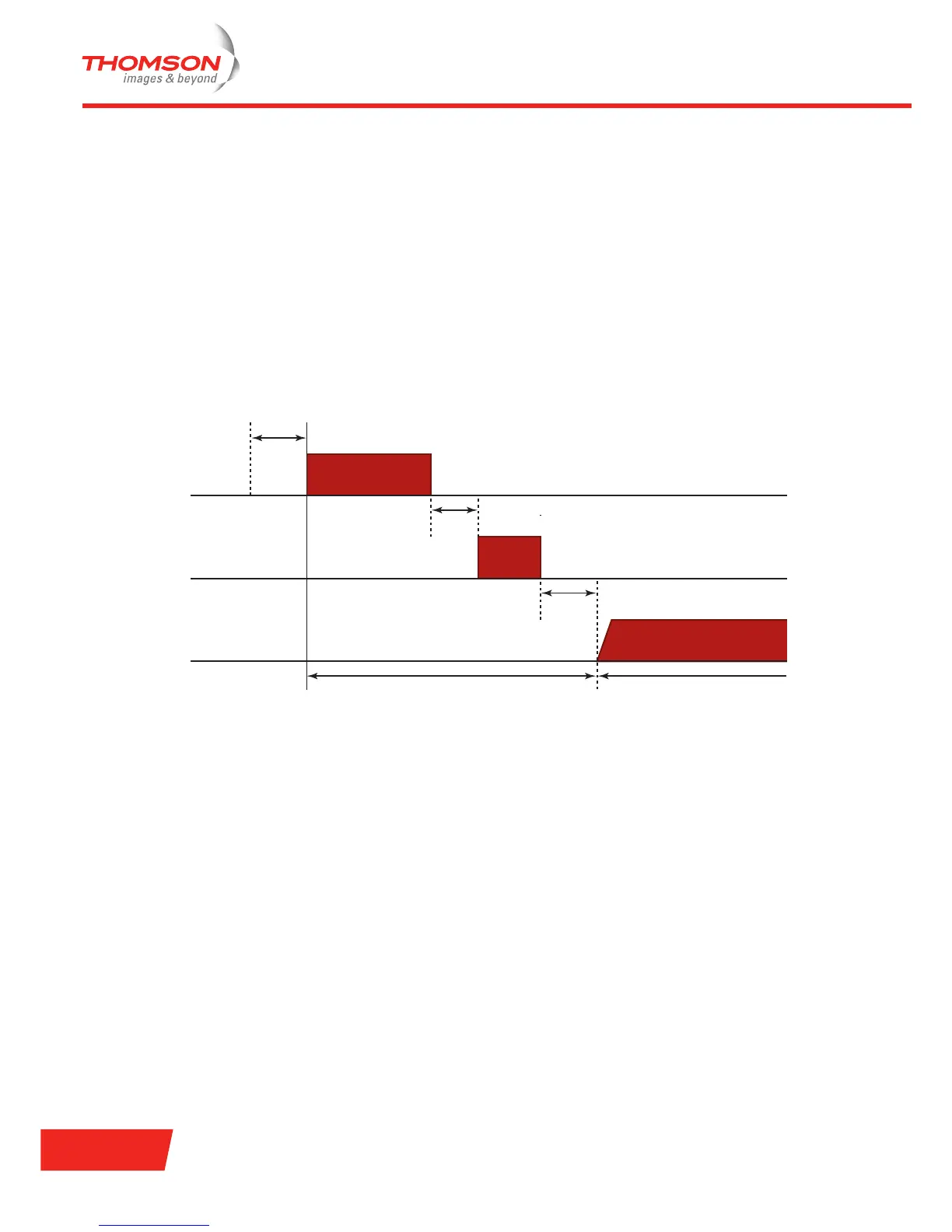
The exchange of a data frame (Data) and an acknowledgement frame (ACK) between sender and receiver is
illustrated in the following figure:
Interframe space (IFS)
The time interval between frames is called the Interframe Space (IFS). Different IFSs are defined to provide
priority levels for accessing the wireless medium:
> Short Interframe Space (SIFS): this is the shortest of the interframe spaces. A SIFS is used to separate
transmissions belonging to a single dialogue, e.g. between a data frame and an acknowledgement frame.
> Distributed Interframe Space (DIFS): this is used by a station that wants to start a new transmission.
> Extended Interframe Space (EIFS): this is used by a station that has received a frame that it could not
understand. This is needed to prevent the station from colliding with a future frame belonging to the
current dialogue.
Data
ACK
Contention Window
DIFS
SIFS
DIFS
Delay Access Backoff After Delay
Receiver
Sender
Other




 To Next Page