E-DOC-CTC-20060609-0001 v2.0
Chapter 2
802.11 Standards
15
Random backoff algorithm
Backoff is a well known method to avoid collisions between several stations that want to access the medium.
Each station must select a random number between 0 and a given value, called the Contention Window (CW).
This random number is the number of 802.11 slot times that the station must wait before it is allowed to
transmit. The station always checks whether another station has accessed the medium at the beginning of
the previous slot.
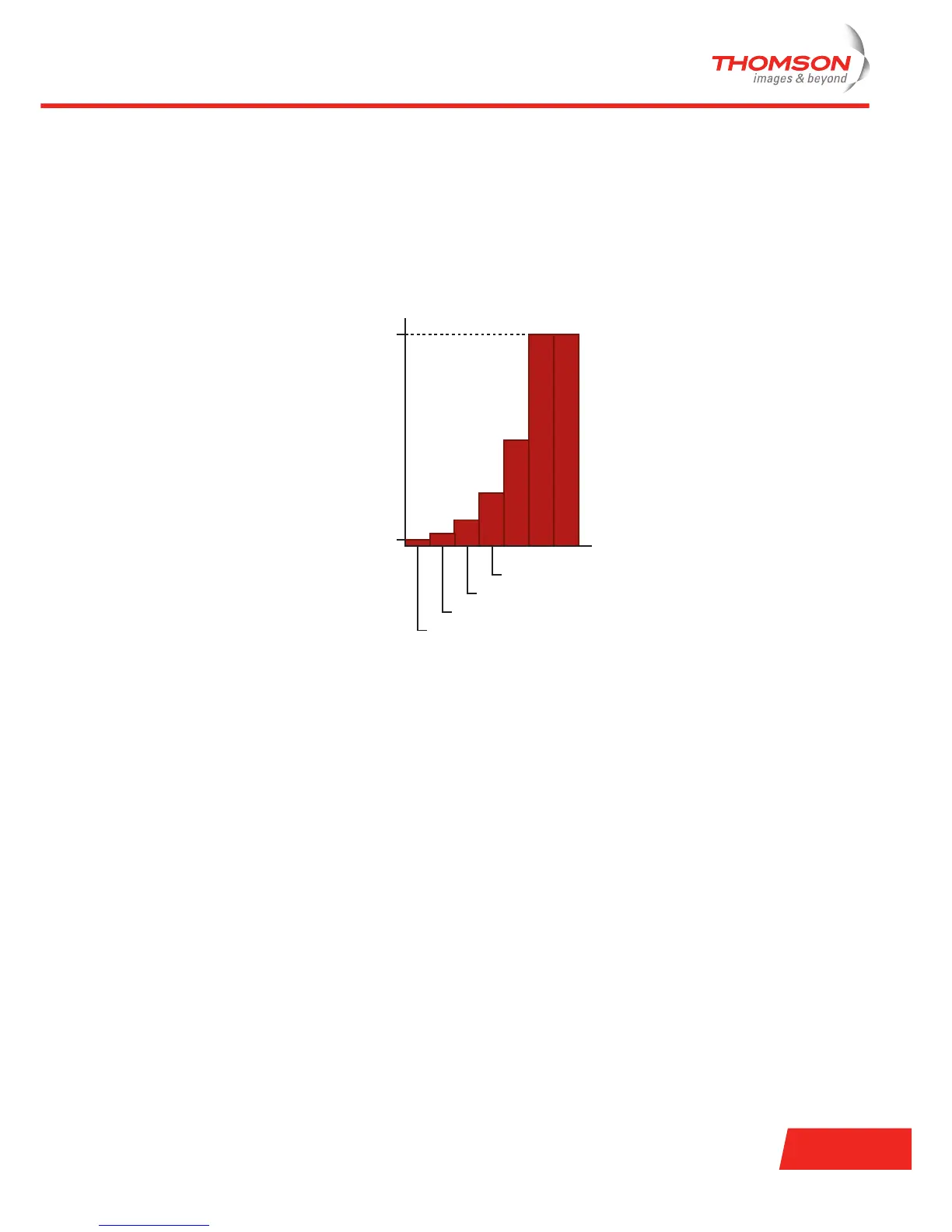
Each time the station decides to transmit and a collision occurs, it increases the value of the CW. The value of
the CW is a moving ceiling starting at CW
min
and stopping at a maximum value known as CW
max
. The
following figure illustrates the CW
min
and CW
max
values for binary random backoff:
The random backoff algorithm must be executed in the following situations:
> When the station senses the medium before the first transmission of a frame and the medium is in use.
> After each retransmission.
> After a successfull transmission.
This algorithm is not used when a station decides to transmit a new frame and the medium has not been in
use for more than a DIFS.
Positive acknowledgements
The correct receipt of a data frame, requires the receiving station to respond with an ACK. This technique is
known as Positive Acknowledgement. If no ACK is received by the sending station, it assumes that an error
has occurred. If no ACK is received:
1 The sending station updates its retry counter.
2 The sending station doubles the value of the Contention Window.
3 A retransmission of the data frame is scheduled by the sender.
Initial Attempt
First Retransmission
Second Retransmission
Third Retransmission
CW
max
CW
min
255 255
7
15
31
63
127




 To Next Page