PK-232 MBX – OPERATING MANUAL AMTOR AND NAVTEX OPERATION
4/91 7-3 88
7.2.6 Tuning in AMTOR Stations
Tuning in AMTOR stations properly is critical to successful operation. Since HF AMTOR sta-
tions use either 170 Hz or 200 Hz Frequency Shift Keying to send data, tuning accuracy is
very important. Follow the procedure below for the best results.
o Make certain your HF receiver is either in LSB or FSK depending on your PK-232 set-
up.
o Turn any IF-Shift and Passband-Tuning controls to the Center or OFF position.
o Tune your receiver carefully between 14.065 and 14.085 MHz (or another band
where you know there is AMTOR activity) and listen for the "chirp chirp" of ARQ or
the steady data of FEC stations.
NOTE: When in the AMTOR Standby mode as you are now, you will not be able to
print the "chirping" ARQ signals. To print these stations, you must be in the
AMTOR Listen (ALIST) mode.
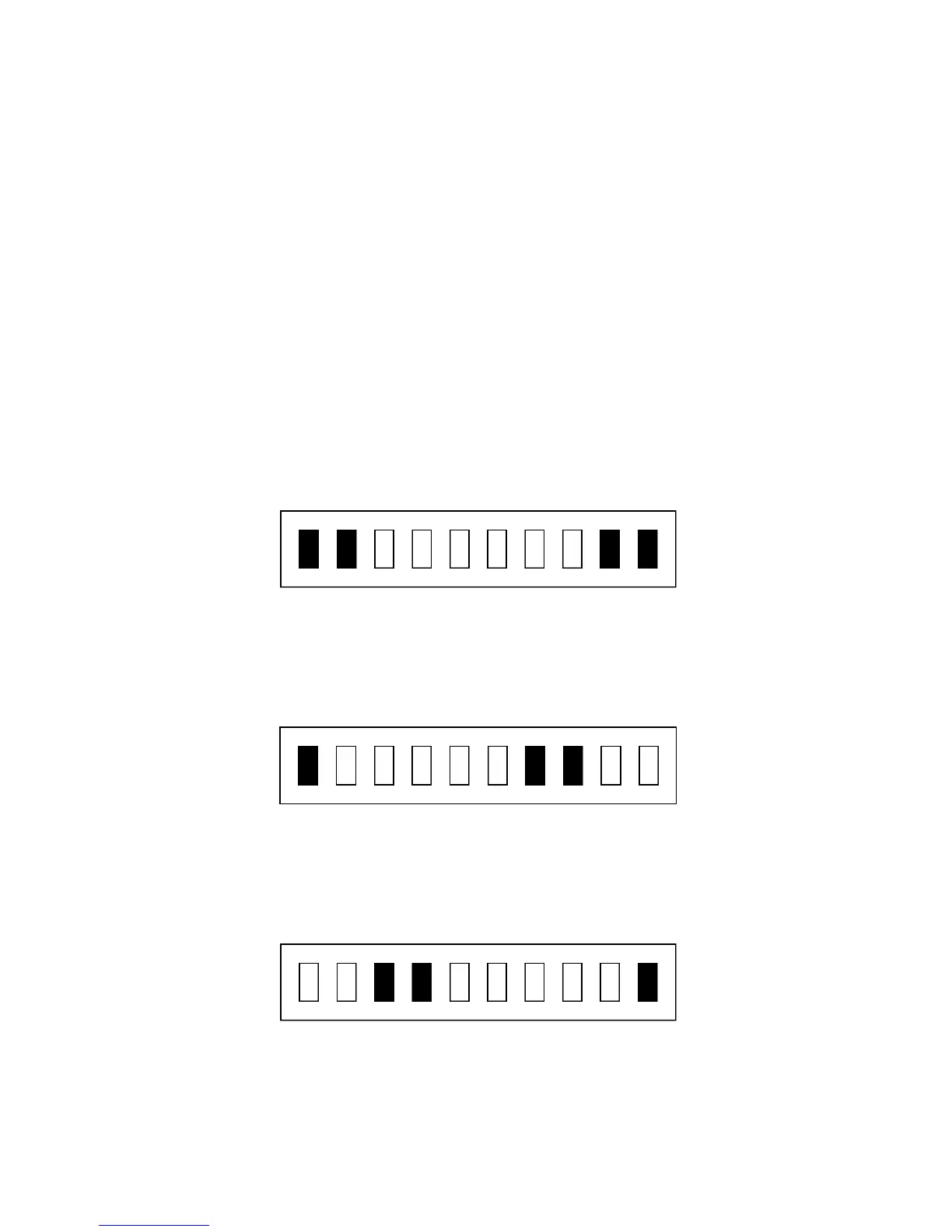
o When you find a station, slowly vary VFO on your receiver and look for a display on
the PK-232 tuning indicator as shown below.
Tuned In
If the tuning indicator looks like the one below, the frequency from your speaker is
too low for the PK-232 to copy packets. Slowly tune the VFO and make the fre-
quency higher.
Frequency Too Low
If the tuning indicator looks like the one below, the frequency from your speaker is
too high for the PK-232 to copy packets. Slowly tune the VFO and make the fre-
quency lower.
Frequency Too High
o Adjust the PK-232's THRESHOLD control so that the DCD LED lights when a properly
tuned FEC AMTOR station is being received.



 To Next Page