EasyManua.ls Logo

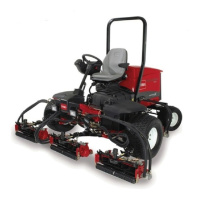
Toro Reelmaster 5510 - User Manual

Toro Reelmaster 5510
112 pages
Print Icon
To Next Page IconTo Next Page
Loading...
Operators Manual
Reelmaster® 5510 Traction Unit
Model—Serial Range
03964—400000000 and Up
3464-490A
Original Instructions (EN)
*3464-490*A

Table of Contents

Other manuals for Toro Reelmaster 5510

Questions and Answers

  • M
    Melissa ColemanSep 18, 2025
    Why is a single cutting unit lifting slowly or not at all on my Toro Reelmaster 5510?
    • G
      Gerald MccoySep 18, 2025
      If a single cutting unit lifts slowly or not at all on your Toro Lawn Mower, clean the debris buildup, check and address any binding, and repair or replace damaged components. The issue might be excessive debris buildup on the cutting unit, a binding lift arm or lift cylinder, a stuck or damaged pilot piston in the lift control manifold, internal leaks in the lift cylinder, or a plugged or damaged flow control orifice in the lift control manifold for the affected cutting unit.
  • A
    Alicia SmithAug 26, 2025
    What to do if my Toro Reelmaster 5510 Lawn Mower steering is inoperative?
    • B
      bushcarlaAug 26, 2025
      If the steering on your Toro Lawn Mower is inoperative or sluggish, there are several things you can check: worn or binding steering components (inspect and repair), a binding steering cylinder (inspect and fix), a low fluid level in the hydraulic reservoir (fill to the appropriate level), a stuck or damaged steering relief valve (inspect and repair or replace), internal leaks in the steering cylinder (inspect and repair), a worn or damaged steering control valve (inspect and repair or replace), or a worn or damaged gear pump section (inspect and repair or replace).
  • Y
    ytaylorAug 27, 2025
    What to do if my Toro Reelmaster 5510 wheel motor does not turn?
    • B
      Bradley LongAug 28, 2025
      If the wheel motor on your Toro Lawn Mower doesn't turn, consider these potential causes: The brakes might be binding, so inspect and fix them. Alternatively, the piston (traction) pump bypass valve could be open, so check, repair, or replace it. Lastly, the piston (traction) pump or the wheel motor itself might be worn or damaged; in this case, inspect and repair or replace the affected components.
  • D
    Diamond LittleAug 28, 2025
    What to do if my Toro Lawn Mower hydraulic fluid foams excessively?
    • C
      Christy HarrisAug 28, 2025
      If the hydraulic fluid in your Toro Lawn Mower is foaming excessively, causing leakage from the hydraulic tank breather, consider the following: The hydraulic fluid level in the hydraulic tank may be low, so fill it to the proper level. The hydraulic system might contain the wrong type of fluid, in which case you should replace it with the correct type. There could be an air leak in one of the pump suction lines, so inspect and repair any leaks. Incompatible hydraulic fluids might be mixed in the system; drain and replace the hydraulic fluid to resolve this. Finally, there might be water in the hydraulic system, so drain and replace with dry hydraulic fluid.
  • K
    Kristina EnglishSep 18, 2025
    Why is a single cutting unit lowering very slowly or not at all on my Toro Reelmaster 5510 Lawn Mower?
    • C
      crawfordbrianSep 19, 2025
      If a single cutting unit lowers very slowly or not at all on your Toro Lawn Mower, inspect for binding issues, replace damaged components, and clear or repair flow control orifices. This could be due to a binding lift arm or lift cylinder, a damaged lift cylinder, a plugged or damaged flow control orifice in the lift control manifold for the affected cutting unit, or a stuck or damaged check valve in the lift control manifold.
  • C
    Crystal NguyenNov 26, 2025
    Why is the traction response of my Toro Reelmaster 5510 sluggish?
    • M
      Michael FreemanNov 26, 2025
      If the traction response of your Toro Lawn Mower is sluggish, the following could be the reasons: the piston (traction) pump bypass valve is open or damaged (check and repair or replace the bypass valve), the brake is dragging or binding (inspect and fix any dragging or binding brakes), the charge pressure is low (check and adjust the charge pressure), the hydraulic fluid is very cold (allow the hydraulic fluid to warm up to operating temperature), the piston (traction) pump check valve, relief valve, and/or flushing valve is leaking (inspect and repair or replace leaking valves), the piston (traction) pump or wheel motor(s) is worn or damaged (inspect and repair or replace worn or damaged components), the charge relief valve in the piston (traction) pump is not seating or is damaged (insp...
  • J
    James LopezSep 12, 2025
    Why won't the rear cutting unit motors operate on my Toro Reelmaster 5510, but the front ones will?
    • R
      Rebecca MccannSep 12, 2025
      If the rear cutting unit motors on your Toro Lawn Mower will not operate but the front cutting unit motors will operate, test and replace solenoid valve MSV1 if necessary, ensure the mow/backlap lever is fully rotated, and check for electrical issues. This problem may occur if solenoid valve MSV1 on the mow control manifold is faulty, the mow/backlap lever for the rear cutting units (MR1) is not rotated fully, an electrical problem exists that prevents the MSV1 solenoid coil from being energized, the rear cutting reel(s) is binding, or gear pump section (P1) is worn or damaged.
  • K
    Kimberly SampsonSep 12, 2025
    Why won't the front cutting unit motors operate on my Toro Reelmaster 5510 Lawn Mower, but the rear ones will?
    • S
      sandrabarnesSep 12, 2025
      If the front cutting unit motors on your Toro Lawn Mower will not operate but the rear cutting unit motors will operate, test and replace solenoid valve MSV2 if necessary, ensure the mow/backlap lever is fully rotated, and check for electrical issues. This issue may arise if solenoid valve MSV2 on the mow control manifold is faulty, the mow/backlap lever for the front cutting units (MR2) is not rotated fully, an electrical problem exists that prevents the MSV2 solenoid coil on the mow control manifold from being energized, the front cutting reel(s) is binding, or gear pump section (P2) is worn or damaged.
  • C
    Courtney HaleySep 5, 2025
    What causes one or more cutting unit does not stay up on my Toro Reelmaster 5510 Lawn Mower?
    • Q
      qescobarSep 5, 2025
      If one or more cutting units on your Toro Lawn Mower raises but doesn't stay up, it could be due to: leaking lift circuit hydraulic lines or fittings (inspect and repair), air in the lift circuit (bleed the air), a lift cylinder for the affected cutting reel(s) that leaks internally (inspect and repair), a leaking check valve in the lift control manifold (CV1, CV4, CV5, and CV23) (inspect and repair or replace), or a stuck or damaged pilot piston in the lift control manifold (inspect and repair or replace).
  • G
    Gloria FordSep 3, 2025
    What causes one cutting reel raises slowly on my Toro Reelmaster 5510 Lawn Mower?
    • O
      ortizshawnSep 3, 2025
      If one cutting reel on your Toro Lawn Mower raises slowly or not at all, consider these potential causes: excessive unwanted elements on the cutting reel (remove them), a binding lift arm or lift cylinder (inspect and fix), a stuck or damaged pilot piston in the lift control manifold (inspect and repair or replace), a plugged, stuck, or damaged flow control orifice in the lift control manifold for the affected cutting reel (inspect and clean or replace), or a lift cylinder that leaks internally (inspect and repair).

Summary

Chapter 2 Safety

General Safety

Outlines fundamental safety rules for operating the machine, covering personal protection and hazard awareness.

Before Operation Safety

Details critical checks and procedures required before starting and operating the machine.

Fuel Safety

Provides essential guidelines for the safe handling, storage, and use of fuel to prevent fires and explosions.

During Operation Safety

Covers safe operating practices, including personal protective equipment and awareness of surroundings.

Slope Safety

Advises on precautions for operating the machine on slopes to prevent accidents and loss of control.

Maintenance Safety

Details safety measures to be followed before and during maintenance procedures to prevent injury.

Engine Safety

Covers safety precautions related to the engine, such as proper shutdown before servicing.

Electrical System Safety

Provides safety guidelines for working with the machine's electrical components and battery.

Cooling System Safety

Warns about hazards associated with the cooling system, including hot coolant and potential poisoning.

Hydraulic System Safety

Details safety measures for the hydraulic system, including handling fluid and leak prevention.

Blade Safety

Emphasizes precautions when inspecting or servicing the cutting blades and bedknives.

Chapter 3 Setup

Chapter 4 Product Overview

Traction Pedal

Explains how the traction pedal controls the machine's forward and reverse movement and braking.

Chapter 5 Operation

Fuel

Discusses fuel requirements, specifications, and handling for the machine's diesel engine.

Fuel Specifications

Details the type of diesel fuel and biodiesel blends suitable for the machine, including sulfur content.

Adding Fuel

Provides a step-by-step guide on how to safely refuel the machine's fuel tank.

Checking the Interlock Switches

Explains how to verify the correct operation of safety interlock switches before use.

Checking the Hydrostatic Braking Distance

Outlines the procedure to check the machine's braking distance for safety.

During Operation

Covers the procedures and considerations for operating the machine.

Machine Operation

Covers basic operational procedures, including handling obstacles and transporting the machine.

Overview of the Traction Pedal

Details the functionality of the traction pedal for controlling speed, braking, and acceleration.

Overview of the Virtual Pedal Stop (VPS) Feature

Explains the VPS feature for temporarily setting maximum traction speeds for better control.

Cruise Control

Introduces the cruise control system and its basic operation for maintaining speed.

Cruise Control Operation

Explains how to engage, set, and disengage the cruise control system.

Starting the Engine

Provides a detailed procedure for safely starting the machine's engine.

Shutting Off the Engine

Outlines the correct procedure for shutting down the machine's engine safely.

Cutting Grass with the Machine

Details the step-by-step process for mowing grass using the machine, including turns and cleanup.

Setting the Reel Speed

Provides guidance and charts for setting the correct reel speed for optimal mowing results.

Proper Mowing Techniques

Details techniques for achieving a professional cut, including striping and following the 1/3rd rule.

After Operation

Chapter 6 Maintenance

Recommended Maintenance Schedule

Presents a detailed schedule of maintenance tasks based on service intervals (hours/time).

Daily Maintenance Checklist

Provides a checklist of routine inspections and checks to perform daily before operation.

Lubrication

Covers the importance and general procedures for lubricating machine components.

Greasing the Bearings and Bushings

Details the procedure for greasing bearings and bushings to ensure longevity.

Engine Maintenance

Covers essential engine maintenance tasks, starting with air cleaner checks.

Checking the Air Cleaner

Explains how to inspect the air cleaner service indicator and the air filter.

Servicing the Air Cleaner

Details the procedure for cleaning or replacing the air cleaner filter and checking the intake system.

Engine Oil Specifications

Lists the required oil type, viscosity grades, and crankcase capacity for the engine.

Checking the Engine Oil Level

Explains how to check the engine oil level using the dipstick, with important notes.

Changing the Engine Oil and Filter

Provides a step-by-step guide for draining the engine oil and replacing the oil filter.

Fuel System Maintenance

Highlights the importance of fuel system maintenance for engine longevity and performance.

Fuel Storage

Offers critical advice on storing fuel correctly to prevent contamination and ensure quality.

Servicing the Fuel;Water Separator

Details procedures for draining water and replacing the filter in the fuel/water separator.

Draining Water from the Fuel;Water Separator

Explains how to drain accumulated water from the fuel/water separator.

Replacing the Fuel;Water Separator Filter

Guides on how to replace the fuel/water separator filter.

Bleeding the Fuel System

Provides steps to prime the fuel system, essential after filter changes or running out of fuel.

Priming the Fuel System

Explains the necessary steps to prime the fuel system after various maintenance actions.

Electrical System Maintenance

Covers maintenance tasks for the electrical system, starting with cable inspection.

Inspecting the Electrical Cables

Details how to check electrical cables for wear, damage, or loose connections.

Disconnecting the Battery

Provides safety instructions and steps for safely disconnecting the machine's battery.

Drive System Maintenance

Covers maintenance tasks related to the machine's drive system, starting with tire pressure.

Cooling System Maintenance

Covers maintenance of the cooling system, starting with coolant specifications.

Hydraulic System Maintenance

Covers maintenance tasks for the hydraulic system, including fluid and filter services.

Changing the Hydraulic Fluid

Provides a step-by-step guide for draining and refilling the hydraulic fluid.

Cutting Unit Maintenance

Covers maintenance procedures specific to the cutting units, including contact and backlapping.

Backlapping the Cutting Units

Details the process of backlapping cutting units for sharpening and adjustment.

Chapter 7 Storage

Storing the Machine

Provides comprehensive steps for preparing and storing the machine for extended periods.

Toro Reelmaster 5510 Specifications

General IconGeneral
BrandToro
ModelReelmaster 5510
CategoryLawn Mower
LanguageEnglish

Related product manuals