Range
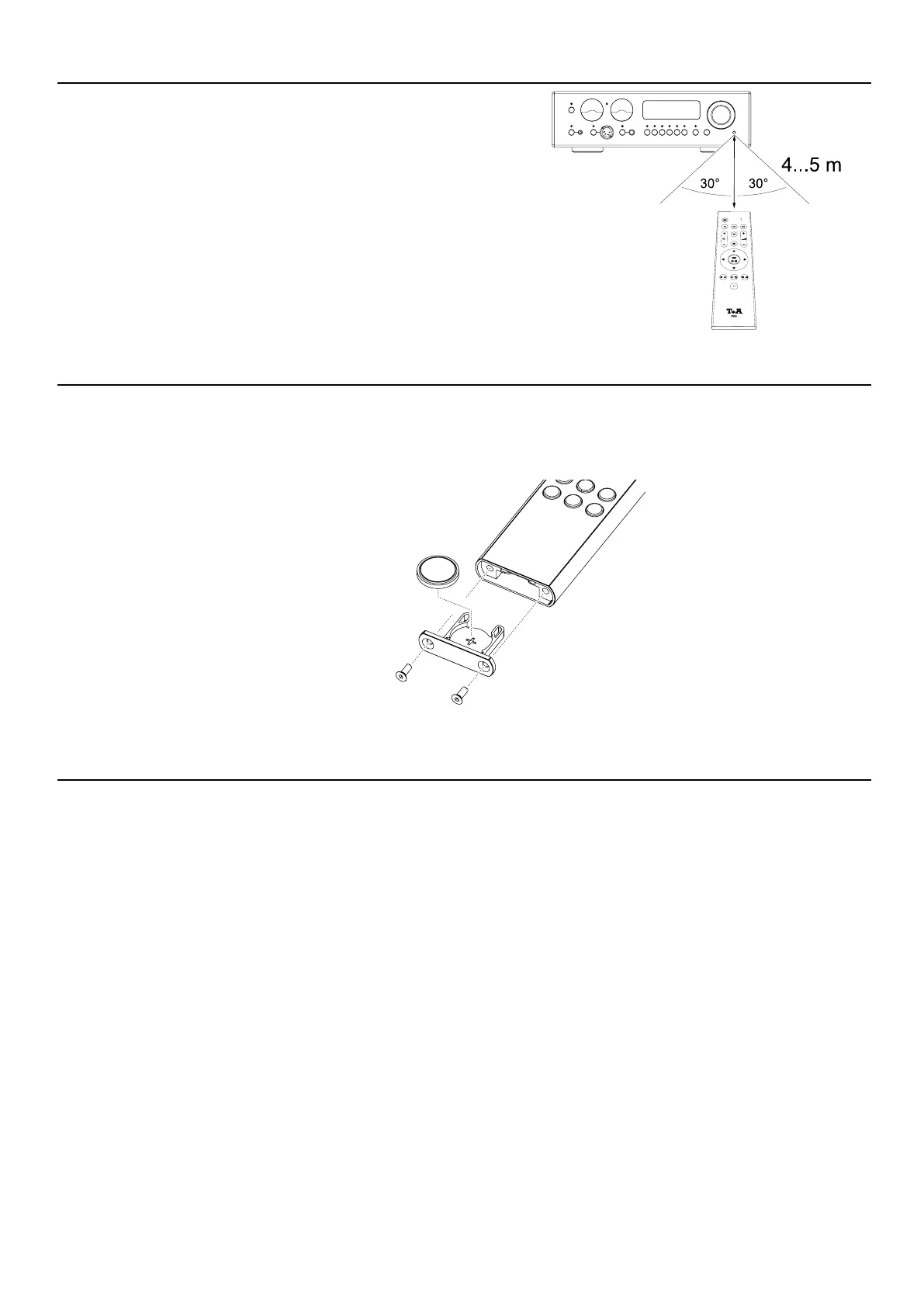
When operating by remote control, please hold the
FM200 in the direction of the remote control receiver.
The range of the remote control is approx. 4..5 m.
The line of sight between FM200 and the remote
control receiver must not be interrupted by obstac-
les.
The direct incidence of interfering light (e.g. from
uorescent and energy-saving lamps) into the re-
ceiver should be avoided at all times, as otherwise
the range of the remote control can be considerably
reduced.
Replacing the battery
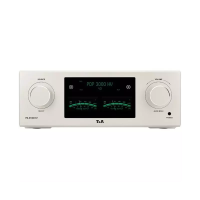
To change the battery of the remote control, rst remove the two screws shown in the gure below. Then
remove the battery holder by pulling it downwards. Insert a new CR 2032 battery into the battery holder
according to the marking ( + on the battery facing downwards). Now insert the holder as shown and use
two screws to fasten the holder.
Important information
j
• The remote control handset supplied in the set contains a button cell battery.
• Do not swallow the battery: chemical burn hazard. If this button cell is ingested, within two hours it may
cause serious internal chemical burning which could result in death
• If you suspect that someone might have swallowed a battery, or that a battery could have entered any
part of the body, seek immediate medical assistance.
• If the battery is replaced improperly, there is danger of explosion. Always replace batteries by batteries
of the same or an equivalent type.
• Keep new and used batteries well away from children.
• If you cannot close the battery compartment securely, cease using the product, and keep it away from
children.
• Batteries shout not be exposed to excessive heat like sunshine, re or the like.
• Very low air pressure may result in explosion of the battery, or leakage of ammable liquids or gases.
• Protect the remote control from humidity, coldness, heat and dust.
• Exhausted batteries must never be thrown into the household waste! They should be returned to the battery
vendor (specialist dealer) or your local toxic waste collection point, so that they can be recycled or disposed
in a proper way. Most local authorities provide collection centres for such waste, and some provide pick-up
vehicles for old batteries.
51


 To Next Page