23
GBGB
4.
MP40
MICROPROCESSOR
4. mP40 microprocessor
The microprocessor control of the JUPITER units
automatically manages unit operation and has the following
principal components:
probes are connected as well as all of the analogical and
digital inputs necessary for control of the unit.
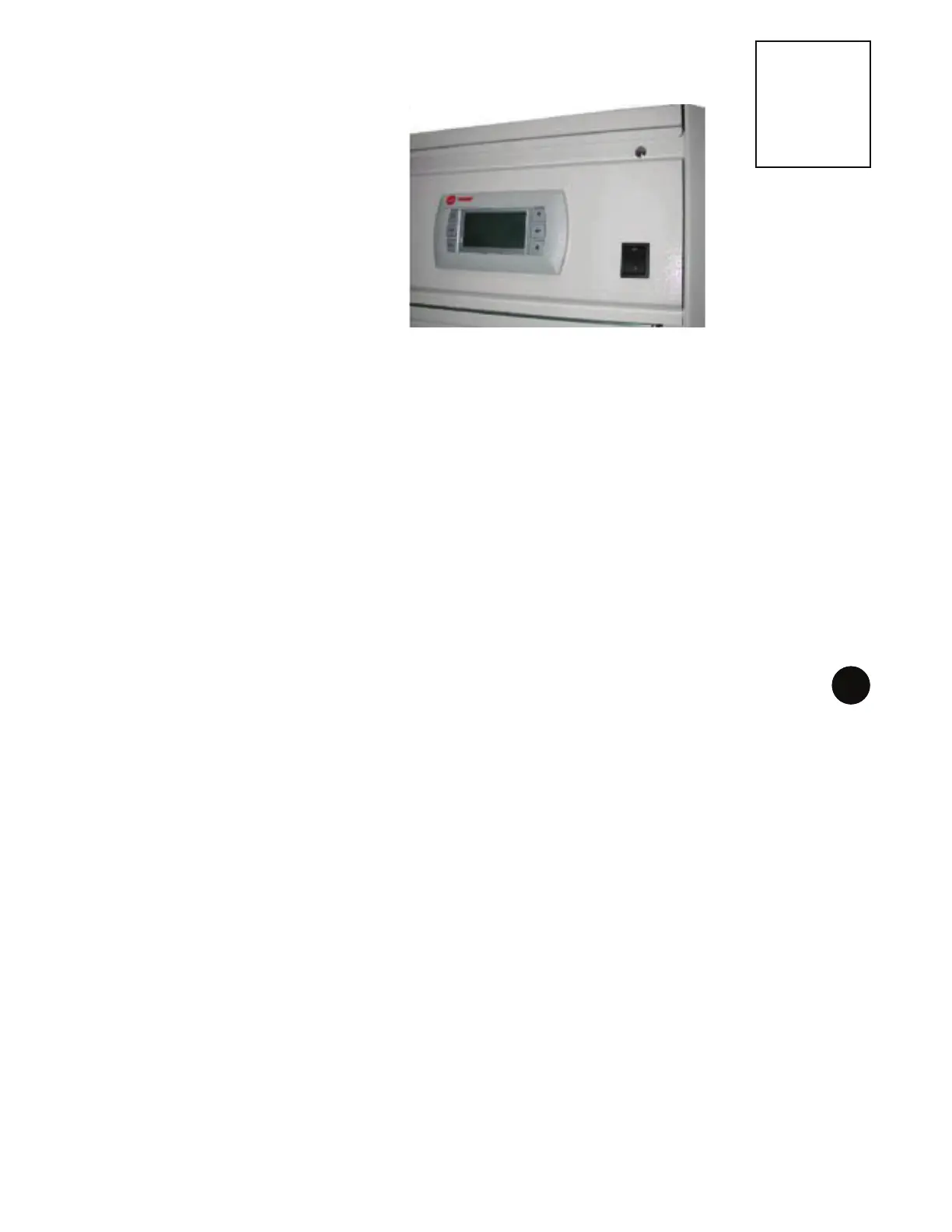
The mP40 microprocessor user terminal is equipped with a
64x120 pixel backlit LCD display and 6 backlit keys to move
between and change parameters. The user terminal can
be placed onboard the unit or, on request, with remote
control. By means of the user terminal it is possible to set the
operating parameters, monitor the trend of the main working
parameters and read any alarm messages. All of the control
algorithms can be found in the microprocessor control board
(in a flash eprom) and all of the operating parameters are memorized and can be viewed using the user terminal. The LAN
card for connection to a Local Area Network is integrated in all units as a standard feature and enables up to 10 units to
be controlled in the same room. Compatibility with Modbus protocol is an integrated feature on all of the units (with RS485
serial card).
The control system enables the following functions:
dehumidification and humidification) which can be set remotely;
connected to the control board;
these units in set back mode, and regulation based on the average temperature;
possibility of remote control;
generators;
digital alarm outputs, that is, the possibility of independently addressing all of the outputs
available (in almost all cases, 2), and to determine if the contact state must usually be open or closed;
automatic reset of the alarms;
electronic thermostatic valve (optional);
in particular the operation of the valve can be checked and can be modified in order to maximise the general operation
of the circuit or to correct any eventual malfunctions, the evaporating pressure/temperature can be monitored and
therefore the unit operation can be checked;
forced timed flushing of the humidifier if the water quality is not high.
In the chilled water (CW) JUPITER units it is possible to select summer/winter mode by a digital input (or from a user
terminal or a serial card) when inside a single coil both cold water (in summer) and hot water (in winter) can flow; it is
possible to also have electrical heaters, in this case it is necessary to also have a second water temperature sensor (single,
on analogical input 1) in order to discriminate the intervention of one or other resource in winter (in summer the heaters
obviously intervene…). In this mode the high water temperature alarm is deactivated, in winter dehumidification and the
high water temperature alarm for the dehumidifier is deactivated. In the chilled water units with EC fans it is possible to
set the air flow directly from the user terminal or manage the fan speed according to the cooling capacity required by the
installation reducing the fan absorption.
The JUPITER units make use as an option of integrated management of the Electronic Expansion Valve based on exclusive
TRANE software.



 To Next Page