All sections of the flue must be capable of inspection and
removable to enable periodic internal cleaning.
Position the appliance bearing in mind all the instructions
and considerations above.
Important!
All 90 degree changes of direction in the flue pipe must be
either removable or capable of inspection.
THE FLUE PIPE RUN MUST NOT INCLUDE MORE THAN 2-3
METRES OF HORIZONTAL PIPE MUST BE AND NOT MORE
THAN THREE 90° ELBOWS (INCLUDING T’s). IT IS ALSO
ADVISABLE NOT TO EXCEED 8 METRES IN LENGTH WITH THE
PIPE Ø 80mm.
The flue connection on the boiler is 80mm. T R Engineering
Ltd recommends the use of 100mm flue for use with this
appliance, so a 80mm to 100mm adaptor is needed.
3.5 Operating Problems Caused by
Draught Defects in the Flue
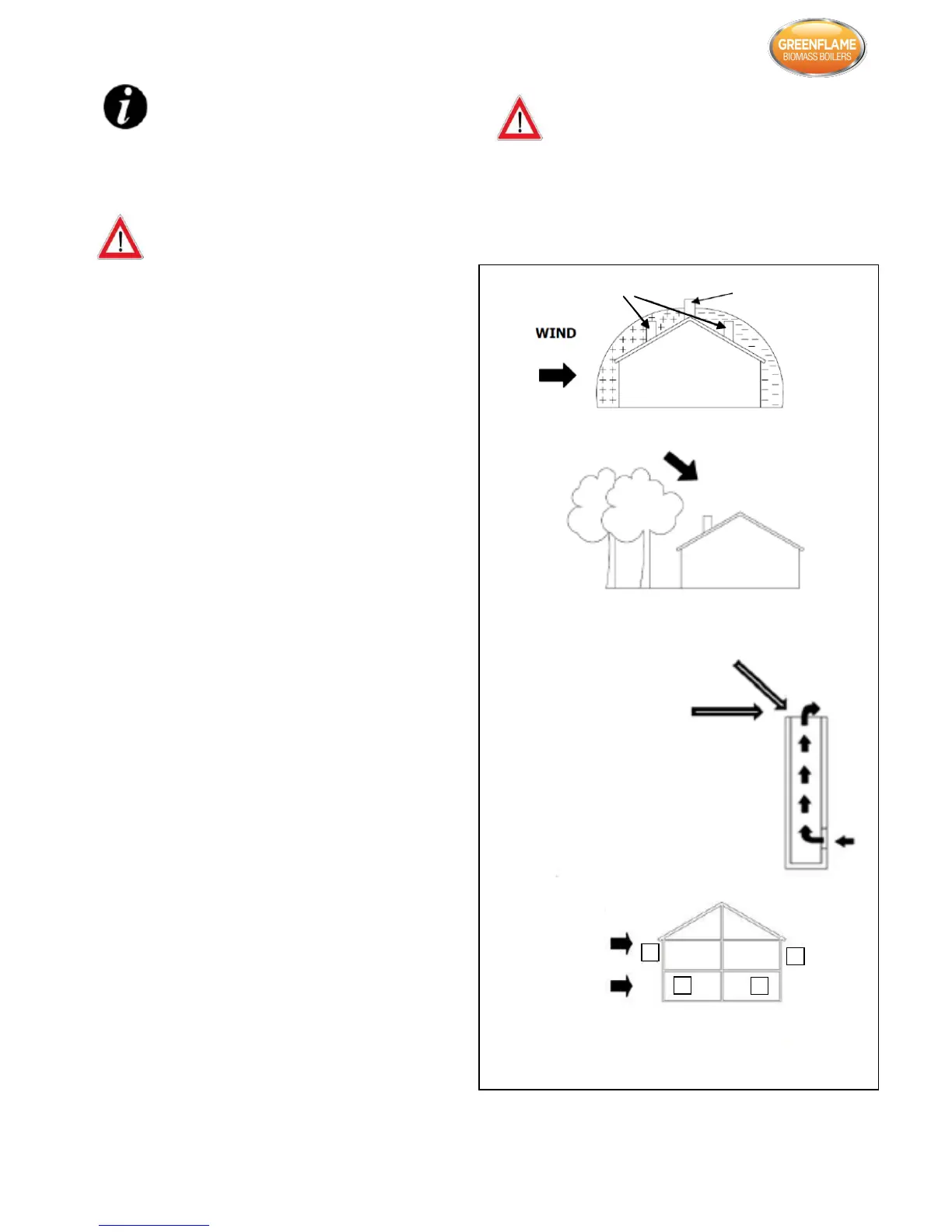
Of all the weather and geographical conditions which affect
the operation of a flue pipe (rain, fog, snow, altitude a.s.l.,
exposure to sunlight, direction of facing), the wind is
unquestionably the most decisive. In fact, along with thermal
depression caused by the difference in temperature inside
and outside of the chimney, there is another type of
depression or over-pressure: dynamic pressure caused by
the wind. An up draught always increases depression and
hence draught. A crosswind increases depression provided
the cowl has been installed properly. A down draught always
decreases depression, at times inverting it.
Besides the direction and force of the wind, the position of
the flue and the cowl with respect to the roof of the building
and the surrounding landscape is important. The wind also
influences the operation of the chimney indirectly by
creating high-pressure and low-pressure zones, not only
outside the building but inside as well. In rooms directly
exposed to the wind (2), an indoor high-pressure area can be
created which can augment the draught in boilers, stoves
and fireplaces, but it can be counteracted by the external
high pressure if the cowl I situated on the side exposed to
the wind (1). On the other hand, in the rooms on the
opposite side from the direction of the wind (3), a dynamic
depression can be created which competes with the natural
thermal depression developed by the chimney, but this can
be compensated for (sometimes) by locating the flue on the
opposite side from the direction of the wind (4).



 To Next Page