SeaKing & SeaPrince Imaging Sonars
0374-SOM-00001, Issue: 08 45 © Tritech International Ltd.
Appendix C. ARCNET Termination
Depending on the cable length the ARCNET communication link requires a termination
resistor to be installed at each end of the umbilical cable. Normally this is supplied fitted within
the ARCNET cable DA-15 or within the SCU/SeaHub at the surface and is left for the user
to fit at the sub-sea end in a convenient junction box or by use of a special waterblock.
The purpose of these terminations is to attenuate any electrical interference or "reflections"
which may occur due to an impedance mis-match and the overall aim is to improve signal
quality and negate any effects which might otherwise be felt by other sources of impedance
such as from the cable itself.
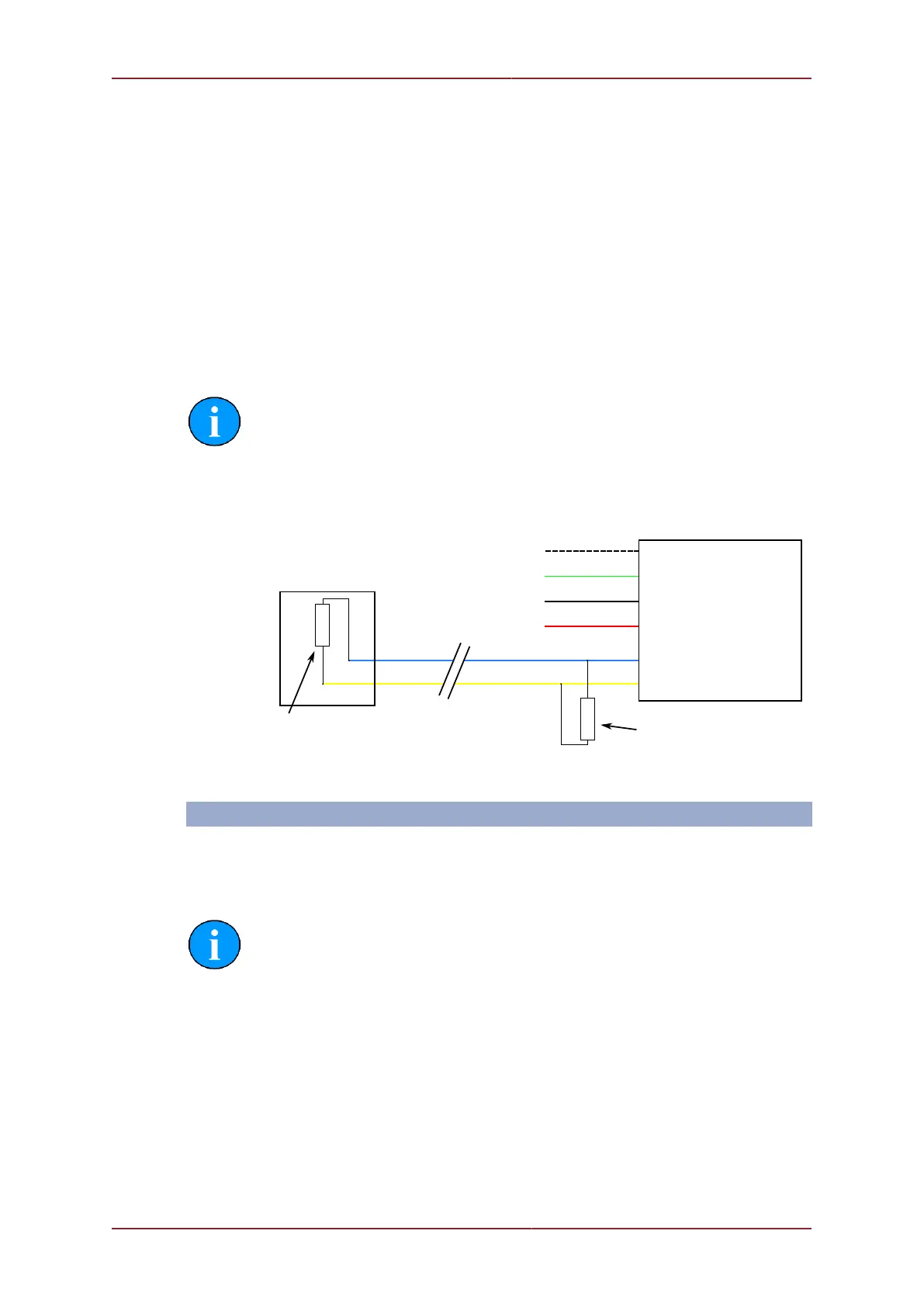
The diagram below shows best practice to use when installing termination resistors on an
ARCNET network of Tritech International Ltd sonar products.
Note
A special yellow waterblock is available from Tritech International Ltd which
contains an in-line impedance of 39Ω which will enable quick and easy
installation of the subsea termination resistor.
waterblock connectors
Earth (cable screen / pin 6)
RS232 ground (green / pin 5)
-ve DC (black / pin 4)
+ve DC (red / pin 3)
ARCNET B (blue / pin 2)
ARCNET A (yellow / pin 1)
surface unit
surface
termination
resistor
subsea
termination
resistor
Cable length Termination Baud rate setting
Less than 100m Single 39Ω subsea resistor Normal baud rate
100-1200m 270Ω at surface and 39Ω subsea Normal baud rate
1200-2500m 270Ω at surface and 39Ω subsea Half baud rate
Note
If there is more than one sensor connected then the sub-sea resistor should be
fitted at the junction box or splice of the cable.


 To Next Page