Offset
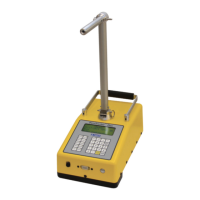
To improve the accuracy of the PaveTracker Plus for a specific
material of known density, the unit can be calibrated using a
density offset. A density offset is determined by taking in-
place measurements using the PaveTracker Plus, then
comparing the measured density to an alternative density, as
determined using a nuclear gauge reading or road core
extraction and analysis.
Determining the Density Offset
To determine the density offset for a given material:
1. Take a reference reading using the PaveTracker Plus as
described on page 4–2.
NOTE
Before using the PaveTracker Plus, inspect the protective
cover of the bottom surface of the gauge’s sensor. Ensure
that the cover is in good condition, and has no deep
scratches or buildup of material. If necessary, replace the
cover as described on page A–8.
2. Measure the in-place density of the material using the
PaveTracker Plus to find the measured density. Mark the
test site so that nuclear gauge readings or core extraction
can be conducted in the same location. If the core has
already been removed, take the measurement as close as
possible to the core location.
NOTE
When taking PaveTracker Plus measurement on a core
site, be sure to take measurements
before the core is cut,
as the water used during the core cutting process may
affect PaveTracker Plus measurements.


 To Next Page