VESDA Maintenance Guide VESDA
8 www.xtralis.com
22. If necessary, clean the detector and sampling pipe network (refer to Sampling Pipe Network maintenance
on page 11).
23. If the sampling pipe network is OK, review the event log. If the event log does not show any unexpected
flow faults, normalize the raw airflow.
24. Once the detector and sampling pipe network have been serviced, cleaned, tested (for testing
instructions, refer to Post-maintenance testing on page 13), and are operating fault-free, return the system
to its normal operating mode.
3.2 Checking Airflow
Every time you visit a site, it is recommended that you check and record the airflow in each sampling pipe.
The current percentage airflow readings indicate any changes in airflow percentage since the last airflow
normalization. These readings may not indicate the absolute increase or decrease in airflow through the
sampling pipe network. Airflow changes could be a result of one of the following:
l Dirty filter.
l Blockages - within sampling pipes, at sampling holes or in capillary tubes.
l Leaks - in sampling pipes or at pipe junctions.
l Airflow changes - introduced by building ventilation systems, changes in sampling pipe network layout or
pipe length etc.
l Aspirator degradation.
l Detector contamination.
Check the airflow in each sampling pipe by following the instructions below:
1. Check the recent airflow data recorded in the event log. Look for flow faults that endured for a
considerable period of time or frequent normalizations. If there are repeated flow faults or detector
normalizations in the event log, detector and system cleaning may be required.
2. Fix any problems from the list above, blockages for example. If there are no obvious problems, use Xtralis
VSC to check the raw airflow through the detector (VESDA VLP, VESDA VLS and VESDA VLC only).
3. Compare the raw airflow against previous historical data.
Notes:
l Progressive decreases in the raw airflow readings may indicate a blockage developing inside the
sampling pipe network. An unexpected reduction of airflow over an extended period of time may indicate
that pipe cleaning is urgently required.
l Record separate raw airflow results for each sampling pipe. When comparing successive raw airflows,
ensure that the values compared are for the same sampling pipes and check that the pipe network has not
changed recently.
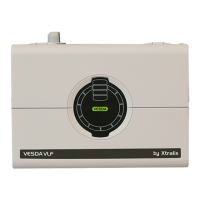
l The VESDA VLF measures flow in liters per minute, not raw airflow, unless it has a VESDAnet card in
which case it displays a value that when divided by 100 equates to an airflow in liters per minute.
Refer to the Xtralis VSC online help for information on how to obtain current raw airflow data for VESDA VLP,
VESDA VLS and VESDA VLC products.
3.3 Checking the Filter(s)
When checking the filter, compare the date of installation on the filter label with the recommendations in
Appendix B on page 49. If in doubt, replace the filter with a new one and record the date on its label.
Notes:
l Serious smoke events, such as those indicated by Fire level alarms, can also affect the life expectancy of
filter cartridges. Filters should be replaced after all actual fire events.
l VESDA VLIdetectors are fitted with multiple filters. Refer to the VESDA VLIProduct Guide for further
information.



 To Next Page