
 Need help?
Do you have a question about the Weber GENESIS II and is the answer not in the manual?
Instructions for identifying gas leaks when gas is smelled, including shutting off the appliance and extinguishing flames.
Warnings against storing flammable liquids or LP tanks near the grill or in enclosed spaces.
Prohibits installation in vehicles, garages, or other enclosed areas due to ventilation and fire risk.
Ensures all parts are in place, no built-in modifications, and proper gas conversion.
Requires adherence to local codes and specific national standards for gas installation.
Specifies grounding requirements for external electrical sources like rotisseries.
Emphasizes outdoor use, adequate ventilation, and keeping flammable materials away.
Covers hot parts, unattended use, moving the grill, and keeping cords away from heat.
Instructions for shutting off gas, storing LP tanks outdoors, and avoiding extreme temperatures.
Alerts about chemicals in combustion byproducts and brass materials causing cancer or reproductive harm.
Details the 10-year warranty for material and workmanship, excluding normal wear and tear.
Outlines owner's duties for care and lists conditions that void the warranty.
Procedures for submitting a warranty claim, including required information and contact details.
States limitations on warranties, liability, and exclusive remedies, and assumption of risk.
Integrated technology for monitoring grill temperature and food temperature via smart device.
Rack to keep food warm or toast buns, folds down when not in use for storage.
Grates providing even heat distribution and superior heat retention.
Dedicated zone for creating intense heat to add sear marks to meat.
Control knobs that illuminate for optimal control during night-time grilling.
Burner for simmering sauces or sautéing vegetables alongside main grilling.
Convenient surfaces for platters and seasonings, with hooks for grilling tools.
Easy-to-read gauge showing the remaining fuel level in the LP tank.
Gas tank mounted externally for easier access and removal.
Enclosed cabinet space for storing grilling tools and accessories.
Guaranteed ignition system for reliable start-up every time.
Ensures consistent gas flow for even heat distribution across cooking grates.
Angled bars catch drippings to vaporize and add smoky flavor to food.
Channels drippings away from burners into a disposable drip tray for fire prevention.
Explains liquefied petroleum gas, its properties as a fuel, and how it vaporizes.
Provides essential safety tips for handling, transporting, and storing LP tanks to prevent hazards.
Details the required dimensions, construction standards, and safety features (OPD, Type 1 connection) for LP tanks.
Explains the role of the regulator and the necessity of using the supplied or approved replacement parts.
Describes how to properly hang the LP tank on the grill's tank scale, noting alignment directions.
Instructions on checking the tank valve for proper mating, damage, or debris before installation.
Guides the user through securing the tank, connecting the regulator coupling, and preparing for leak checks.
Explains the importance of leak checks and identifies fittings to be tested for gas escape.
Detailed steps for applying a soap solution, opening gas supply, and identifying leaks by bubble formation.
Provides specific actions based on where a leak is detected, including shutting off gas and contacting support.
Crucial safety warnings about using flames, operating with leaks, and handling propane tanks.
How to determine the amount of fuel remaining in the LP tank using the tank scale indicator.
Step-by-step instructions for safely closing the valve, disconnecting the regulator, and removing the tank.
Highlights fittings that require leak checks after refilling and reinstalling a tank.
Details how the WEBER CONNECT module alerts users to the LP tank fuel level.
Procedure for an initial burn-off at high heat for 20 minutes before the first use.
Importance and steps for preheating the grill on high for 15 minutes for optimal cooking.
Steps for cleaning grease management system and inspecting the hose before each use.
Instructions for brushing grates immediately after preheating to remove food debris.
Step-by-step guide for igniting each burner using the electronic ignition system.
Guidance on what to do if burners fail to ignite, including waiting periods and referring to troubleshooting.
Instructions for turning off burners and the LP tank supply to safely extinguish the grill.
Explains searing as a direct grilling technique to brown food surfaces and caramelize flavors.
Details preheating, burner settings, and placing food over the sear zone for optimal results.
Instructions on how to safely turn off the burners and gas supply after using the sear zone.
Guide for igniting the side burner using electronic ignition, with checks for main burners and LP tank.
How to check if the side burner is lit and what to do if ignition fails.
Procedure for turning off the side burner control knob and the LP tank supply.
Details the functions available through the WEBER CONNECT app, such as notifications and grilling assistance.
Steps for connecting the grill to a smart device via Bluetooth® or a Wi-Fi network.
Explains the LED display for temperatures, notifications, connectivity, and cook status.
How to use the '+' and '-' buttons to adjust settings and the confirmation button.
Guides on setting timers and target temperatures for grilling and food monitoring.
Details how to use food temperature probes with the module for precise cooking control.
Information on fuel level, wireless symbol status, and battery power indicators on the module.
Steps to set up notifications for when the grill reaches a target internal temperature.
Guide on inserting probes, setting target temperatures, and receiving alerts for food doneness.
Instructions for cleaning probes by wiping, avoiding submersion, and noting they are not dishwasher safe.
Advice on neatly wrapping and storing food temperature probes indoors when not in use.
Describes using direct heat for smaller, tender foods cooked quickly under direct flame.
Explains using indirect heat for larger cuts or delicate foods cooked away from direct flame.
Highlights the importance of tongs, timers, and barbecue mitts for successful grilling.
Stresses the importance of preheating and cleaning grates before every grilling session.
Advice on being present, organizing tools, and creating adequate space for flexible cooking.
Tips on minimizing peeking, flipping food once, using timers, and knowing when to stop cooking.
Encourages experimentation with different foods and recipes to enhance grilling skills.
Guidance on utilizing the warming rack for keeping food warm or folding it down.
Explains how the lighted control knobs aid in precise operation during night-time grilling.
Recommendations for thorough cleaning of the grill interior, ideally twice a year.
How to remove carbonized grease deposits from the inside of the lid.
Steps for brushing debris off the cooking grates with a stainless steel brush.
Instructions for scraping and brushing the FLAVORIZER BARS to maintain performance.
Focuses on cleaning burner ports and spider screens for safe and optimal operation.
Instructions for scraping and brushing heat deflectors to ensure even heat distribution.
How to scrape debris from the cookbox into the grease tray opening to prevent fires.
Emphasizes cleaning the slide-out grease tray and catch pan as an essential step before each grill use.
Guidance on using non-abrasive cleaners for stainless steel surfaces, cleaning with the grain.
Instructions for using warm soapy water and cloth for painted, porcelain-enameled, and plastic components.
Advice for frequent cleaning with soapy water and applying stainless steel cleaner to prevent rust.
How to wipe the interior cabinet with a damp cloth, avoiding electronic components.
Identifies common symptoms when burners fail to ignite and potential causes like gas flow or ignition system issues.
Detailed steps for using a match to verify gas flow to main burners and the side burner.
Guidance on next steps based on whether match lighting is successful or unsuccessful.
Addresses symptoms like low flame, uneven heating, or incomplete burner ignition related to gas flow.
Describes the expected flame pattern (blue tips, descending light blue to dark blue) for optimal burner performance.
Explains how spider screens can get obstructed by webs or debris, affecting burner performance.
Identifies symptoms of gas leaks, such as smell, hissing sounds, or damaged seals.
Addresses symptoms like peeling paint and flare-ups, attributing them to carbon buildup or leftover food.
Guide on checking battery presence, protective wrap removal, correct installation, and replacement.
Instructions for verifying secure connections of ignition wires to the button and module.
Reference chart illustrating wire connections for the igniter module on the 335 model.
Addresses symptoms where the module and control knobs do not turn on, checking wires and batteries.
Guide on how to replace the six 'D' alkaline batteries for the WEBER CONNECT module.
Solutions for Bluetooth® connectivity issues, including range, pairing, and multiple device connections.
Advice for resolving Wi-Fi connectivity issues, focusing on signal range and router proximity.
Guidance on what to do when error codes appear on the WEBER CONNECT module display.
Instructions for connecting a compatible external power bank as an alternative to batteries.
Provides important information on power bank capacity, connection, and operating conditions.
Visual representation of the wiring connections for the WEBER CONNECT system on the GEN II 315 EX model.
Provides thickness/weight and approximate total grill times for various red meat cuts.
Details grilling times and methods for different pork cuts like bratwurst, chops, and ribs.
Offers cooking times for chicken breasts, thighs, whole chicken, and game hens.
Guidance on grilling times for various fish fillets, whole fish, and shrimp.
Provides cooking times for vegetables such as asparagus, corn, mushrooms, onions, and potatoes.
An illustrated diagram showing all components of the Genesis II EX-335 SX-335 grill with corresponding part numbers.
Details FCC compliance for the WC2 controller, including limits for Class B digital devices and interference measures.
Covers FCC and ISED Canada regulations on radio frequency exposure and device operation.
Lists IFETEL compliance, IC, FCC, and HVIN identifiers for the WC2 controller.
Provides customer service phone numbers, Bluetooth® and other trademark attributions.
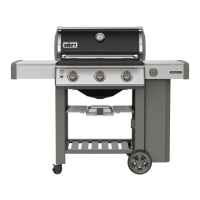
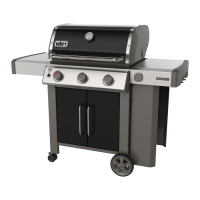
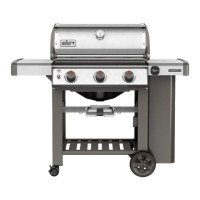
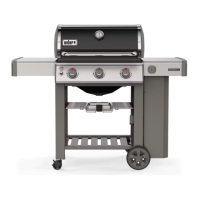
The Weber Genesis II EX-335/SX-335 is a high-performance gas grill designed for outdoor cooking, featuring integrated WEBER CONNECT technology for enhanced control and monitoring.
This gas grill is designed for outdoor use only, providing a versatile platform for various grilling techniques. It utilizes liquid propane (LP) gas as fuel, regulated by a pressure regulator to maintain uniform gas pressure. The grill's GS4 High Performance Grilling System ensures consistent heat distribution across the cooking grates, allowing for even cooking. The Infinity Ignition system guarantees reliable ignition of the burners. FLAVORIZER BARS are strategically angled to catch drippings, which then smoke and sizzle, imparting a smoky flavor to the food. A Grease Management System funnels drippings away from the burners into a disposable drip tray, preventing flare-ups and simplifying cleanup. The grill includes a dedicated Sear Zone for intense heat to create sear marks on meat, and a Side Burner for simmering sauces or sautéing vegetables. Integrated WEBER CONNECT technology allows users to monitor grill and food temperatures remotely via a smart device, providing notifications for flipping, resting, and food readiness.
 General
| Burner Material | Stainless Steel |
|---|---|
| Fuel Type | Propane or Natural Gas |
| Dimensions - Lid Open | Varies by model |
| Dimensions - Lid Closed | Varies by model |
| Side Tables | Yes |
| Swivel Locking Casters | Yes |
| Durable All-Weather Wheels | Yes |
| Cooking Grate Material | Porcelain-enameled cast iron or Stainless Steel |
| Warming Rack | Yes (depending on model) |
| Side Burner | Yes |
| iGrill Compatibility | Yes |
| Grill Material | Porcelain-enameled steel |
| Ignition | Electronic Ignition |
| Warranty | 10 years |



 To Next Page

