i16 Manual Page 29 - Revision: 2-09-2023
11. Prime the Hot Tank by dispensing hot water from the front of the unit until water
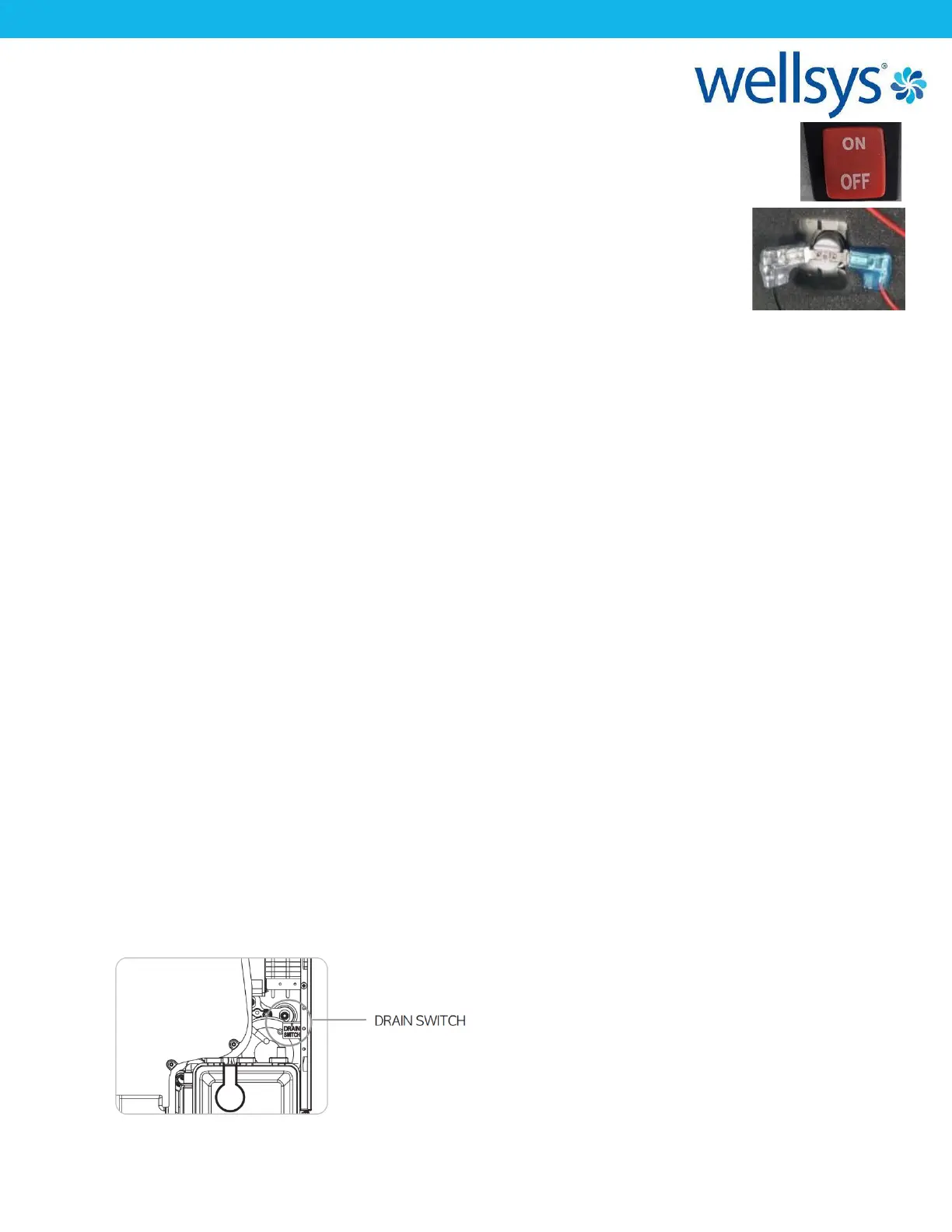
begins to flow. Once complete, turn on the red Hot Tank switch on the back of the
machine. This will enable the heating process for Hot Water feature.
*In the event that the hot water switch is turned on BEFORE the hot tank is primed,
it is likely that a “dry heat” event will occur. The hot tank, empty of water, will
begin to heat rapidly and trip the overload thermostat on the hot tank. This
overload will have to be manually reset for the hot tank to operate correctly.
The overload thermostat is located ON the hot tank itself, and the red reset
button must be pressed to manually reset and restore operation to the hot
tank.
12. This system can be installed into two different installation environments: (1) Non-Drainable
area & (2) Drainable area
*The default setting is for Non-Drainable Area with the Drain Switch OFF. (Non-Drainable
Area)
1) Non-Drainable Area: As default setting, check that the END PLUG, located at the rear of
the system, is properly plugged to drain tube (black tubing), and make sure the drain switch
is in the OFF state:
2) Drainable Area: Remove the End Plug blocking the drain tube (black), connect the drain
tube to a drain, then turn on the source water. Remove the Top Cover and turn the Drain
Switch ON.
*Please secure the drain tubing to prevent any dislodgement during the drainage.
Note: To ensure reliability and the highest performance, only genuine Wellsys filters should be
used and must be changed on time. Please reference below for the filter change schedule.
1. Pre-Sediment Filter 1 year or 2500 gallons max
2. Pre-Carbon Filter 1 year or 2500 gallons max
3. Reverse Osmosis Membrane 3 years or 4500 gallons max
4. BIO-Sure Plus 1 year or 750 gallons
5. TCR 2 years or 2500 gallons
6. Air Filter 2 years in office environment
Filter schedule is only estimate and does not guarantee the life will last to this length of time.
Many factors may impact the life of each filter including but not limited to poor water quality,
low pressure, incorrectly installation, and neglect.


 To Next Page