Manual 02879 723PLUS/Analog Load Sharing
Woodward 1
Chapter 1.
General Information
Introduction
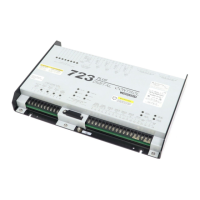
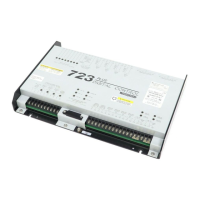
This manual describes the Woodward 723PLUS Analog Load Sharing Digital
Speed Control, models 8280-414 (low voltage), 8280-415 (high voltage),
8280-480 (low voltage, low speed), and 8280-481 (high voltage, low speed). The
low speed versions are for engines rated at 130 rpm or less.
Declaration of Incorporation
In accordance with the EMC Directive 89/336/EEC and its amendments, this
controlling device, manufactured by the Woodward Governor Company, is
applied solely as a component to be incorporated into an engine prime mover
system. Woodward Governor declares that this controlling device complies with
the requirements of EN50081-2 and EN50082-2 when put into service per the
installation and operating instructions outlined in the product manual.
NOTICE: This controlling device is intended to be put into service only upon
incorporation into an engine prime mover system that itself has met the
requirements of the above Directive and bears the CE mark.
Application
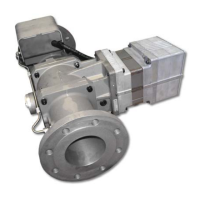
This 723PLUS Digital Speed Control controls the speed and load of reciprocating
engines in generator set service, including those with flexible couplings (see
Figure 1-1). The control includes inputs for two magnetic pickups (MPUs) or
proximity switches for monitoring flexible coupling torsionals, an input for a kW
sensor, an input for a synchronizer, an input for a remote speed or load setting,
an input for output fuel limiting, and an internal speed reference for local control
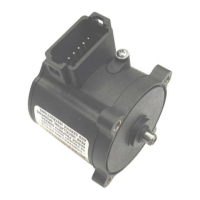
of speed. The control outputs include an actuator output, three configurable
analog outputs, and three relay outputs. The relay outputs are for a shutdown, an
alarm, and to open the generator breaker after unloading the generator.
Connections for analog load sharing via an internal relay are also provided.
These controls can be used with other Woodward controls and accessories
which use standard analog load sharing.
LON channel #1 can be used to support Woodward LinkNet
®
input/output nodes
for monitoring functions. LON channel #2 is not used.
The three serial channels provide for various control interfaces. Port J1 is
switchable to be a Watch Window PC interface or a hand-held programmer port
for monitoring and programming the 723PLUS control. Port J2 is a Watch
Window only port. Port J3 can interface to a Modbus
®
* master device such as a
Human/Machine Interface (HMI) to monitor the control and engine parameters
and to issue control commands.
*—Modbus is a trademark of Modicon, Inc.






 To Next Page