723PLUS/Analog Load Sharing Manual 02879
2 Woodward
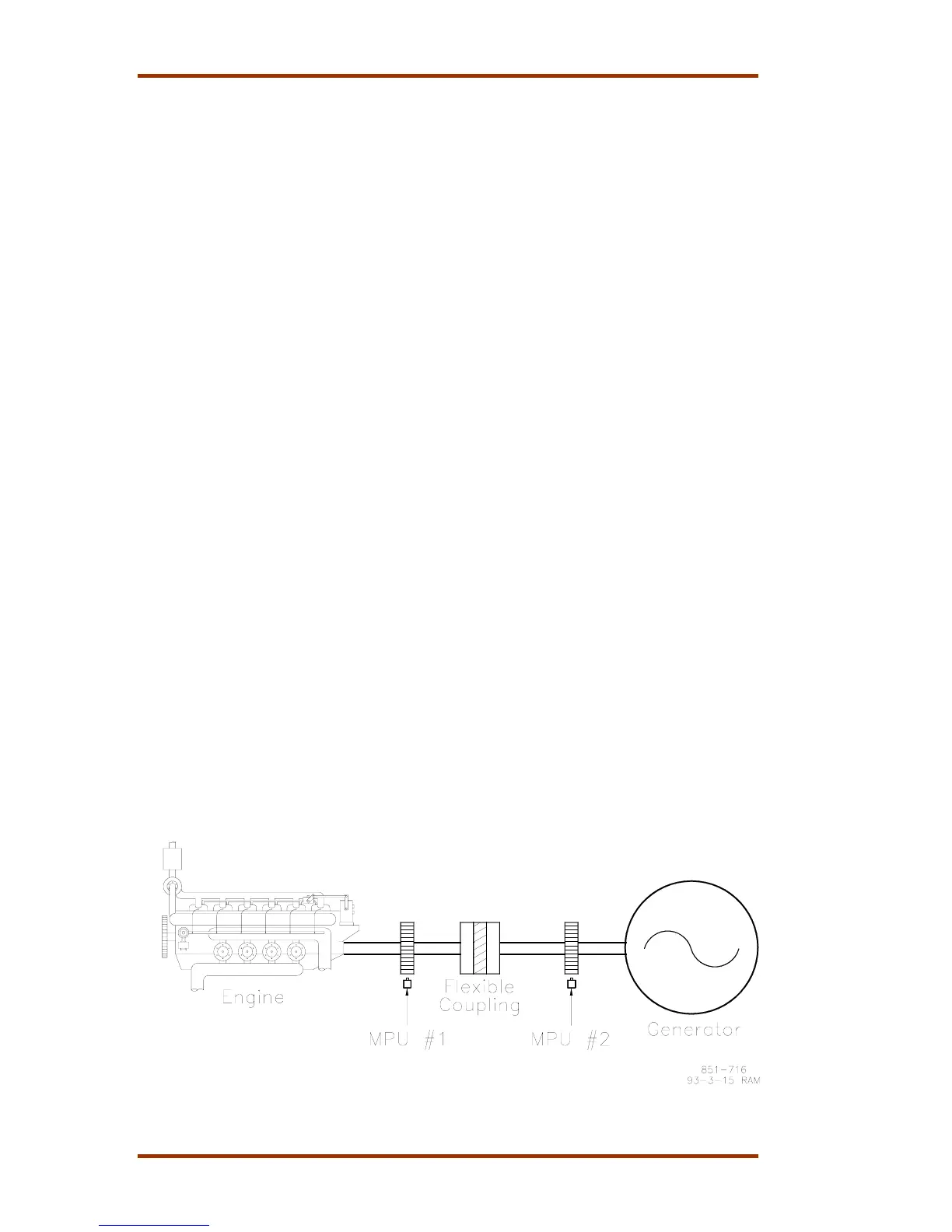
A typical 723PLUS control system is shown in Figure 1-6. The system shown is a
genset with a flexible coupling between the engine and the generator. The
generator is connected (along with other gensets) to an infinite bus and a plant
load. While the utility is present, the on-line units will run in baseload or kW
droop. The load can be controlled by the Remote Load Setpoint device. If the
utility tie-line is lost, the on-line gensets will isochronously load share to control
the system frequency as the system load changes. Off-line units can be brought
on-line at any time with the SPM-A synchronizer. Protection is provided to the
unit shown with the External Fuel Limiter and special torsional detection and
filtering across the flexible coupling.
The 723PLUS control system includes:
• a 723PLUS Digital Speed Control
• ServLink Watch Window (Figure 1-3) or a hand held terminal (Figure 1-4)
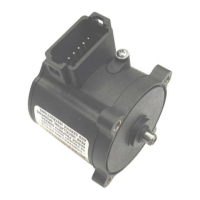
• one or two proportional actuators to position the fuel metering
• an external power source
• one or two speed-sensing devices (two required for coupling torsional
filtering)
• eight optional switch contacts to manage control functions
• an optional synchronizing device
• an optional fuel limiting transducer
• three optional analog readout devices for display
• two optional relay-driven alarms and shutdowns
• optional Modbus devices for digital monitoring and control
• optional LinkNet Modules to provide additional I/O paths for the Modbus
devices
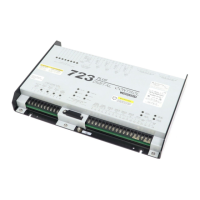
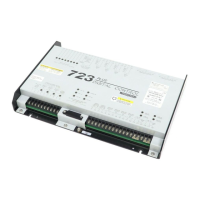
The 723PLUS control (Figure 1-2) consists of a single printed circuit board in a
sheet-metal chassis. Connections are via three terminal strips and three 9-pin
subminiature D connectors.
Control Options
Each 723PLUS control requires 40 W of power. A nominal current in-rush of 7 A
(low voltage) or 22 A (high voltage) is possible. Acceptable input voltage ranges
are:
• low voltage—18 to 40 Vdc
• high voltage—90 to 150 Vdc
Figure 1-1. Flexible Coupled Generator Set






 To Next Page