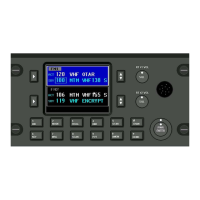
FLEXCOMM 2000
(P-2000/C-2000/RT-2000)
INSTALLATION MANUAL
Publication No. 150-049106 Page 13 of 56
Rev. F P-2000 Installation Manual
Nov 2007
SECTION 2 – INSTALLATION
1. General
This section contains suggestions and factors to consider before installing the P-2000/C-2000/RT-2000.
Close adherence to these suggestions will assure a more satisfactory performance from the equipment.
2. Unpacking and Inspecting Equipment
Exercise extreme care when unpacking the equipment. Make a visual inspection of the units for evidence
of damage incurred during shipment. If a claim for damage is to be made, save the shipping container to
substantiate the claim. The claim should be promptly filed with the transportation company. It would be
advisable to retain the container and packaging material after all equipment has been removed in the
event that equipment storage or reshipment should become necessary.
3. Equipment Installation
The P-2000/C-2000/RT-2000 installations will conform to standards designated by the customer,
installing agency, and existing conditions as to the unit location and type of installation. See Figures 2-1
through 2-7 for an outline drawings of the LRU’s, installation tray, and antennas. Before beginning
installation the installing agency should review the drawings, electrical interwiring diagram and installation
pictorials which are located in this section, and establish requirements to a particular aircraft.
A. Cooling Considerations
External cooling is not required; however, the greatest single contributor to increased reliability of all
modern day avionics is limiting the maximum operating temperature of the individual units, whether
panel-mounted or remote-mounted. While modern day circuit designs consume far less electrical
energy, the watts per cubic inch dissipated within the avionics units still remains much the same due
to high density packaging techniques utilized.
B. P-2000 Mechanical Installation
(1) Select the P-2000 mounting location. The LCD display’s vertical viewing angle is 10°
towards the 12 o’clock position and 30° towards the 6 o’clock position. It is best to locate
the P-2000 as high as possible on the front panel or far back on the center pedestal to take
advantage of the best vertical viewing angle. Insure that the unit will be easily accessible
and clearly visible to the operator.
The location should be free from excessive moisture, vibration, heat and noise generating
sources. The unit has standard Dzus mount dimensions as shown in Figure 2-1. Allow
adequate space and service loops for installation of cables and connectors.
(2) The installing agency will supply and fabricate all external cables. The connectors are
supplied separately and are listed in Section 1.F.
(3) The length and routing of the external cables must be carefrully studied and planned before
attempting actual installation. Avoid sharp bends and placing cables too close to other
aircraft cables.
These commodities, technology or software are controlled in accordance with the United States Export Administration Regulations, Export Classification
Control Number (ECCN) 7E994. When exporting, diversion contrary to U.S. law is prohibited.


 To Next Page