EasyManua.ls Logo

Xantrex 3000 - User Manual

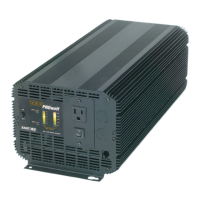
Xantrex 3000
64 pages
Print Icon
To Next Page IconTo Next Page
Loading...
by
XPower Inverter 3000 Plus
Owner’s Guide
XPower3000.book Page i Wednesday, December 10, 2003 6:52 AM

Table of Contents

Questions and Answers

  • B
    Brandon ReidAug 12, 2025
    What to do if my Xantrex Inverter has no output voltage and no input voltage indication?
    • J
      James CochranAug 13, 2025
      First, ensure the inverter is turned on. Then, check the wiring to the inverter for any issues. If the fuse is open, the inverter may need to be returned for repair, as it could be damaged, possibly due to reverse DC input polarity. Note that damage from reverse polarity is not covered under warranty. Also check if the battery disconnect switch or breaker is off.
  • M
    Misty OwenAug 16, 2025
    Why is my Xantrex 3000 close to over-temperature shutdown?
    • S
      sherrycollinsAug 16, 2025
      The inverter might be close to over-temperature shutdown because the ventilation openings are obstructed, the ambient temperature is too high, or the load applied exceeds the continuous operation limit. To resolve this, improve ventilation by ensuring the inverter’s ventilation openings are not blocked, reduce the ambient temperature, and decrease the load if continuous operation is needed.
  • S
    Susan ClarkAug 20, 2025
    What to do if my Xantrex 3000 is in overload shutdown?
    • H
      Haley DyerAug 20, 2025
      The inverter is in overload shutdown because the load applied is above the continuous operation limit. To resolve this, reduce the load if continuous operation is required.
  • C
    cynthia58Aug 25, 2025
    Why is my Xantrex 3000 Inverter in overvoltage shutdown?
    • B
      Billy WoodsAug 25, 2025
      The inverter is in overvoltage shutdown due to high input voltage. To fix this, ensure the inverter is connected to a 12 V battery and check the voltage regulation of the charging system.
  • S
    samuelsmithAug 27, 2025
    What causes low output voltage on a true RMS reading voltmeter for my Xantrex 3000 Inverter?
    • W
      woodharoldAug 27, 2025
      Low input voltage and a load close to the maximum allowable power can cause low output voltage. Check the connections and cable to see if the battery is fully charged. Recharge the battery if it is low and reduce the load.
  • F
    Felicia PachecoAug 31, 2025
    How to fix low DC input terminal voltage on Xantrex Inverter?
    • D
      dandavisAug 31, 2025
      Low DC input terminal voltage can be caused by poor DC wiring or poor battery condition. Use proper cable size and lengths, and make solid connections. Charge or replace the battery.
  • T
    Terry WillisSep 4, 2025
    How to eliminate buzz in audio equipment connected to Xantrex Inverter?
    • S
      Sandra MeadowsSep 4, 2025
      The buzz in audio equipment may be due to the power supply in the audio system not adequately filtering the modified sine wave produced by the inverter. Using a sound system with a higher quality power supply may resolve this issue.
  • M
    Marie RasmussenSep 8, 2025
    What to do if the output on Xantrex inverter is shortcircuit?
    • D
      Daniel DeckerSep 8, 2025
      Remove the short circuit.

Summary

About Xantrex

Contact Information

Lists telephone, fax, email, and web details for Xantrex customer support and information.

About This Guide

Guide Purpose and Scope

Explains the guide's objective and content scope for the XPower Inverter 3000 Plus.

Important Safety Instructions

General Safety Warnings

Presents critical warnings for installation and operation to prevent personal injury and equipment damage.

Safety Precautions

Battery Hazards and Handling

Details precautions for explosive gases from batteries and safe handling practices to prevent fire or explosion.

1 Introduction

Introduction to Inverter Features

Covers quality power, ease of use, and comprehensive protection features of the inverter.

2 Features

Inverter Features Overview

Introduces the main features including remote switch, AC panel, and DC panel of the XPower Inverter 3000 Plus.

B Battery Types

Battery Type Selection Guide

Guides users on selecting appropriate battery types, differentiating between automotive and deep-cycle batteries.

1 Introduction (continued)

Quality Power Details

Details the inverter's continuous power, surge capability, and low standby draw.

Introduction (continued)

Ease of Use and Protection Features

Highlights the inverter's ease of use, compact design, remote operation, and protective features.

Features (continued)

AC Panel Identification

Identifies and describes the components and indicators on the inverter's AC panel.

Features (continued)

DC Panel Identification

Identifies and describes the terminals, ground lug, and openings on the DC panel.

3 Installation

Installation Planning Process

Guides users through planning installation, covering codes, battery needs, charging systems, and location.

Installation - Cable Sizing

DC Input Cable Sizing

Explains how to calculate the correct size for DC input cables based on length and current.

Installation - Protection Sizing

Fuse;Circuit Breaker Sizing

Guides on determining the correct fuse or circuit breaker size based on battery short-circuit current ratings.

Installing the Inverter

Installation Tools and Materials

Lists the essential tools and materials required for the inverter installation process.

Installing the Inverter (continued)

Mounting the Inverter

Provides detailed instructions and approved orientations for mounting the inverter securely.

Connecting the Inverter

AC Connections and Chassis Grounding

Covers AC load connections and the crucial step of connecting the inverter's chassis ground.

Connecting the Inverter (continued)

Connecting the DC Cables

Provides step-by-step instructions for attaching DC cable connectors and routing the cables.

Connecting the Inverter (continued)

DC Connection Cautions

Highlights critical cautions for DC connections, including reverse polarity, terminal tightening, and loose connections.

4 Operation

Basic Operation Procedures

Explains how to turn the inverter on/off and operate multiple loads sequentially to prevent overloads.

Operation (continued)

Power Management and Display Screen

Covers turning off the inverter when not in use and understanding the LED display screen for status monitoring.

Operation (continued)

Operating Limits and Input Voltage

Details the inverter's power output ratings and allowable input voltage ranges, including alarm and shutdown thresholds.

Operation - Load Considerations

Load Compatibility and Waveform Cautions

Discusses inverter loads, high surge loads, and critical warnings about appliance compatibility with the modified sine wave output.

Operation - Maintenance

Maintenance and Battery Recharging Tips

Provides guidance on routine maintenance and best practices for recharging batteries to ensure longevity.

5 Troubleshooting

Common Problems and Solutions

Addresses common issues like audio buzzing and TV interference, offering specific troubleshooting steps.

Troubleshooting (continued)

Troubleshooting Reference Table

Presents a comprehensive table of error codes, problems, causes, and solutions for diagnosing inverter issues.

A Specifications

Electrical and Physical Specifications

Lists detailed electrical performance metrics and physical dimensions/weight of the inverter.

B Battery Types

Battery Type Selection Guide

Guides users on selecting appropriate battery types, differentiating between automotive and deep-cycle batteries.

B Battery Types (continued)

Battery Size and Voltage Requirements

Explains battery capacity ratings and critically emphasizes the 12V battery requirement for the inverter.

B Battery Types (continued)

Estimating Battery Requirements

Provides a step-by-step guide for calculating the necessary battery capacity based on appliance usage and charging intervals.

B Battery Types (continued)

Battery Sizing Example

Illustrates a practical calculation to determine the recommended battery bank size in Amp-hours (Ah).

B Battery Types (continued)

Using Multiple Batteries and Cautions

Discusses using multiple batteries, parallel connections, separate banks, and cautions against mixing battery types.

C Alternators and Charging Systems

Charging System Requirements and Cautions

Outlines charging system requirements and warns against direct alternator operation of the inverter.

C Alternators and Charging Systems (continued)

Engine Alternator Charging Strategies

Discusses using standard alternators, controllers, or high-output alternators for effective battery charging.

Warranty and Product Information

Warranty Coverage and Service

Details the product warranty, coverage period, and instructions for obtaining service from Xantrex.

Warranty and Product Information (continued)

Warranty Claims and Exclusions

Specifies proof of purchase requirements and lists common warranty exclusions like misuse or alterations.

Disclaimer and Usage Limitations

Warranty Disclaimer and Use Restrictions

Disclaims warranties and warns against using the inverter with life support or medical equipment.

Warranty and Product Information (continued)

Return Material Authorization Policy and Procedure

Outlines the policy and steps for obtaining an RMA and returning products for service.

Warranty and Product Information (continued)

Out of Warranty Service

Explains how to obtain paid service for units outside the warranty period or conditions.

Warranty and Product Information (continued)

System Information for Customer Support

Provides a checklist for recording system details to aid customer service representatives.

Xantrex 3000 Specifications

General IconGeneral
Output Voltage120 VAC
Output Frequency60 Hz
WaveformModified Sinewave
Continuous Output Power3000W
Surge Rating6000W
Input Voltage12 VDC
ProtectionsOverload, Over Temperature, Short Circuit

Related product manuals