EasyManua.ls Logo

Yale Kyra Pro - User Manual

Yale Kyra Pro
10 pages
Print Icon
To Next Page IconTo Next Page
Loading...
Part of ASSA ABLOY
Yale Kyra Pro
STC-Kyra-49S00242
Product features and design may be updated for improvement without prior notice.
User Guide
Question and Answer IconNeed help?

Do you have a question about the Yale Kyra Pro and is the answer not in the manual?

Summary

Product Introduction

1.1 Product parts list

Details the components of the front and main body of the lock, including sensors and buttons.

1.2 Indicator light description

Explains the meaning of different indicator light colors (Red, Green, Blue) for operational feedback.

1.3 Icon description

Lists icons used in the manual and their corresponding actions or functions for user understanding.

Operation Settings

2.1 Administrator and user ID

Defines administrator code requirements and user ID generation for credentials.

2.2 Factory default administrator password

States the default administrator code and advises changing it for security.

2.3 Changing of administrator code

Provides a step-by-step guide to change the administrator code.

2.4 Factory reset

Details the procedure to reset the lock to its factory default settings.

Add;Delete User

3.1 Add;delete fingerprint user

Instructions for adding and deleting fingerprint credentials.

3.2 Add;delete PIN code user

Instructions for adding and deleting PIN code credentials.

3.3 Create new; delete One-Time-Pin (OTP)

Guide for creating and deleting one-time PIN codes.

System Settings

3.4 Add;delete card

Instructions for adding and deleting card credentials.

3.5 Delete all users for all credentials

Procedure to remove all registered users and credentials.

4.1 Auto-lock setting

Configuration options for the automatic door locking feature.

4.2 Volume setting

Adjusts the audio volume level for voice prompts and alerts.

4.3 Language setting

Selects the display language for the product interface.

4.4 External forced lock setting

Details on enabling and managing the external forced lock function.

Usage of Product

5.1 FaceScan, fingerprint scan, PIN code and CPU card

How to use the different entry methods for unlocking the door.

5.2 Mechanical key override

Explains the use of a physical key for emergency access.

5.3 Silent mode operation

How to unlock the door without audible voice notifications.

5.4 Unlocking from indoor

Methods to unlock the door from the inside.

5.5 External forced lock

Steps to enable and activate the external forced lock function.

Door Locking and System Control

5.6 Door locking

Describes automatic and manual locking procedures.

5.7 Internal forced lock

Details on activating, deactivating, and releasing internal forced lock.

5.8 Emergency power supply

How to use a Type-C USB for emergency power when battery is low.

5.9 Battery replacement

Instructions for replacing the AA alkaline batteries.

5.10 System restart

Procedure to reboot the product in case of system errors.

Protection and Alarm

6.1 Low battery alarm

Alerts for low battery level and indicator status.

6.2 Tampering alarm

Triggered when the front body is forcefully detached.

6.3 3-mins lock-out

Activates after 5 failed attempts within 3 minutes.

6.4 Intrusion alarm

Triggered if the edge bolt pops out when the door is locked.

6.5 External forced lock alarm

Triggered if the door is opened from the inside while in external forced lock.

Networking Modules

Networking module settings

How to upgrade functions with networking modules via installation.

Networking module installation

Step-by-step guide for installing networking modules.

Yale Access module (Yale Access app)

Steps for setting up a new device with the Yale Access app.

Remote Controller

Instructions for pairing a remote controller with the lock.

Home Network Controller

Steps for connecting the lock to a home network controller.

Summary

Product Introduction

1.1 Product parts list

Details the components of the front and main body of the lock, including sensors and buttons.

1.2 Indicator light description

Explains the meaning of different indicator light colors (Red, Green, Blue) for operational feedback.

1.3 Icon description

Lists icons used in the manual and their corresponding actions or functions for user understanding.

Operation Settings

2.1 Administrator and user ID

Defines administrator code requirements and user ID generation for credentials.

2.2 Factory default administrator password

States the default administrator code and advises changing it for security.

2.3 Changing of administrator code

Provides a step-by-step guide to change the administrator code.

2.4 Factory reset

Details the procedure to reset the lock to its factory default settings.

Add;Delete User

3.1 Add;delete fingerprint user

Instructions for adding and deleting fingerprint credentials.

3.2 Add;delete PIN code user

Instructions for adding and deleting PIN code credentials.

3.3 Create new; delete One-Time-Pin (OTP)

Guide for creating and deleting one-time PIN codes.

System Settings

3.4 Add;delete card

Instructions for adding and deleting card credentials.

3.5 Delete all users for all credentials

Procedure to remove all registered users and credentials.

4.1 Auto-lock setting

Configuration options for the automatic door locking feature.

4.2 Volume setting

Adjusts the audio volume level for voice prompts and alerts.

4.3 Language setting

Selects the display language for the product interface.

4.4 External forced lock setting

Details on enabling and managing the external forced lock function.

Usage of Product

5.1 FaceScan, fingerprint scan, PIN code and CPU card

How to use the different entry methods for unlocking the door.

5.2 Mechanical key override

Explains the use of a physical key for emergency access.

5.3 Silent mode operation

How to unlock the door without audible voice notifications.

5.4 Unlocking from indoor

Methods to unlock the door from the inside.

5.5 External forced lock

Steps to enable and activate the external forced lock function.

Door Locking and System Control

5.6 Door locking

Describes automatic and manual locking procedures.

5.7 Internal forced lock

Details on activating, deactivating, and releasing internal forced lock.

5.8 Emergency power supply

How to use a Type-C USB for emergency power when battery is low.

5.9 Battery replacement

Instructions for replacing the AA alkaline batteries.

5.10 System restart

Procedure to reboot the product in case of system errors.

Protection and Alarm

6.1 Low battery alarm

Alerts for low battery level and indicator status.

6.2 Tampering alarm

Triggered when the front body is forcefully detached.

6.3 3-mins lock-out

Activates after 5 failed attempts within 3 minutes.

6.4 Intrusion alarm

Triggered if the edge bolt pops out when the door is locked.

6.5 External forced lock alarm

Triggered if the door is opened from the inside while in external forced lock.

Networking Modules

Networking module settings

How to upgrade functions with networking modules via installation.

Networking module installation

Step-by-step guide for installing networking modules.

Yale Access module (Yale Access app)

Steps for setting up a new device with the Yale Access app.

Remote Controller

Instructions for pairing a remote controller with the lock.

Home Network Controller

Steps for connecting the lock to a home network controller.

Overview

The Yale Kyra Pro is an advanced smart lock designed for enhanced security and convenient access. It integrates multiple unlocking methods and offers a range of customizable settings to suit various user needs.

Function Description

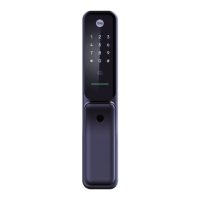
The Yale Kyra Pro serves as a primary door locking and unlocking mechanism, offering both traditional and modern access solutions. It features a front body with a keypad, card sensor, and fingerprint sensor, and a main body with a manual thumbturn, touch sensor, and unlock button. The lock is designed to automatically secure the deadbolt upon door closure when the auto-lock feature is activated. Users can also manually lock the door from the inside by pressing the "lock / internal forced lock" button.

The device supports multiple credential types for unlocking:

  • PIN Code: Users can enter a personal identification number on the keypad. The system allows for scramble codes, where fake digits can be added before or after the actual PIN to prevent password leakage.
  • Fingerprint Scan: A registered fingerprint can be scanned on the fingerprint sensor for quick and secure access. The system guides users through an 8-time scan process during registration for optimal accuracy.
  • CPU Card: Registered CPU cards can be tapped on the card sensor to unlock the door.
  • One-Time PIN (OTP): Temporary PINs can be created for single-use access, ideal for visitors or service providers.
  • Mechanical Key Override: In emergencies such as battery depletion or forgotten passwords, a traditional mechanical key can be used to unlock the door.
  • Manual Thumbturn: From the inside, the door can be unlocked by turning the manual thumbturn.
  • Unlock Button with Touch Sensor: From the inside, a short press on the "unlock" button combined with a touch on the touch sensor allows for exit.

The lock also includes several security and alarm features:

  • Low Battery Alarm: Notifies users with a voice reminder ("replace the batteries") and a red status indicator when the battery level is low, allowing approximately 50 more operations before complete depletion.
  • Tampering Alarm: Triggers an alarm if the front body of the lock is forcefully detached.
  • 3-Minutes Lock-Out: Activates if there are 5 consecutive failed attempts using fingerprint, card, or PIN code within 3 minutes, temporarily disabling access. This lock-out can be lifted after 3 minutes or by using specific deactivation methods (pressing the R button, unlock button, lock/internal forced lock button, or manual thumbturn).
  • Intrusion Alarm: Sounds if the edge bolt pops out when the door is closed and locked, indicating a potential forced entry.
  • External Forced Lock Alarm: When enabled, this alarm is triggered if the door is opened from the inside while the external forced lock function is active.

System settings are highly customizable, including:

  • Auto-lock Setting: Enables or disables automatic locking of the deadbolt.
  • Volume Setting: Adjusts the device's voice guidance volume, offering high, low, and mute options.
  • Language Setting: Allows users to select the preferred language for voice prompts (e.g., Chinese, English).
  • External Forced Lock Setting: Activates a security feature that triggers an alarm if the door is opened from the inside.

Usage Features

The Yale Kyra Pro is designed for intuitive and user-friendly operation.

  • Administrator Code: A primary administrator code is required for all menu operations, including user management and function settings. This code should be changed from the factory default for security.
  • User ID Management: The system automatically generates 2-digit user IDs for registered fingerprints, PINs, and cards, which are essential for managing and deleting individual users.
  • Silent Mode Operation: Users can activate silent mode by touching the keypad with their palm for 3 seconds, muting voice notifications during unlocking.
  • Internal Forced Lock: This feature enhances security from the inside. When activated by pressing and holding the Internal Forced Lock button for 3 seconds, it deactivates all external credentials (fingerprint, card, user PIN code, OTP) and can only be deactivated by the administrator code, pressing and holding the button again for 3 seconds, or using the manual thumbturn.
  • Emergency Power Supply: In case of complete battery depletion, the lock can be temporarily powered via a Type-C USB cable connected to the emergency power supply port, allowing access.
  • System Restart: A system restart button is available for rebooting the device in case of system errors or unresponsiveness.
  • Networking Module (Optional): The lock supports optional networking modules for additional smart home integration and remote control via the Yale Access app. When a Yale Access module is installed and registered, all previously registered standalone credentials are deleted, requiring re-registration through the app.

Maintenance Features

Proper maintenance ensures the longevity and optimal performance of the Yale Kyra Pro.

  • Battery Replacement: The lock is powered by 6x AA alkaline batteries. Users are prompted by a voice reminder to replace batteries when they are low. It is recommended to replace batteries every 6-10 months and to use good quality alkaline batteries to prevent leakage. The battery compartment is easily accessible by removing the battery cover on the main body.
  • Cleaning: To prevent dirt accumulation on the keypad and fingerprint sensor, it is recommended to wipe these areas with a soft cloth. Harsh chemicals such as benzene, gasoline, or alcohol should not be used, nor should water be sprayed directly onto the device.
  • Door Alignment: If the deadbolt does not retract or recede smoothly, adjustment of the striker plate is recommended, especially in cases of door deformation.
  • Mechanical Key Storage: It is crucial to keep at least one mechanical key override outside the house (e.g., at a trusted neighbor's, office, or parents' house) for emergency access.
  • Environmental Considerations: The product should not be installed in outdoor environments with direct exposure to weather to prevent damage.

Yale Kyra Pro Specifications

General IconGeneral
TypeSmart Lock
Power Source4 AA batteries
ConnectivityBluetooth, Wi-Fi
Battery LifeUp to 12 months
Keyless EntryYes
CompatibilityAmazon Alexa, Google Assistant
MaterialMetal
FeaturesAuto-lock, tamper alerts
SecurityGrade 2 security certification
FinishSatin Nickel

Related product manuals